Monthly Archives: January 2026

Living with food and financial insecurity may age the heart faster than recognised clinical risk factors

A new analytical study exploring how social determinants of health influence cardiac ageing has identified financial strain and food insecurity as the most potent contributors to accelerated biological ageing of the heart and a heightened risk of death. The research demonstrates that these social pressures exert a more substantial effect than many traditional clinical risk factors, highlighting the intricate ways in which social and economic conditions shape cardiovascular outcomes. Published in Mayo Clinic Proceedings, the findings highlight the need for prevention strategies that go beyond purely biomedical models of care.

The study emerges at a time of profound demographic change. In the United States, the population aged 65 and over is projected to almost double by 2050, reaching approximately 82 million people, or nearly a quarter of the total population. As life expectancy rises, healthcare priorities have increasingly shifted towards promoting healthy ageing and preserving quality of life in later years. This transition has fuelled interest in identifying more meaningful measures of biological ageing, rather than relying solely on chronological age, to predict disease risk and guide interventions better.

According to lead investigator Dr Amir Lerman of the Mayo Clinic’s Department of Cardiovascular Medicine, the research was driven by growing evidence that conventional cardiovascular risk factors do not account equally for disease burden across patients. He notes that social influences on health are often overlooked in clinical settings, mainly because they are not routinely assessed or discussed. These unrecognised factors, he suggests, may play a significant role in accelerating biological ageing and could represent opportunities for intervention if correctly identified.

The cross-sectional analysis included data from more than 280,000 adults who received care at the Mayo Clinic between 2018 and 2023. Researchers evaluated social determinants of health using a comprehensive questionnaire covering nine domains: stress, physical activity, social connections, housing instability, financial strain, food insecurity, transport needs, nutrition, and education. Cardiac age was estimated using an artificial intelligence–enabled electrocardiogram. At the same time, advanced statistical modelling was employed to examine how social factors, traditional risk factors, and comorbidities interact to influence the gap between cardiac and chronological age.

A central concept in the study is the “cardiac age gap, which reflects the difference between a person’s biological heart age and their actual age. A larger gap indicates an older biological heart and a greater likelihood of future cardiovascular disease. The findings demonstrate that the combined influence of social determinants was the most significant driver of this gap, surpassing traditional clinical factors. Among all social variables assessed, financial strain and food insecurity consistently showed the strongest association with accelerated cardiac ageing, both in the overall population and when analysed by sex. Several social factors, including housing instability and physical inactivity, were also found to predict mortality risk at levels comparable to, or exceeding, established medical risks.

The authors acknowledge limitations, noting that the AI-based ECG tool was validated within a single healthcare system and that most participants identified as non-Hispanic White, which may limit generalisability to other populations. Nevertheless, the study underscores the importance of integrating social context into cardiovascular care. Dr Lerman concludes that recognising and addressing key social determinants can enable more targeted prevention efforts and support genuinely patient-centred care, ultimately improving heart health by confronting the broader conditions that contribute to disease.

More information: Nazanin Rajai et al, Interplay of Social Determinants of Health and Traditional Risk Factors in Predicting Cardiac Aging, Mayo Clinic Proceedings. DOI: 10.1016/j.mayocp.2025.01.024

Journal information: Mayo Clinic Proceedings Provided by Elsevier

New Video Dataset Supports the Evolution of AI-Enabled Health Care

Researchers at the University of Pennsylvania have introduced Observer, a first-of-its-kind multimodal medical dataset designed to capture anonymised, real-time interactions between patients and clinicians. Comparable in atmosphere to medical dramas that depict the intensity of life in clinical settings, Observer offers a genuine view inside primary care consultations. Unlike fictional portrayals, however, the recorded encounters are real, securely anonymised, and created specifically to support research and responsible AI development.

Historically, health care research has relied on information left behind after a clinical visit, such as clinician notes, laboratory values, and vital signs. While valuable, these records omit much of what actually shapes a medical encounter. Elements like body language, tone of voice, eye contact, room layout, and the presence of computers or digital tools are rarely documented, yet they strongly influence communication, trust, and outcomes. Observer addresses this gap by combining video, audio, transcripts, and clinical data, allowing researchers to examine what happens during care rather than inferring it after the fact.

Kevin B. Johnson, the project’s lead investigator, explains that much of medical care has remained invisible to researchers. By using technology that automatically anonymises recordings and ensures compliance with US privacy regulations, Observer enables observation of care as it unfolds. This evidence, he argues, is not only essential for improving clinical practice but also critical for developing AI systems that support care in ethical and meaningful ways.

The dataset is already being used. Pilot grants have been awarded to research teams exploring new questions using Observer, with the longer-term aim of expanding it into a national resource. Johnson describes this as a “flywheel” effect: as more researchers contribute insights and recordings, the dataset grows, enabling increasingly ambitious investigations into how care is delivered and experienced.

Clinical data have long been central to improving health care. Large datasets of medical records have underpinned decades of research and, more recently, have played a key role in training AI models to identify patterns linking diagnoses, treatments, and outcomes. Yet, as Johnson notes, understanding the whole experience of care requires data that captures what happens in the room. With Observer, researchers can now study questions such as how humour affects visits, how often clinicians engage with screens instead of patients, and how patients respond to explanations of diagnoses.

Protecting patient privacy has been a central challenge. To make Observer possible, the research team developed MedVidDeID, an automated system that de-identifies video and audio recordings. The tool removes identifying text, alters voices, and detects and blurs faces and other visual identifiers, with human reviewers providing final quality checks. This approach has dramatically reduced the time and effort required to prepare recordings for research use safely.

With initial data collection complete and early studies underway, the team plans to expand Observer and open access to qualified researchers through an application process. The goal is systemic change. As Johnson emphasises, improving care and building meaningful clinical AI depend on understanding the clinical encounter itself. When researchers can observe hundreds or thousands of real visits, genuine transformation becomes possible.

More information: Kevin B. Johnson et al, Observer: creation of a novel multimodal dataset for outpatient care research, Journal of the American Medical Informatics Association. DOI: 10.1093/jamia/ocaf182

Journal information: Journal of the American Medical Informatics Association Provided by University of Pennsylvania School of Engineering and Applied Science

Safety Concerns: Blood Flow Restriction Cuffs and Falls in Older Adults

New research from Murdoch University’s School of Allied Health, conducted in collaboration with the Health Futures Institute, has found that wearing blood flow restriction cuffs can alter the way older adults walk, potentially increasing unsteadiness during exercise. The findings highlight essential safety considerations as this form of training becomes increasingly widespread among ageing populations seeking to improve strength and mobility through low-load exercise.

Blood flow restriction (BFR) training has gained global popularity as a way to increase muscle strength using lighter physical loads. The technique involves placing inflatable cuffs around the arms or legs to restrict blood flow during movement or exercise partially. This approach allows individuals to achieve strength benefits without the heavier resistance often required in traditional training methods, which can be challenging for some older adults.

By limiting the flow of blood into and out of a limb, BFR creates a low-oxygen environment within the working muscles. This causes the muscles to fatigue more quickly and work harder, even at lower intensities. As a result, improvements in strength and muscle size can be achieved with less mechanical stress on joints, making the method appealing in rehabilitation and ageing-related exercise settings.

Associate Professor Brendan Scott from the Centre for Healthy Ageing explained that while restricting blood flow to the legs during walking has been shown to improve muscle strength and size, caution is required. He noted that although BFR can be a powerful tool for enhancing stability and functional ability in older adults, research shows that wearing cuffs. At the same time, walking alters gait patterns, suggesting that exercise should be conducted in a safe, controlled environment.

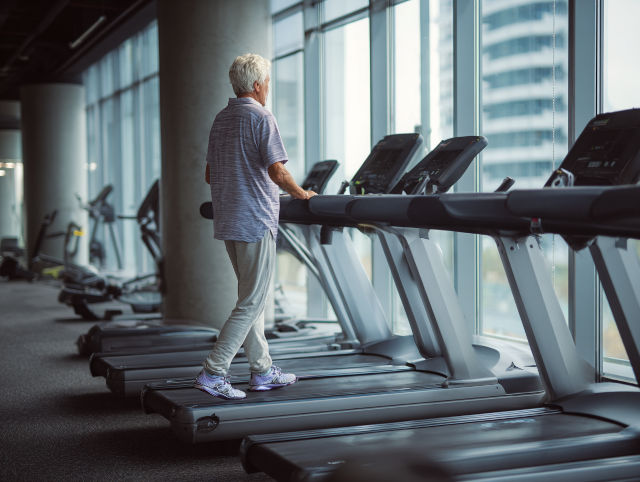
The study involved 10 healthy adults, with an average age of 73, who walked on a treadmill for 10 minutes at different speeds. Participants completed trials without cuffs, then with cuffs inflated to 40 and 60 per cent of the pressure required to restrict blood flow fully. A small motion sensor placed on the lower back was used to assess balance and stability during walking.

Results showed that balance worsened whenever the cuffs were inflated, regardless of walking speed, and higher pressures led to greater instability. Despite this, the researchers emphasised that BFR training may still offer long-term benefits if applied correctly. Professional supervision, low starting pressures, and a safe environment can help challenge balance during BFR walking, helping older adults adapt over time while minimising the risk of falls.

More information: Brook Galna et al, Bilateral blood flow restriction of the legs worsens acute walking balance of older adults – a full factorial randomised experiment, Gait & Posture. DOI: 10.1016/j.gaitpost.2025.110022

Journal information: Gait & Posture Provided by Murdoch University

Frailty and depression together may substantially increase dementia risk in later life

Concurrent physical frailty and depression are likely to markedly increase the risk of dementia in older people, with the interaction between these two factors alone accounting for around 17% of overall dementia risk, according to findings from an extensive international study published in the open-access journal General Psychiatry. The researchers note that around 57 million people worldwide are currently living with dementia, a figure projected to triple by 2050, underscoring the urgency of identifying modifiable risk factors. While previous research has primarily examined physical frailty and depression separately, the authors highlight that the two conditions share overlapping physiological and pathological mechanisms, making their combined impact particularly important to understand.

To investigate this interaction, the study followed 220,947 participants with an average age of 64, of whom just over half were women, drawn from three major cohort studies: the UK Biobank, the English Longitudinal Study of Ageing, and the Health and Retirement Study. Physical frailty was measured using modified Fried frailty criteria, classifying individuals as frail if they met at least three indicators, including unintentional weight loss, exhaustion, low physical activity, slow walking speed, and weak grip strength. Depression was identified through validated mental health questionnaires and, in some cases, linked hospital admission records. Across all three cohorts, frail participants tended to be older, more often female, heavier, living with more long-term health conditions, and had lower levels of educational attainment than those in good physical health.

Over an average follow-up period of nearly 13 years, 9,088 participants were diagnosed with dementia of any type. Analysis showed that frailty alone was associated with more than a 2.5-fold increase in dementia risk, while depression was linked to a 59% higher risk. Strikingly, individuals who were both physically frail and depressed were more than three times as likely to develop dementia as those in good physical and mental health. Beyond these individual effects, the researchers identified a significant interaction between frailty and depression, with approximately 17% of dementia risk attributable specifically to their combined presence.

The authors suggest that lower levels of either frailty or depression may allow the health system to compensate for the cognitive burden imposed by the other condition. Still, once both exceed a certain threshold, this compensatory capacity may break down, resulting in a sharp rise in dementia risk. Although the study is observational and cannot establish causality, and definitions of frailty, depression, and dementia varied across cohorts, the findings remain clinically meaningful. The researchers conclude that because both physical frailty and depression are potentially modifiable, interventions targeting them together could play a significant role in reducing the future burden of dementia.

More information: Yihong Ding et al, Associations of physical frailty, depression and their interaction with incident all-cause dementia among older adults: evidence from three prospective cohorts, General Psychiatry. DOI: 10.1136/gpsych-2025-102172

Journal information: General Psychiatry Provided by BMJ Group

Long-term mortality outcomes of natural disasters in ageing populations

Severe weather events can have enduring effects on the health and survival of older adults, particularly those who are already vulnerable, according to research published in the Journal of the American Geriatrics Society drawing on data from the aftermath of Hurricane Harvey.

Using Medicare claims records for almost 1.8 million fee-for-service beneficiaries aged 65 and over in Texas and Louisiana, the researchers examined mortality patterns following the hurricane. Their analysis showed that older adults who were exposed to areas of high rainfall during Hurricane Harvey faced a 3 per cent higher risk of death within one year of the event compared with their less-exposed counterparts. The increase in mortality was most pronounced among individuals with chronic conditions that require ongoing medical management, such as chronic kidney disease, Alzheimer’s disease and related dementias. In absolute terms, the most significant number of excess deaths occurred among people living with Alzheimer’s disease and related dementias, with an estimated 1,245 additional deaths in the year after the hurricane.

The study also revealed marked disparities across racial and ethnic groups. Black older adults experienced a 6 per cent higher mortality risk. In comparison, Hispanic and Latino older adults faced a 13 per cent increase relative to other populations, underscoring how disasters can disproportionately affect groups that already face structural disadvantages.

Commenting on the findings, corresponding author Sue Anne Bell, PhD, of the University of Michigan, emphasised that the consequences of disasters extend well beyond their immediate aftermath. She noted that such events not only disrupt services in the short term but also lay bare and intensify existing weaknesses in the healthcare system. For older adults who depend on regular, uninterrupted care, even brief interruptions can lead to serious, lasting health consequences.

More information: Sue Anne Bell et al, Variation in One-Year Mortality Following Severe Weather Exposure Among Older Americans by Chronic Health Condition and Sociodemographic Status, Journal of the American Geriatrics Society. DOI: 10.1111/jgs.70237

Journal information: Journal of the American Geriatrics Society Provided by Wiley

Night waking disrupts cognitive functioning regardless of how long one sleeps

For many years, guidance around healthy sleep has centred on the number of hours spent asleep each night. However, emerging evidence suggests that for older adults, how well they sleep may be more critical for next-day thinking skills than how long they sleep. A recent study by researchers from Penn State and a medical college in the Bronx indicates that sleep quality can influence cognitive performance the following day, even when total sleep time remains unchanged.

The study, published in mid-December in the journal Sleep Health, showed that older adults who experienced more disrupted sleep processed information more slowly the next day. Rather than focusing on bedtime or total hours of sleep, the researchers assessed sleep quality by measuring how long participants remained awake after initially falling asleep. This period of wakefulness proved a stronger predictor of next-day cognitive speed than sleep duration alone.

One of the study’s authors explained that most people are familiar with the mental fog that follows a poor night’s sleep, but this research aimed to pinpoint which aspects of sleep matter most for daily cognitive functioning. The findings suggest that, at least in the short term, sleep continuity plays a key role for older adults. In other words, a night marked by frequent awakenings may impair cognition even if the overall number of hours slept appears adequate.

The researchers analysed data from 261 adults aged 70 or older who were taking part in a long-running study of ageing and cognitive health. Over 16 days, participants wore wrist-based devices that recorded their sleep patterns. During the same time, they completed brief cognitive tasks on a smartphone several times each day, including after waking and before bedtime. These tasks measured processing speed, visual working memory, and visuospatial abilities, resulting in more than 20,000 individual assessments.

On average, participants slept just over seven hours per night but spent more than an hour awake. When an individual experienced an additional half-hour of wakefulness compared with their usual pattern, their processing speed was noticeably slower the next day. Factors such as naps, bedtime, and total sleep duration did not show a meaningful association with cognitive performance. When comparing participants, those who consistently spent more time awake at night also performed worse on several cognitive tests, including measures of working memory.

Sleep disturbances are common in later life, and persistent problems have been linked to faster cognitive decline and a higher risk of dementia. The researchers emphasised that occasional poor sleep is not a cause for alarm, and that worrying about sleep can make matters worse. Instead, they advised focusing on long-term habits, such as maintaining a consistent bedtime, creating a calm sleep environment, and limiting screen use before bed. Where difficulties persist, non-drug approaches such as cognitive behavioural therapy may help improve sleep quality safely, potentially supporting healthier cognitive ageing over time.

More information: Orfeu Buxton et al, Within- and between-person associations of sleep characteristics with daily cognitive performance in a community-based sample of older adults, Sleep Health. DOI: 10.1016/j.sleh.2025.11.010

Journal information: Sleep Health Provided by Penn State

Ongoing Physical Activity Helps Prevent Metabolic Syndrome

A recent Finnish study shows that adults who remain physically active throughout adulthood have a significantly lower prevalence of metabolic syndrome at age 61 than those whose leisure-time physical activity remains low. Notably, the findings also indicate that taking up physical activity later in life can still be beneficial. In particular, physical activity in early to late adulthood—especially muscle-strengthening exercise—may help reduce the health risks linked to earlier inactivity.

The study is part of a long-running longitudinal research project conducted at the University of Jyväskylä, Finland, which has followed the same participants for over 50 years. In this analysis, researchers examined leisure-time physical activity patterns among 159 participants at ages 27, 42, 50, and 61, alongside assessments of their cardiometabolic health at age 61. The primary outcome of interest was the presence of metabolic syndrome.

Metabolic syndrome refers to a cluster of cardiovascular risk factors that tend to occur together, including increased waist circumference, high blood pressure, impaired glucose metabolism, and unhealthy blood lipid levels. Having metabolic syndrome substantially raises the risk of cardiovascular disease and type 2 diabetes, making it an important indicator of long-term metabolic health.

Across the 34-year follow-up period, the researchers identified three distinct trajectories of leisure-time physical activity. One group was consistently active, exercising several times a week from early adulthood onwards. A second group became increasingly active over time, reaching activity levels similar to those of the consistently active group by midlife. The third group was consistently inactive, engaging in leisure-time physical activity no more than once a week throughout adulthood.

Apparent differences emerged when the prevalence of metabolic syndrome was compared between these groups. Individuals who were consistently inactive had nearly a fourfold risk of metabolic syndrome in early and late adulthood compared with those who were consistently active. Those who increased their activity over time had an intermediate risk, at roughly twice that of the consistently active group. However, these differences decreased after accounting for participants’ current engagement in various types of physical activity at age 61, suggesting that recent behaviour plays an important role.

Postdoctoral Researcher Tiina Savikangas notes that while long-term physical activity is strongly associated with better metabolic health in later life, the findings also highlight the value of being active in older age. Muscle-strengthening activities, in particular, appear to make a meaningful contribution to metabolic health, even among those who were less active earlier in adulthood.

Analysis of individual components of metabolic syndrome showed that long-term leisure-time physical activity was associated with a smaller waist circumference and a more favourable lipid profile. These associations also weakened after accounting for current physical activity. Participants who regularly engaged in muscle-strengthening exercise and active commuting had higher levels of beneficial HDL cholesterol, and those who performed strength training tended to have a smaller waist circumference than those who did not.

Overall, the findings reinforce the idea that physical activity supports metabolic health across the entire lifespan. While staying active from early adulthood offers clear advantages, the study also delivers an encouraging message: adopting or increasing physical activity later in life can still provide essential health benefits, and it is never too late to start.

More information: Tiina Savikangas et al, Leisure-Time Physical Activity Trajectories across Adulthood and Cardiometabolic Risk at the Beginning of Late Adulthood – A Prospective Cohort Study, Medicine & Science in Sports & Exercise. DOI: 10.1249/MSS.0000000000003883

Journal information: Medicine & Science in Sports & Exercise Provided by University of Jyväskylä – Jyväskylän yliopisto