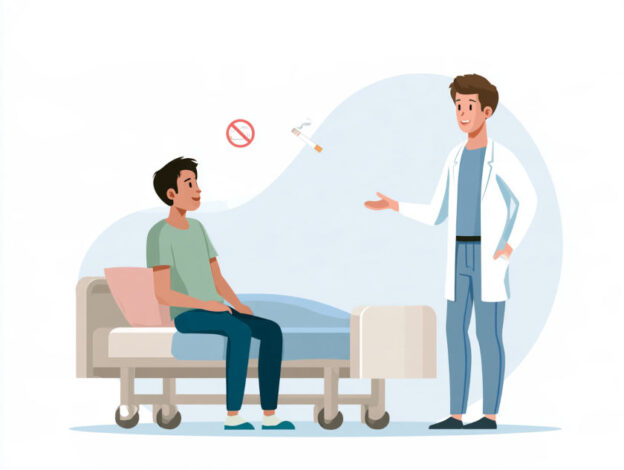
Hospitals could play a much greater role in helping smokers quit, according to new clinical guidelines that recommend making tobacco treatment a standard part of inpatient care. The recommendations aim to ensure that patients receive support regardless of whether they have expressed an intention to stop smoking.
Developed by the American College of Chest Physicians (CHEST), with contributions from experts at MUSC Hollings Cancer Center, the guidelines advocate an “opt-out” system. Under this approach, every hospitalised patient who currently smokes would automatically be offered treatment rather than having to request assistance.
Benjamin Toll, Ph.D., director of the MUSC Health Tobacco Treatment Program, helped develop the recommendations alongside Alana Rojewski, Ph.D. Toll explained that smoking often receives insufficient attention because hospital staff are occupied with other pressing medical concerns.
Hospitalisation presents a valuable opportunity to address tobacco dependence. Since patients cannot smoke during their stay, many experience nicotine withdrawal, creating an opening for healthcare professionals to manage cravings and discuss long-term smoking cessation without pressuring patients to quit.
The guidelines draw on an extensive scientific review involving more than 9,300 research abstracts and 142 studies. Although evidence was stronger for some treatments than others, the expert panel combined research findings with clinical experience to develop recommendations covering hospital treatment and follow-up care.
A central recommendation is to offer treatment based on smoking status rather than a patient’s willingness to quit. Researchers emphasised that motivation can change over time, and patients who initially decline assistance may eventually accept it when support is offered consistently.
For patients experiencing withdrawal, the guidelines suggest nicotine replacement therapy, including patches combined with gum or lozenges to control cravings. They also strongly recommend beginning varenicline, a prescription medication that reduces nicotine cravings, before discharge to support longer-term quitting efforts.
Counselling is another important component. Rather than providing only brief advice, hospitals are encouraged to offer at least 15 minutes of dedicated tobacco treatment counselling. Combining behavioural support with medication can help patients develop practical strategies for remaining smoke-free after returning home.
The recommendations also stress the importance of continued assistance after discharge. Proactive telephone counselling and follow-up from healthcare providers are considered more effective than simply directing patients to smoking cessation hotlines. Hospitals can involve nurses, physicians, social workers and tobacco treatment specialists in delivering these services.
Toll and Rojewski hope the guidelines will encourage hospitals to establish comprehensive tobacco treatment programmes that reach more patients. By incorporating smoking cessation into everyday healthcare, hospitals could help people who might otherwise receive little support, improving access to potentially lifesaving treatment and increasing opportunities to quit successfully.
More information: Hasmeena Kathuria et al, Tobacco Treatment in the Inpatient Setting, CHEST Journal. DOI: 10.1016/j.chest.2026.08.038
Journal information: CHEST Journal Provided by Medical University of South Carolina