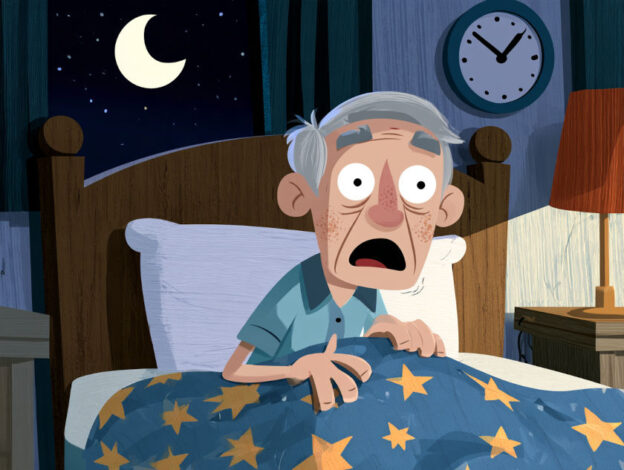
That sudden jolt just as you are drifting off to sleep may be more than an occasional nuisance. Researchers have found that people who regularly experience these abrupt awakenings tend to report poorer sleep, more severe insomnia and higher levels of anxiety. The findings, published in the open-access journal PLOS Mental Health, suggest a connection between these common night-time disturbances and emotional well-being.
Known as “sleep starts” or hypnic jerks, these episodes occur during the transition from wakefulness to sleep. They often involve an involuntary muscle twitch powerful enough to wake someone completely. Some people experience the unsettling sensation of falling, while others describe electric-shock-like feelings, tingling, flashes of light or brief dream-like images.
The experience can be surprisingly intense. A sudden racing heartbeat, rapid breathing or feelings of fear and confusion may accompany the jolt. Although most people settle back to sleep relatively quickly, repeated episodes can make bedtime frustrating, particularly for those already struggling with anxiety or sleeplessness.
Researchers from Paris Lodron University Salzburg in Austria surveyed 194 adults from Austria and Germany about their sleeping habits, emotional health and experiences with sleep starts. Of those surveyed, 96 reported abrupt awakenings accompanied by at least one additional symptom every week. The remaining 98 participants formed a comparison group.
The differences were striking. Those experiencing frequent sleep starts reported significantly worse sleep quality, more severe insomnia symptoms and greater anxiety and depression than the comparison group. They were also more likely to hold unhelpful beliefs about sleep, such as excessive worry about getting enough rest. More frequent episodes were associated with higher anxiety and poorer sleep, although the same relationship was not found with depression.
Psychological stress appeared to play an important role. Participants said their sleep starts became more frequent during emotionally demanding periods, while sleep deprivation seemed to have less influence. Researchers also noticed that people who worried more about sleeping tended to experience more episodes, raising questions about whether anxiety and disrupted sleep might reinforce one another.
Lead researcher Tanja Grünberger said the findings reveal that sleep starts involve considerably more than a simple muscle twitch. Participants described frightening sensations, including falling, loud bangs and sudden feelings of alarm. However, she cautioned that the study relied on self-reported experiences rather than objective sleep recordings. Because the research captured information at only one point in time, it cannot establish whether anxiety contributes to sleep starts or results from them.
Senior author Manuel Schabus emphasised that sleep starts are generally harmless for most people. Nevertheless, frequent episodes may cause considerable distress and make falling asleep more difficult. Researchers now hope to investigate whether techniques aimed at reducing emotional arousal and sleep-related worry could help those experiencing troublesome episodes. For now, the findings offer another reminder of the close relationship between sleep and psychological well-being.
More information: Tanja Grünberger et al, Sleep starts: Phenomenology and associations with sleep, psychological, and demographic characteristics, PLOS Mental Health. DOI: 10.1371/journal.pmen.0000737
Journal information: PLOS Mental Health Provided by PLOS