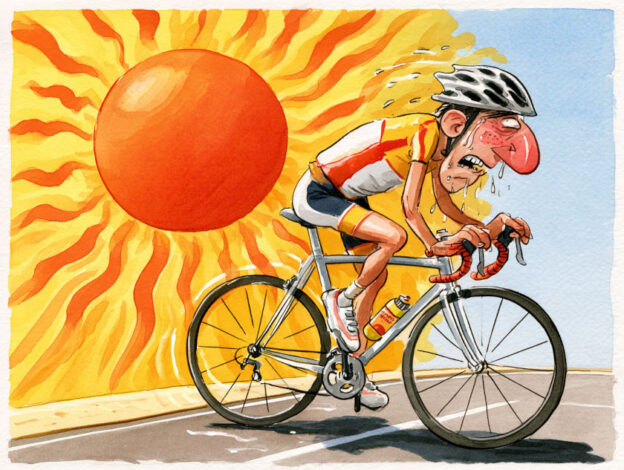
Extreme heat could be preventing endurance athletes from getting the full benefit of the carbohydrates they consume during competition, according to new research that sheds light on why performance can suffer in scorching conditions. Scientists have discovered that high temperatures interfere with the body’s ability to draw glucose from the bloodstream and use it as fuel, even when athletes have adapted to exercising in the heat.
The findings come as endurance sports increasingly rely on aggressive carbohydrate fuelling strategies. Elite runners, cyclists and triathletes now consume upwards of 120 grams of carbohydrates per hour during competition, a practice that has helped drive remarkable performances, including the first competitive marathon completed in under two hours.
Researchers at the University of Birmingham, working with colleagues from the University of Exeter, examined how temperature affects the body’s ability to use carbohydrates consumed during exercise. Their study, published in the Journal of Physiology, involved 17 trained amateur cyclists completing 90-minute sessions on stationary bicycles.
Participants exercised in three separate trials, including two conducted at 40°C with 20% humidity and one at a more comfortable 20°C. Before the second hot-weather trial, they underwent nine days of heat acclimation training.
The results revealed a striking difference. Cyclists used an average of 27% less carbohydrate from their food and drinks in extreme heat than in cooler conditions. Surprisingly, heat acclimation did nothing to reverse this reduction, despite producing measurable improvements in their ability to tolerate high temperatures.
Scientists had previously suspected that heat restricted carbohydrate absorption in the digestive system. However, blood samples, muscle biopsies and stable-isotope tracers pointed elsewhere. Glucose was still entering the bloodstream, but its subsequent removal from circulation and use by muscles and other tissues appeared to be impaired.
Professor Gareth Wallis, the study’s senior author, said the findings could have major implications for endurance competitions held in increasingly hot climates. With almost 30% less ingested glucose available for aerobic performance, even small differences in how athletes manage their fuelling could influence race results.
The acclimation findings were particularly unexpected. After nine days of training in the heat, participants recorded lower core temperatures, expanded blood plasma volumes and reduced heart rates. Exercise also felt easier and more comfortable, yet their ability to use ingested carbohydrates remained limited.
Researchers have not established the precise biological mechanism responsible for this disruption. Nevertheless, the findings suggest athletes should resist the temptation to reduce carbohydrate consumption when temperatures rise, particularly while trying to balance energy intake with the need for adequate hydration.
Dr Tim Podlogar, the study’s lead author, stressed that carbohydrates remain essential in hot conditions because the digestive system continues absorbing them. He advised athletes to maintain their usual carbohydrate intake, drink enough to support sweating and practise race-day nutrition in warm weather. Cold drinks, ice slushies and other cooling techniques may also help athletes cope with the heat.
More information: Tim Podlogar et al, Heat acclimation does not alleviate the reduction in exogenous glucose oxidation that occurs when exercising in hot conditions, The Journal of Physiology. DOI: 10.1113/JP289304
Journal information: The Journal of Physiology Provided by University of Birmingham