Sunday, 16 Aug 2026
  • My Feed
  • My Saves
  • History
  • Blog
Living Well Study
  • Blog
  • Ageing Well
  • Brain Health
  • Healthy Diets
  • Physical Wellness
  • Wellness
  • 🔥
  • Wellness
  • older adults
  • Living Well
  • Brain Health
  • dementia
  • public health
  • Ageing Well
  • Health and Medicine
  • ageing populations
  • alzheimer disease
Font ResizerAa
Living Well StudyLiving Well Study
  • My Saves
  • My Feed
  • History
Search
  • Pages
    • Home
    • Search Page
  • Personalized
    • Blog
    • My Feed
    • My Saves
    • History
  • Categories
    • Ageing Well
    • Brain Health
    • Healthy Diets
    • Mental Wellness
    • Physical Wellness
    • Wellness
Have an existing account? Sign In
Follow US
© 2022 Foxiz News Network. Ruby Design Company. All Rights Reserved.
Living Well Study > Blog > Ageing Well > Greenland Shark Research Could Unlock New Approaches to Protecting Ageing Vision
Ageing Well

Greenland Shark Research Could Unlock New Approaches to Protecting Ageing Vision

support
Share
Greenland shark
SHARE

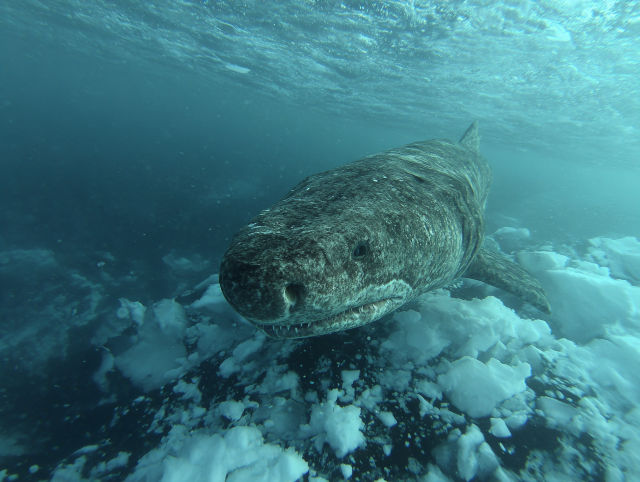
Dorota Skowronska-Krawczyk sits in her office, her gaze fixed on the computer monitor in front of her. On the screen, a Greenland shark glides slowly through the dark, clouded waters of the Arctic Ocean. She points to the image as it plays. “You can see the eye move,” says the UC Irvine associate professor of physiology and biophysics. “It’s tracking the light. That’s what’s so fascinating.” What looks like a sluggish, indifferent animal reveals a subtle awareness that immediately challenges long-standing assumptions.

The video shows the world’s longest-living vertebrate: a thick, grey shark with a heavy body, small head and blunt snout. Its eyes appear opaque and lifeless, further obscured by a parasite attached to one eyeball. For years, scientists believed Greenland sharks were functionally blind, citing both the frequent presence of these parasites and the extremely dim, murky environment in which the animals live. Vision, it was assumed, was not necessary. Yet the deliberate movement of the eye towards light tells a different story, hinting at an unexpected sensory resilience.

New research led by Skowronska-Krawczyk is now reshaping what scientists understand about ageing, vision and longevity. Co-authored with Walter Salzburger and Lily G. Fogg from the University of Basel, the study examines Greenland shark vision through an evolutionary lens. Published in Nature Communications on 5 January, the findings suggest that these sharks rely on a powerful DNA repair mechanism that allows them to preserve retinal health over centuries. Some Greenland sharks are estimated to live for as long as 400 years, yet their eyes show no signs of retinal degeneration and appear finely adapted to extreme low-light conditions.

Skowronska-Krawczyk traces her interest in the Greenland shark’s visual system to a 2016 paper by marine biologist John Fleng Steffensen. That study noted how commonly parasites attach themselves to the sharks’ eyes, raising an evolutionary puzzle. “You don’t keep an organ you don’t need,” she explains. After watching numerous videos, she noticed something others had missed: the sharks actively moved their eyeballs towards light. That observation prompted a deeper investigation and ultimately led to the current study.

The sharks used in the research were caught between 2020 and 2024 using scientific long lines near the University of Copenhagen’s Arctic Station on Disko Island, Greenland. Their eyeballs were dissected, preserved and sent for analysis to Skowronska-Krawczyk’s lab. Emily Tom, a PhD student and physician-scientist in training, remembers opening the package to find a massive, centuries-old eyeball resting on dry ice. Used to working with mouse eyes, she had to adapt quickly. Through careful histological analysis, Tom found no signs of cell death and confirmed that rhodopsin, a protein crucial for low-light vision, remained active. For Skowronska-Krawczyk, these findings offer promising insights into how vision might be preserved as humans age.

More information: Lily G. Fogg et al, The visual system of the longest-living vertebrate, the Greenland shark, Nature Communications. DOI: 10.1038/s41467-025-67429-6

Journal information: Nature Communications Provided by University of California – Irvine

TAGGED:ageing vision
Share This Article
Email Copy Link Print
Previous Article Links Between Reproductive History and Biological Ageing
Next Article Tissue repair slows with age. These proteins help restore it.
Leave a Comment

Leave a Reply Cancel reply

Your email address will not be published. Required fields are marked *

Recent Posts

  • Socioeconomic Disadvantage Is Associated with Greater Physical Decline with Age
  • Early Life Adversity Leaves a Lasting Molecular Mark Across the Body
  • Growing Up Gets Easier With Time, New Research Suggests
  • Most Patients with Early Alzheimer’s Disease Seeking Anti-Amyloid Antibody Therapy Fall Short of Brain Health Guidelines
  • Strength in Motion: Muscles May Hold the Key to Protecting the Parkinson’s Brain

Tags

adolescents adverse effects ageing populations aging populations air pollution alzheimer disease amyloids anxiety artificial intelligence atopic dermatitis behavioral psychology biomarkers blood pressure body mass index brain cancer cancer research cardiology cardiovascular disease cardiovascular disorders caregivers children climate change clinical research cognition cognitive development cognitive disorders cognitive function cognitive neuroscience COVID-19 dementia depression diabetes diets discovery research disease control disease intervention disease prevention diseases and disorders environmental health epidemiology foods food science gender studies geriatrics gerontology gut microbiota health and medicine health care health care costs health care delivery heart disease heart failure home care human brain human health hypertension inflammation insomnia life expectancy life sciences longitudinal studies memory disorders menopause mental health metabolic disorders metabolism mortality rates neurodegenerative diseases neurological disorders neurology neuroscience nursing homes nutrients nutrition obesity older adults parkinsons disease physical exercise population studies preventive medicine psychiatric disorders psychological science psychological stress public health research impact risk assessment risk factors risk reduction skin sleep sleep apnea sleep disorders social interaction social research social sciences socioeconomics tobacco type 2 diabetes weight loss
August 2026
S M T W T F S
 1
2345678
9101112131415
16171819202122
23242526272829
3031  
« Jul    

This website is for information purpose only and is in no way intended to replace the advice, professional medical care, diagnosis or treatment of a doctor, therapist, dietician or nutritionist.

About | Contact | Cookie Policy | Digital Millennium Copyright Act Notice | Disclaimer | Privacy Policy | Terms of Service

You Might Also Like

Ageing Well

Research Reveals Adolescent Sports Boost Bone Health in Older Adults

By support
Ageing Well

The presence of particular lipids signals tissue ageing, which can be mitigated through regular exercise

By support
Ageing Well

Vibrant New Communities: Rejuvenating Neighbourhoods Amidst an Ageing Population

By support
Ageing Well

Cycling as a Path to Longevity and Vitality in Older Adults, Especially for Nondrivers

By support
Living Well Study
Categories
  • Ageing Well
  • Brain Health
  • Healthy Diets
  • Mental Wellness
  • Physical Wellness
  • Wellness
LivingWellStudy
  • About
  • Contact
  • Cookie Policy
  • Digital Millennium Copyright Act Notice
  • Disclaimer
  • Privacy Policy
  • Terms of Service
Welcome Back!

Sign in to your account

Username or Email Address
Password

Lost your password?