Monday, 10 Aug 2026
  • My Feed
  • My Saves
  • History
  • Blog
Living Well Study
  • Blog
  • Ageing Well
  • Brain Health
  • Healthy Diets
  • Physical Wellness
  • Wellness
  • 🔥
  • Wellness
  • older adults
  • Living Well
  • Brain Health
  • dementia
  • public health
  • Ageing Well
  • Health and Medicine
  • alzheimer disease
  • physical exercise
Font ResizerAa
Living Well StudyLiving Well Study
  • My Saves
  • My Feed
  • History
Search
  • Pages
    • Home
    • Search Page
  • Personalized
    • Blog
    • My Feed
    • My Saves
    • History
  • Categories
    • Ageing Well
    • Brain Health
    • Healthy Diets
    • Mental Wellness
    • Physical Wellness
    • Wellness
Have an existing account? Sign In
Follow US
© 2022 Foxiz News Network. Ruby Design Company. All Rights Reserved.
Living Well Study > Blog > Science > The Changing Science of Ageing: New Perspectives on the Biology of Growing Older
Science

The Changing Science of Ageing: New Perspectives on the Biology of Growing Older

support
Share
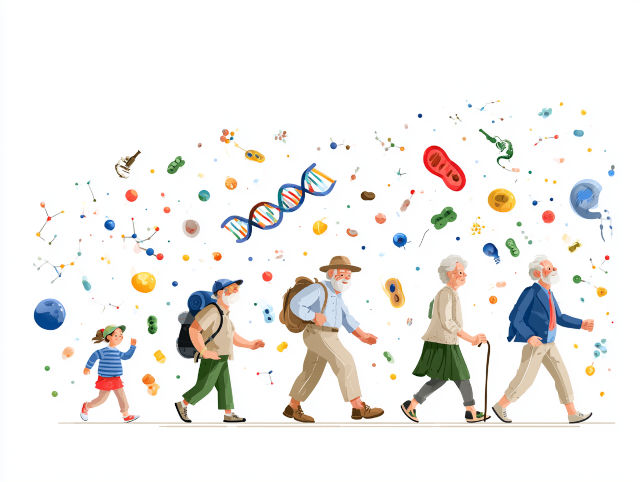
an older person walking through different stages of life
SHARE

As recently as the mid-20th century, ageing was described by Nobel Prize laureate Peter Medawar as “an unsolved problem in biology”. Today, researchers can analyse the activity of thousands of genes in individual cells and identify genetic variants linked to longevity. These studies identify molecular pathways that influence lifespan, and estimate biological age using epigenetic clocks. Experimental treatments such as senolytics, which target senescent cells, have also emerged. Yet despite these remarkable advances, scientists increasingly recognise that ageing is far more complex than once imagined. A new paper by Dr Piotr Chmielewski of Wroclaw Medical University argues that a single universal mechanism does not drive ageing, but rather the interaction of numerous biological processes operating across different levels of organisation.

Published in Biogerontology, the paper, Ageing was never a singular problem in biology: implications for mechanisms, measurements and interventions, challenges the search for a single cause of ageing. Recent discoveries have identified key pathways, including mTOR, AMPK, FOXO and IGF-1, that regulate growth, metabolism and lifespan. At the same time, advances in DNA sequencing have made it possible to study ageing at the level of individual cells. According to Dr Chmielewski, these discoveries have deepened understanding of specific mechanisms but have also highlighted how many overlapping processes contribute to ageing, making it increasingly difficult to view it as one unified biological phenomenon.

For decades, researchers proposed oxidative stress, DNA damage, telomere shortening, mitochondrial dysfunction, epigenetic changes and chronic inflammation as possible primary drivers of ageing. While each contributes to age-related decline, none alone explains the full picture. Instead, the evidence increasingly supports the idea that ageing reflects the gradual disorganisation of a complex biological system. This perspective is reflected in the widely adopted concept of the “hallmarks of ageing”, a collection of interconnected biological characteristics that collectively influence the ageing process rather than a single underlying cause.

The growing use of epigenetic clocks illustrates both the promise and the uncertainty of modern ageing research. These tools estimate biological age by analysing DNA methylation patterns and have been linked to disease risk and mortality. However, researchers still do not know whether they measure mechanisms that actively drive ageing or reflect biological changes caused by other processes. As Dr Chmielewski notes, determining whether reversing epigenetic changes would genuinely rejuvenate the body or merely alter a biomarker remains one of the field’s most important unanswered questions.

The paper also highlights the limitations of translating laboratory discoveries into human medicine. While many interventions extend the lifespan of mice by 20 to 30 per cent, mice differ fundamentally from humans in lifespan, metabolism, tissue organisation, immune function and repair mechanisms. As a result, therapies that appear highly effective in animal models often fail to deliver comparable benefits in people. Increasingly, researchers believe that youth may depend less on avoiding biological damage—which occurs throughout life—and more on maintaining the ability to repair tissues, adapt to stress and preserve normal function.

According to Dr Chmielewski, this shift in thinking may represent one of the most important developments in biogerontology. Rather than asking what causes ageing, researchers are increasingly asking how some organisms preserve resilience, adaptability and function despite continuous damage. From this perspective, interventions such as regular physical activity, calorie restriction and intermittent fasting may promote healthy ageing not by stopping ageing itself, but by strengthening the body’s capacity to adapt and recover. If this view proves correct, future research may focus less on finding a single cure for ageing and more on helping people maintain health and functional independence for as long as possible.

More information: Piotr Paweł Chmielewski, Ageing was never a singular problem in biology: implications for mechanisms, measurements and interventions, Biogerontology. DOI: 10.1007/s10522-026-10436-x

Journal information: Biogerontology Provided by Wroclaw Medical University

TAGGED:ageing populationsgerontology
Share This Article
Email Copy Link Print
Previous Article Financial Instability Associated with Faster Brain Ageing
Next Article Why Keeping a Doctor Is Becoming Harder
Leave a Comment

Leave a Reply Cancel reply

Your email address will not be published. Required fields are marked *

Recent Posts

  • Obesity and Ageing May Share Common Biological Pathways
  • Unsafe Living Environments Elevate Fall Risk for Seniors
  • Optimizing Blood Pressure Control: A New Strategy
  • Study Highlights How Social Inequality Hinders Physical Activity
  • Beyond Connection: The Mental Health Impact of Smartphones on Older Adults

Tags

adolescents adverse effects ageing populations aging populations air pollution alzheimer disease amyloids anxiety artificial intelligence atopic dermatitis behavioral psychology biomarkers blood pressure body mass index brain cancer cancer research cardiology cardiovascular disease cardiovascular disorders caregivers children climate change clinical research cognition cognitive development cognitive disorders cognitive function cognitive neuroscience COVID-19 dementia depression diabetes diets discovery research disease control disease intervention disease prevention diseases and disorders environmental health epidemiology foods food science gender studies geriatrics gerontology gut microbiota health and medicine health care health care costs health care delivery heart disease heart failure home care human brain human health hypertension inflammation insomnia life expectancy life sciences longitudinal studies memory disorders menopause mental health metabolic disorders metabolism mortality rates neurodegenerative diseases neurological disorders neurology neuroscience nursing homes nutrients nutrition obesity older adults parkinsons disease physical exercise population studies preventive medicine psychiatric disorders psychological science psychological stress public health research impact risk assessment risk factors risk reduction skin sleep sleep apnea sleep disorders social interaction social research social sciences socioeconomics tobacco type 2 diabetes weight loss
August 2026
S M T W T F S
 1
2345678
9101112131415
16171819202122
23242526272829
3031  
« Jul    

This website is for information purpose only and is in no way intended to replace the advice, professional medical care, diagnosis or treatment of a doctor, therapist, dietician or nutritionist.

About | Contact | Cookie Policy | Digital Millennium Copyright Act Notice | Disclaimer | Privacy Policy | Terms of Service

You Might Also Like

Physical Wellness

Routine physical activity can decelerate the progression of bone density loss

By support
Brain Health

Engaging in Games, Puzzles, and Reading May Delay Cognitive Deterioration in the Elderly, Including Those with Mild Cognitive Impairment

By support
Wellness

Evaluation of the Economic Effects of Alternative Healthcare Delivery Methods for Elderly Patients in Emergency Departments

By support
Science

New Study Reveals Way to Watch and Reverse Key Chemical Process Linked to Alzheimer’s

By support
Living Well Study
Categories
  • Ageing Well
  • Brain Health
  • Healthy Diets
  • Mental Wellness
  • Physical Wellness
  • Wellness
LivingWellStudy
  • About
  • Contact
  • Cookie Policy
  • Digital Millennium Copyright Act Notice
  • Disclaimer
  • Privacy Policy
  • Terms of Service
Welcome Back!

Sign in to your account

Username or Email Address
Password

Lost your password?