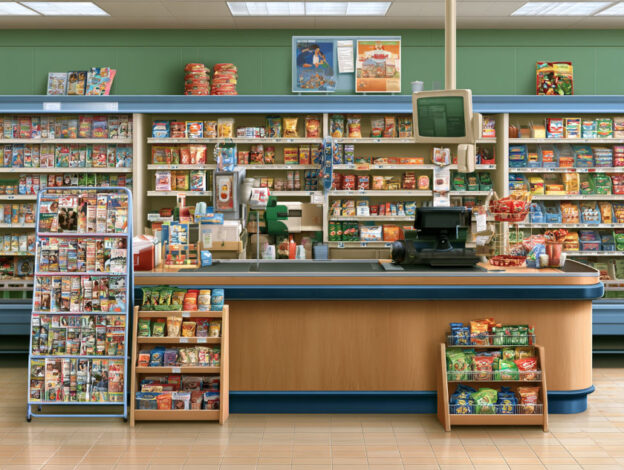
A healthy checkout policy introduced in Berkeley, California, appears to be changing what shoppers buy. A new study found that the policy was linked to substantial declines in soda sales and reduced purchases of small-package candy in supermarkets, while also encouraging sales of healthier snacks. Researchers say, however, that strong enforcement is essential for achieving lasting public health benefits.
In March 2021, Berkeley became the first city in the world to prohibit sugary beverages and snacks from being displayed in checkout lanes at supermarkets, drug stores and mass-market retailers. Checkout areas have traditionally been prime locations for candy, chocolate and sugary drinks, encouraging impulse purchases as customers wait in line.
Researchers from Boston University School of Public Health and the University of California, Davis examined how Berkeley’s healthy checkout ordinance affected purchasing behaviour. Published in The Lancet Public Health, the study compared sales in Berkeley with those in Davis, Oakland and Sacramento before and after the ordinance was implemented in 2021 and became enforceable in January 2022.
The results varied by product and store type. Soda sales declined substantially following implementation and enforcement, while sales of small-package candy fell significantly in supermarkets after enforcement began. Total candy sales did not decline overall, but purchases of healthier, lower-sugar snacks such as small packages of nuts and seeds increased. Supermarkets, which showed the strongest compliance, experienced the greatest reductions in sugary product sales, while less-compliant drug stores saw little change.
“Through bright lighting, colorful packaging, and eye-level placement, checkout lanes are intentionally designed to draw shoppers’ attention to snacks and beverages with high added sugar,” said study co-lead author Dr. Justin White of Boston University. He said the findings suggest healthy checkout policies can reduce impulse purchases and encourage healthier choices, but active enforcement is necessary to produce meaningful and sustained changes.
The findings build on earlier research showing that candy and sugar-sweetened beverages were among the most common products displayed at checkouts. Previous assessments found that the amount of added sugar in checkout foods and beverages in Berkeley declined by 70 per cent during the first year after the ordinance was introduced. The latest study indicates that changes in product placement can also influence what consumers actually purchase.
Researchers analysed retail scanner data from 71 stores between March 2019 and December 2023, examining sales of candy, soda, nuts, seeds and bottled water. By analysing candy and soda according to package size, they could determine whether the ordinance reduced purchases of smaller items typically displayed at checkout. However, stores remained free to move sugary products elsewhere or promote them through seasonal displays.
The researchers argue that healthy checkout policies could have a greater impact when combined with broader measures. “No single policy alone can address the problems with our food system,” said senior author Dr. Jennifer Falbe of UC Davis. Expanding healthy-product placement rules and combining them with front-of-package nutrition labels, sugary-drink taxes and subsidies for healthier foods could further improve diet quality and help consumers make healthier choices.
More information: Justin White et al, Effects of a healthy checkout ordinance on the sale of soft drinks and confectionery in Berkeley, CA, USA: a quasi-experimental study, The Lancet Public Health. DOI: 10.1016/S2468-2667(26)00169-6
Journal information: The Lancet Public Health Provided by Boston University School of Public Health