Sunday, 16 Aug 2026
  • My Feed
  • My Saves
  • History
  • Blog
Living Well Study
  • Blog
  • Ageing Well
  • Brain Health
  • Healthy Diets
  • Physical Wellness
  • Wellness
  • 🔥
  • Wellness
  • older adults
  • Living Well
  • Brain Health
  • dementia
  • public health
  • Ageing Well
  • Health and Medicine
  • ageing populations
  • alzheimer disease
Font ResizerAa
Living Well StudyLiving Well Study
  • My Saves
  • My Feed
  • History
Search
  • Pages
    • Home
    • Search Page
  • Personalized
    • Blog
    • My Feed
    • My Saves
    • History
  • Categories
    • Ageing Well
    • Brain Health
    • Healthy Diets
    • Mental Wellness
    • Physical Wellness
    • Wellness
Have an existing account? Sign In
Follow US
© 2022 Foxiz News Network. Ruby Design Company. All Rights Reserved.
Living Well Study > Blog > Ageing Well > Investigations reveal that tai chi excels over standard exercises in boosting seniors’ mobility and stability
Ageing Well

Investigations reveal that tai chi excels over standard exercises in boosting seniors’ mobility and stability

support
Share
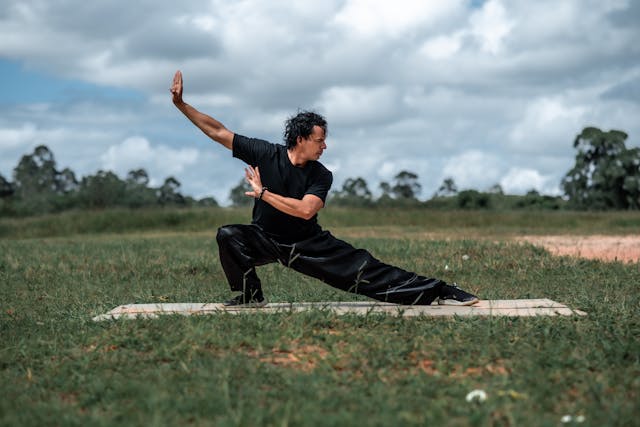
Man in Black Outfit Practicing Tai-chi. Photo by Hebert Santos: https://www.pexels.com/photo/man-in-black-outfit-practicing-tai-chi-8461244/
SHARE

Despite the recognised advantages of tai chi for enhancing functional mobility and balance in older adults, the breadth of these benefits has been obscured by the considerable variability in the methodologies and findings of existing research. However, a recent comprehensive review and meta-analysis of the literature confirms that tai chi offers significant improvements in these areas for relatively healthy older adults, surpassing the outcomes associated with traditional exercises.

This analysis delved into 12 studies involving 2,901 participants, uncovering evidence of tai chi’s efficacy. Notably, compared to standard exercise regimens, tai chi participants demonstrated superior performance in several key metrics:

– They completed a 50-foot walk an average of 1.84 seconds quicker.

– Their ability to maintain a one-leg stance was extended by 6 seconds with open eyes and by 1.65 seconds with closed eyes.

– Performance in the timed-up-and-go test, which assesses speed in standing, walking, and sitting, improved by 0.18 points.

– Significant advancements were observed in the functional reach test, with a standardised mean difference of 0.7, underscoring an enhanced capacity for reaching and conducting daily tasks.

Further insights from secondary analyses indicated that tai chi programs of relatively short duration (less than 20 weeks) and low total engagement time (up to 24 hours), particularly those centred on the Yang style, were incredibly influential in fostering better mobility and balance when compared to conventional exercises.

Brad Manor, PhD, the director of the Mobility and Falls Program at Hebrew SeniorLife’s Hinda and Arthur Marcus Institute for Aging Research, along with associate professor of medicine at Harvard Medical School and Beth Israel Deaconess Medical Center, and Junhong Zhou, PhD, assistant scientist II at the same institute and assistant professor of medicine at Harvard Medical School and Beth Israel Deaconess Medical Center, expressed their enthusiasm about the findings. They highlighted the compelling evidence from the review and meta-analysis for tai chi as a more effective method to enhance functional mobility and balance in relatively healthy older adults than traditional exercises.

Bao Dapeng, a professor at Beijing Sport University, emphasised the implications of this research for the design of future rehabilitative programs targeting balance and mobility improvement in older adults. He suggested that tai chi warrants serious consideration as a component of these initiatives.

The researchers associated with this study hail from prestigious institutions, including the Hebrew SeniorLife Hinda and Arthur Marcus Institute for Aging Research, Harvard Medical School, the School of Sports Medicine and Physical Therapy at Beijing Sport University, the Sports Coaching College at Beijing Sport University, the College of Physical Education and Health Science at Chongqing Normal University, and the China Institute of Sport and Health Science at Beijing Sport University, adding considerable weight to their conclusions.

More information: Brad Manor et al, The comparison between effects of Taichi and conventional exercise on functional mobility and balance in healthy older adults: a systematic literature review and meta-analysis, Frontiers. DOI: 10.3389/fpubh.2023.1281144

Journal information: Frontiers Provided by Hebrew SeniorLife and Hinda and Arthur Marcus Institute For Aging Research

TAGGED:older adultstai chi
Share This Article
Email Copy Link Print
Previous Article According to the brain, not all itches are the same
Next Article Residing in verdant areas may enhance bone density and reduce the risk of osteoporosis
Leave a Comment

Leave a Reply Cancel reply

Your email address will not be published. Required fields are marked *

Recent Posts

  • Socioeconomic Disadvantage Is Associated with Greater Physical Decline with Age
  • Early Life Adversity Leaves a Lasting Molecular Mark Across the Body
  • Growing Up Gets Easier With Time, New Research Suggests
  • Most Patients with Early Alzheimer’s Disease Seeking Anti-Amyloid Antibody Therapy Fall Short of Brain Health Guidelines
  • Strength in Motion: Muscles May Hold the Key to Protecting the Parkinson’s Brain

Tags

adolescents adverse effects ageing populations aging populations air pollution alzheimer disease amyloids anxiety artificial intelligence atopic dermatitis behavioral psychology biomarkers blood pressure body mass index brain cancer cancer research cardiology cardiovascular disease cardiovascular disorders caregivers children climate change clinical research cognition cognitive development cognitive disorders cognitive function cognitive neuroscience COVID-19 dementia depression diabetes diets discovery research disease control disease intervention disease prevention diseases and disorders environmental health epidemiology foods food science gender studies geriatrics gerontology gut microbiota health and medicine health care health care costs health care delivery heart disease heart failure home care human brain human health hypertension inflammation insomnia life expectancy life sciences longitudinal studies memory disorders menopause mental health metabolic disorders metabolism mortality rates neurodegenerative diseases neurological disorders neurology neuroscience nursing homes nutrients nutrition obesity older adults parkinsons disease physical exercise population studies preventive medicine psychiatric disorders psychological science psychological stress public health research impact risk assessment risk factors risk reduction skin sleep sleep apnea sleep disorders social interaction social research social sciences socioeconomics tobacco type 2 diabetes weight loss
August 2026
S M T W T F S
 1
2345678
9101112131415
16171819202122
23242526272829
3031  
« Jul    

This website is for information purpose only and is in no way intended to replace the advice, professional medical care, diagnosis or treatment of a doctor, therapist, dietician or nutritionist.

About | Contact | Cookie Policy | Digital Millennium Copyright Act Notice | Disclaimer | Privacy Policy | Terms of Service

You Might Also Like

Wellness

Predicting Long-Term Care Needs in Older Adults Through Body Composition Analysis

By support
Wellness

Numerous older adults who are provided with home care do not receive palliative care before passing away

By support
Ageing Well

Listening Devices: Advantages and Obstacles of Voice Assistants for Senior Citizens

By support
Mental Wellness

Older adults with a history of stroke are at a heightened risk of experiencing depression induced by the pandemic

By support
Living Well Study
Categories
  • Ageing Well
  • Brain Health
  • Healthy Diets
  • Mental Wellness
  • Physical Wellness
  • Wellness
LivingWellStudy
  • About
  • Contact
  • Cookie Policy
  • Digital Millennium Copyright Act Notice
  • Disclaimer
  • Privacy Policy
  • Terms of Service
Welcome Back!

Sign in to your account

Username or Email Address
Password

Lost your password?