Sunday, 16 Aug 2026
  • My Feed
  • My Saves
  • History
  • Blog
Living Well Study
  • Blog
  • Ageing Well
  • Brain Health
  • Healthy Diets
  • Physical Wellness
  • Wellness
  • 🔥
  • Wellness
  • older adults
  • Living Well
  • Brain Health
  • dementia
  • public health
  • Ageing Well
  • Health and Medicine
  • ageing populations
  • alzheimer disease
Font ResizerAa
Living Well StudyLiving Well Study
  • My Saves
  • My Feed
  • History
Search
  • Pages
    • Home
    • Search Page
  • Personalized
    • Blog
    • My Feed
    • My Saves
    • History
  • Categories
    • Ageing Well
    • Brain Health
    • Healthy Diets
    • Mental Wellness
    • Physical Wellness
    • Wellness
Have an existing account? Sign In
Follow US
© 2022 Foxiz News Network. Ruby Design Company. All Rights Reserved.
Living Well Study > Blog > Health and Medicine > Major Cancers More Prevalent in Economically Disadvantaged Japanese Communities, 16-Year Study Finds
Health and Medicine

Major Cancers More Prevalent in Economically Disadvantaged Japanese Communities, 16-Year Study Finds

support
Share
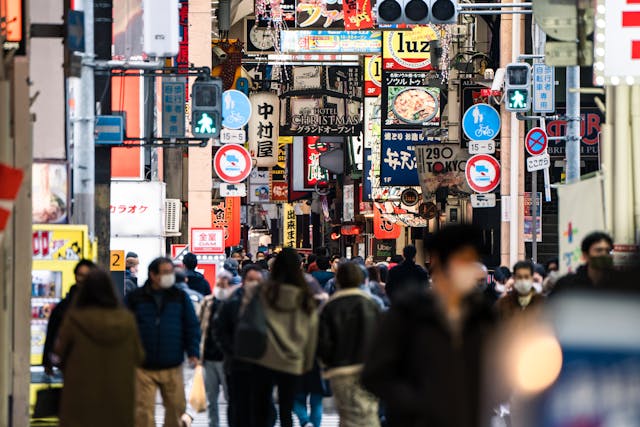
Photo by Satoshi Hirayama: https://www.pexels.com/photo/people-walking-on-the-street-10698558/
SHARE

A comprehensive analysis of sixteen years of data on Japanese adults has revealed that five common cancers—lung, stomach, colorectal, liver, and breast—occur more frequently in communities characterised by lower employment rates or reduced income levels.

Cancer continues to impose a significant burden due to its high morbidity and mortality, making effective prevention strategies a public health priority. A growing body of evidence indicates that certain cancer types are closely linked to individual socioeconomic status (SES), with disparities in both incidence and mortality reflecting broader social inequalities. For example, individuals with lower SES are disproportionately affected by lung cancer, a trend that may be partially attributed to higher smoking prevalence within these populations. Education level also plays a pivotal role in cancer outcomes, as those with higher levels of education are more likely to avoid health-risk behaviours, such as tobacco use.

While several prevention initiatives targeting individuals with low SES have been implemented—such as screening and treatment programmes for breast and cervical cancer aimed at low-income or uninsured women—participation rates in these efforts remain suboptimal. Studies have consistently shown that individuals with lower income or educational attainment are less likely to engage in cancer screening. These low participation rates are influenced not only by direct financial barriers but also by contextual regional factors, including limited access to healthcare services in socioeconomically disadvantaged areas.

In contrast to approaches focused solely on individual SES, interventions that consider broader community-level circumstances have, in some instances, yielded more successful outcomes. For example, culturally tailored screening initiatives and community-based hepatitis B testing programmes have demonstrated improved participation rates and better health outcomes. These findings suggest that regional SES disparities—pervasive within many countries—must be taken into account when designing public health interventions. Populations with similar socioeconomic conditions tend to cluster geographically, shaping the overall SES of a community. This clustering influences the development of local social systems, which in turn affect health outcomes and access to preventive services.

As such, the SES of a community and the supporting social infrastructure can significantly impact both the onset and progression of disease. Demonstrating the relationship between community-level SES and cancer is therefore essential for informing more effective and equitable prevention strategies. By aligning interventions with the socioeconomic characteristics of specific regions, policymakers and public health professionals can better position themselves to reduce cancer disparities and improve population health outcomes at both the individual and community levels.

More information: Satoru Kanda et al, Association between socioeconomic background and cancer: An ecological study using cancer registry and various community socioeconomic status indicators in Kanagawa, Japan, PLOS One. DOI: 10.1371/journal.pone.0326895

Journal information: PLOS One Provided by PLOS

TAGGED:cancerhuman health
Share This Article
Email Copy Link Print
Previous Article Adult Survivors of Childhood Cancer Face Heightened Risk of Severe COVID-19 Outcomes
Next Article USC Research Finds Mindfulness Meditation Enhances Focus Across All Age Groups
Leave a Comment

Leave a Reply Cancel reply

Your email address will not be published. Required fields are marked *

Recent Posts

  • Socioeconomic Disadvantage Is Associated with Greater Physical Decline with Age
  • Early Life Adversity Leaves a Lasting Molecular Mark Across the Body
  • Growing Up Gets Easier With Time, New Research Suggests
  • Most Patients with Early Alzheimer’s Disease Seeking Anti-Amyloid Antibody Therapy Fall Short of Brain Health Guidelines
  • Strength in Motion: Muscles May Hold the Key to Protecting the Parkinson’s Brain

Tags

adolescents adverse effects ageing populations aging populations air pollution alzheimer disease amyloids anxiety artificial intelligence atopic dermatitis behavioral psychology biomarkers blood pressure body mass index brain cancer cancer research cardiology cardiovascular disease cardiovascular disorders caregivers children climate change clinical research cognition cognitive development cognitive disorders cognitive function cognitive neuroscience COVID-19 dementia depression diabetes diets discovery research disease control disease intervention disease prevention diseases and disorders environmental health epidemiology foods food science gender studies geriatrics gerontology gut microbiota health and medicine health care health care costs health care delivery heart disease heart failure home care human brain human health hypertension inflammation insomnia life expectancy life sciences longitudinal studies memory disorders menopause mental health metabolic disorders metabolism mortality rates neurodegenerative diseases neurological disorders neurology neuroscience nursing homes nutrients nutrition obesity older adults parkinsons disease physical exercise population studies preventive medicine psychiatric disorders psychological science psychological stress public health research impact risk assessment risk factors risk reduction skin sleep sleep apnea sleep disorders social interaction social research social sciences socioeconomics tobacco type 2 diabetes weight loss
August 2026
S M T W T F S
 1
2345678
9101112131415
16171819202122
23242526272829
3031  
« Jul    

This website is for information purpose only and is in no way intended to replace the advice, professional medical care, diagnosis or treatment of a doctor, therapist, dietician or nutritionist.

About | Contact | Cookie Policy | Digital Millennium Copyright Act Notice | Disclaimer | Privacy Policy | Terms of Service

You Might Also Like

Health and Medicine

Global disease-spanning atlas decodes molecular fingerprints of human health and ageing

By support
Public Health

Residential Proximity to Nuclear Plants Associated with Greater Cancer Mortality

By support
Public Health

Ultra-Processed Foods Tied to Elevated Heart and Stroke Risk, FAU Reports

By support
Health and Medicine

Chronic Stress and Cancer Progression

By support
Living Well Study
Categories
  • Ageing Well
  • Brain Health
  • Healthy Diets
  • Mental Wellness
  • Physical Wellness
  • Wellness
LivingWellStudy
  • About
  • Contact
  • Cookie Policy
  • Digital Millennium Copyright Act Notice
  • Disclaimer
  • Privacy Policy
  • Terms of Service
Welcome Back!

Sign in to your account

Username or Email Address
Password

Lost your password?