
Monthly Archives: April 2026

Breakthrough study finds strong genetic risk factor for rare dementia

Researchers at the VIB and University of Antwerp have identified a major genetic risk factor for a rare form of frontotemporal dementia, marking an important advance in understanding this complex condition. The discovery, reported in Nature Genetics, provides a crucial biological entry point into a disease subtype that has long been difficult to investigate. This insight has the potential to improve diagnostic precision and patient stratification while opening new directions for the development of targeted treatments tailored to specific disease mechanisms.

Frontotemporal dementia is less common and less widely recognised than Alzheimer’s disease, yet it is one of the leading causes of dementia in younger adults. The condition primarily affects brain regions responsible for behaviour, personality, decision-making, and language, meaning that early symptoms often manifest as changes in social conduct, reduced empathy, impulsivity, or language difficulties. These symptoms can appear long before memory problems become evident, often complicating early diagnosis and contributing to delays that may affect careers, relationships, and overall quality of life.

One specific subtype, known as aFTLD-U, is characterised by atypical frontotemporal lobar degeneration and the presence of ubiquitin-positive inclusions, which distinguish it from other forms of frontotemporal dementia. Individuals with this subtype may begin to exhibit behavioural symptoms as early as their thirties or forties, yet a definitive diagnosis has historically been possible only through post-mortem examination. Its rarity has made large-scale study challenging, even as the need to distinguish between different subtypes has become increasingly important, given that they may respond differently to emerging therapies.

The research team undertook a global effort to assemble a sufficiently large dataset of confirmed aFTLD-U cases. Using a genome-wide association approach across dozens of cases and thousands of controls, combined with advances in long-read sequencing technology, they identified a repeat expansion located within an intron of the GOLGA8A gene. This repeat varies in both length and sequence composition, with longer expansions showing a particularly strong association with the disease. Notably, this represents the first instance of a disease-linked repeat involving only two nucleotides, highlighting a previously underappreciated form of genetic variation.

The strength of the genetic signal observed in this study is striking, especially when compared with findings from larger studies of more common conditions. Long-read sequencing proved essential for detecting and characterising this complex repeat region, as traditional short-read methods are often unable to resolve such intricate genomic structures, particularly in areas like GOLGA8A that exist in multiple copies across the genome. This technological advantage enabled researchers to uncover a level of detail that would otherwise have remained hidden.

Although the functional impact of this repeat expansion is not yet fully understood, its presence in a substantial proportion of cases suggests a fundamental role in disease biology. Ongoing work is focused on determining how this genetic feature influences gene regulation and cellular processes in vulnerable brain regions. The findings also reinforce a broader perspective that even conditions considered sporadic may have significant genetic contributions. Identifying such factors offers a pathway towards earlier diagnosis and more precise classification, and ultimately supports the development of therapies that target the underlying biological mechanisms of disease.

More information: Wouter De Coster et al, A repeat expansion in GOLGA8A is a major risk factor for atypical frontotemporal lobar degeneration with ubiquitin-positive inclusions, Nature Genetics. DOI: 10.1038/s41588-026-02537-7

Journal information: Nature Genetics Provided by Vlaams Instituut voor Biotechnologie
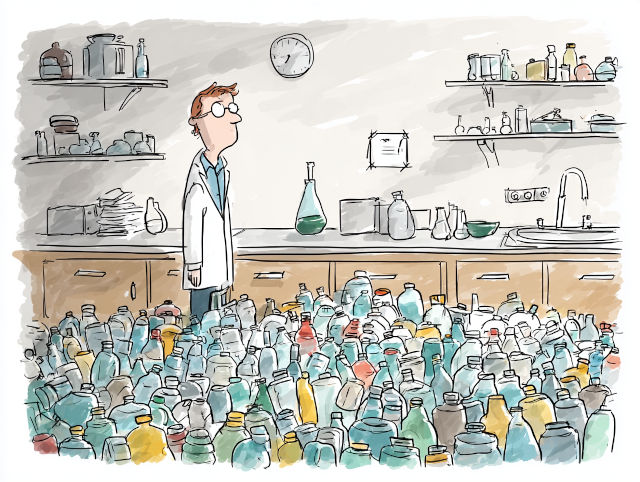
From Pollution to Prescription: Plastic Bottles Become Parkinson’s Drug

A pioneering study has demonstrated that a drug used to treat Parkinson’s disease can be produced from waste plastic bottles using an innovative biological method. The research introduces a novel approach that transforms post-consumer plastic into L-DOPA, a key frontline medication for managing the condition. By leveraging engineered bacteria, scientists have created a process that not only addresses plastic waste but also contributes to sustainable pharmaceutical production.

At the centre of this breakthrough is the use of bacteria to convert polyethylene terephthalate (PET), a common plastic found in food and drink packaging, into valuable chemical compounds. Researchers at the University of Edinburgh modified E. coli bacteria to carry out a sequence of biological reactions. These reactions ultimately convert PET-derived molecules into L-DOPA, marking the first time a natural biological system has been engineered to transform plastic waste into a therapeutic drug for a neurological condition.

The process begins with breaking down PET, of which approximately 50 million tonnes are produced annually, into its core chemical component, terephthalic acid. This intermediate compound is then processed by the engineered bacteria through a series of enzymatic steps, resulting in the production of L-DOPA. The approach effectively captures carbon embedded in plastic waste and repurposes it into a high-value medical product, demonstrating a creative and practical application of engineering biology.

Compared with conventional pharmaceutical manufacturing, which typically depends on finite fossil fuels, this method offers a more sustainable alternative. Plastic waste, often derived from oil and gas, is repurposed rather than discarded, reducing reliance on non-renewable resources. Existing recycling methods for PET remain imperfect and continue to contribute to global pollution, making this new technique particularly significant as a complementary solution that adds value while reducing environmental harm.

Beyond its immediate application in producing Parkinson’s medication, the innovation signals broader possibilities for a bio-upcycling industry. The same principles could potentially be applied to create a wide range of products, including flavourings, fragrances, cosmetics, and industrial chemicals. By demonstrating the feasibility of converting waste into useful and valuable outputs, the study highlights how biological systems can be harnessed to reshape manufacturing and resource use in more sustainable ways.

The findings, published in Nature Sustainability, were supported by organisations including UK Research and Innovation. Researchers are now working to scale up the process, improve efficiency, and evaluate its environmental and economic viability for industrial use. As the technology advances, it may help redefine how society views waste—not as a problem to discard, but as a resource with untapped potential to support both environmental sustainability and human health.

More information: Benjamin Royer et al, Microbial upcycling of plastic waste to levodopa, Nature Sustainability. DOI: 10.1038/s41893-026-01785-z

Journal information: Nature Sustainability Provided by University of Edinburgh

New evidence connects brain immune cells to Alzheimer’s plaque growth

A new study led by researchers from VIB and KU Leuven reveals that immune cells in the brain known as microglia may actively promote the formation of plaques in Alzheimer’s disease. This challenges the long-standing assumption that these cells function solely as defenders that clear harmful buildup. The findings, recently published in Proceedings of the National Academy of Sciences, suggest that microglia may play a more complex and previously underappreciated role in disease development.

For decades, prevailing research has characterised microglia as protective cells tasked with removing amyloid plaques from the brain. However, this new work indicates that their role may be more paradoxical. According to co-senior author Joost Schymkowitz, microglia do not merely respond to plaque accumulation but may also contribute to it. Rather than plaques forming independently through spontaneous aggregation, the study suggests that microglial activity—while attempting to mitigate damage—may inadvertently amplify the very processes that drive plaque formation.

Alzheimer’s disease affects nearly 55 million people worldwide and is defined by the accumulation of toxic protein aggregates, commonly referred to as amyloid plaques, in the brain. These plaques are closely associated with neuronal damage, cognitive decline, and progressive dementia. Microglia have long been considered a key line of defence against this pathology and have therefore become a central focus of therapeutic strategies. Yet the new findings indicate that, particularly in earlier stages of the disease, microglia may also act as active contributors to plaque formation, prompting a reconsideration of current therapeutic approaches.

The research team demonstrated that microglia can transform soluble amyloid-beta proteins into structured fibrils with strong seeding activity. This seeding process is especially significant, as it allows a single aggregate to give rise to many more, accelerating disease progression. Notably, the fibrils generated by microglia resemble those found in the brains of patients, suggesting that cellular processes may play a more direct role in shaping disease pathology than previously understood.

Co-senior author Frederic Rousseau highlighted that these findings point to an additional, previously unrecognised function of microglia. Using seeding assays, the team showed that amyloid produced by cells more closely mimics patient-derived material and elicits biologically relevant responses. This represents an important advance, as it provides a model that better reflects the conditions occurring in human disease and may improve the relevance of experimental studies.

The study also underscores the limitations of traditional laboratory models, where amyloid plaques are typically formed under simplified conditions that differ significantly from those in patients. By developing approaches that generate plaques more representative of those observed in the human brain, researchers may gain deeper insight into the mechanisms of aggregation and identify more effective therapeutic targets. Importantly, while several experimental treatments aim to stimulate microglia to clear plaques, these new findings suggest that their effects may vary depending on the stage of the disease. This nuanced understanding could prove critical in refining future strategies for treating Alzheimer’s disease.

More information: Katerina Konstantoulea et al, Phagocytes as plaque catalysts: Human macrophages generate seeding-competent Aβ42 fibrils with cross-seeding activity, Proceedings of the National Academy of Sciences. DOI: 10.1073/pnas.2516774123

Journal information: Proceedings of the National Academy of Sciences Provided by Vlaams Instituut voor Biotechnologie

Daily Multivitamin Use Associated with Reduced Biological Ageing in COSMOS Study

An analysis led by investigators at Mass General Brigham has found that daily multivitamin use may slow biological ageing in older adults. Drawing on data from a large, randomised clinical trial, the researchers observed that two years of supplementation was associated with measurable reductions in biological ageing, with the greatest benefits seen among individuals who entered the study with signs of accelerated ageing.

Biological age refers to how quickly the body is ageing at a cellular level, which may differ from a person’s chronological age. In this study, researchers examined multiple indicators of biological ageing over two years and found that participants taking a daily multivitamin experienced a modest but meaningful slowing of this process. The effect was equivalent to approximately four months less biological ageing compared with those who did not receive the supplement.

The findings, published in Nature Medicine, contribute to a growing body of research focused not only on extending lifespan but also on improving healthspan—the number of years lived in good health. According to senior author Howard Sesso, the results are particularly notable given the accessibility and safety profile of multivitamins. The study highlights the potential for relatively simple interventions to support healthier ageing trajectories.

To assess biological ageing, the research team used epigenetic clocks, which estimate ageing based on patterns of DNA methylation—small chemical modifications that regulate gene activity and change over time. These markers are increasingly recognised as reliable indicators of ageing and are associated with risks of disease and mortality. The analysis included blood samples from 958 healthy participants with an average age of 70, all drawn from the larger COSMOS trial.

Participants in the trial were randomly assigned to one of four groups: multivitamin and cocoa extract, multivitamin and placebo, cocoa extract and placebo, or double placebo. Over the course of two years, researchers measured changes across five established epigenetic clocks. Compared with the placebo group, those taking a multivitamin showed consistent slowing across all five measures, with statistically significant improvements observed in the clocks most strongly linked to mortality risk.

Importantly, the benefits were most pronounced among individuals whose biological age exceeded their chronological age at baseline, suggesting that those already experiencing accelerated ageing may derive greater value from supplementation. While these findings are promising, further research is needed to determine whether these effects persist over time and how they translate into real-world health outcomes, such as improved cognition or reduced risk of chronic conditions.

More information: Sidong Li et al, Effects of daily multivitamin–multimineral and cocoa extract supplementation on epigenetic aging clocks in the COSMOS randomized clinical trial, Nature Medicine. DOI: 10.1038/s41591-026-04239-3

Journal information: Nature Medicine Provided by Mass General Brigham

Experts fine-tune genetic maps to trace DNA influences on human traits and disease susceptibility

Scientists have uncovered how specific genetic changes function inside cells to influence disease risk and a wide range of human health traits. By closely examining regions of DNA already linked to disease, the team produced high-resolution maps showing how individual DNA variants behave. This approach helps identify the exact changes that shape complex traits such as blood pressure, cholesterol levels, and blood sugar. Rather than broadly associating regions of the genome with disease, the study focuses on pinpointing the precise genetic differences that have real biological effects.

The research, published in Nature and led by teams from The Jackson Laboratory, the Broad Institute, and Yale University, addresses a long-standing challenge in human genetics. For many years, scientists have known that certain stretches of DNA are connected to disease, but these regions often contain many possible variants. This made it difficult to determine which specific changes were actually responsible. Testing each variant individually was slow and labour-intensive, limiting progress in understanding how genetic risk truly works.

To overcome this, the researchers used a large-scale experimental approach capable of analysing thousands of DNA variants at once. In total, they examined more than 220,000 previously identified genetic changes across five different cell types. This allowed them to clarify about 20 per cent of the targeted regions in the genome. By doing so, they revealed new insights into how these variants influence gene activity, offering a clearer picture of how genetic differences contribute to health outcomes and disease risk.

The study identified over 13,000 single-letter DNA changes that affect how strongly genes are expressed. While many of these variants act independently, the researchers found that about 11 per cent behave differently when combined with nearby variants. This suggests that some genetic effects are not simply additive but depend on specific combinations of changes working together. In some cases, these combinations were linked to lower levels of LDL cholesterol, while others appeared to influence genes related to blood pressure or developmental processes.

Another important finding highlights the value of studying genetic variation across diverse populations. The researchers identified a DNA variant linked to long-term blood sugar control that had been discovered mainly in people of European ancestry. Based on its biological behaviour, they predicted that similar variants in people of African ancestry would show comparable effects. Follow-up analysis confirmed this, demonstrating how understanding genetic mechanisms can improve equity in research and ensure that findings are relevant across different populations.

Although the study provides detailed insights into how many DNA variants regulate gene activity, it is only one step towards fully understanding disease. The human body contains many different tissues and cell types, and gene regulation can vary widely between them. Many genetic variants also remain untested. Even so, the findings offer valuable data that can strengthen future research, improve genetic risk prediction, and support the development of targeted therapies. By moving from broad associations to precise biological understanding, this work helps bridge a critical gap in human genetics.

More information: Layla Siraj et al, Functional dissection of complex trait variants at single-nucleotide resolution, Nature. DOI: 10.1038/s41586-026-10121-6

Journal information: Nature Provided by Jackson Laboratory

Fall Prevention Clinics: A Smart Investment in Older Adult Health

Falls remain one of the leading causes of injury and hospitalisation among older adults, creating considerable pressure on individuals, families, and the health-care system. Beyond the immediate physical harm, falls often trigger a cascade of complications, including loss of independence, increased reliance on caregivers, and transitions into long-term care. As populations age, the cumulative impact of falls is becoming an increasingly urgent public health and economic concern.

New research led by Jennifer Davis at the University of British Columbia, Okanagan, highlights a compelling solution. The findings demonstrate that investing in targeted fall prevention for older adults at high risk not only reduces injuries but also delivers substantial financial returns. In essence, relatively modest upfront investments can prevent far more costly downstream health-care use.

Dr Davis, a Tier 2 Canada Research Chair in Applied Health Economics and an associate professor in the Faculty of Management, specialises in evaluating the economic impact of clinical interventions. Her work integrates economic analysis into randomised controlled trials, examining both cost-effectiveness and cost-utility across areas such as falls prevention, cognitive health, and chronic disease management.

Her most recent study, published in Maturitas, presents a 12-month cost analysis of the Falls Prevention Clinic at Vancouver General Hospital. The results show that each dollar invested in the clinic generates meaningful financial and health returns. By intervening early—before additional falls, fractures, or complications occur—the clinic significantly reduces the need for emergency visits, hospital admissions, and long-term care placement.

The clinic is a referral-based, research-informed service designed for adults aged 65 and older who are at high risk of falling. Many patients arrive with a history of repeated falls—on average, three within the previous year. Through comprehensive risk assessments and tailored interventions, the clinic addresses underlying risk factors while supporting independence and mobility. A core component is a personalised exercise programme delivered by a physiotherapist, focusing on progressive strength and balance training proven to reduce falls.

The outcomes are striking. The programme reduced falls by 36 per cent and produced a return on investment estimated between 500 and 2,700 per cent. In a single year, the clinic generated nearly one million dollars in health-care savings while operating with relatively modest costs, including approximately $103,000 for physiotherapy staffing. These findings illustrate how targeted, evidence-based enhancements to existing care models can yield substantial clinical and economic benefits while reinforcing the importance of prevention in sustaining health systems.

More information: Jennifer C. Davis et al, Twelve-month cost analysis of a geriatrician-led falls prevention clinic in Canada, Maturitas. DOI: 10.1016/j.maturitas.2026.108862

Journal information: Maturitas Provided by University of British Columbia Okanagan campus