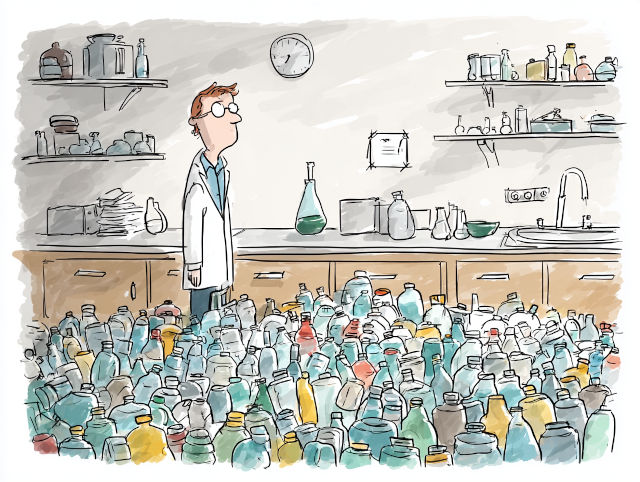
A pioneering study has demonstrated that a drug used to treat Parkinson’s disease can be produced from waste plastic bottles using an innovative biological method. The research introduces a novel approach that transforms post-consumer plastic into L-DOPA, a key frontline medication for managing the condition. By leveraging engineered bacteria, scientists have created a process that not only addresses plastic waste but also contributes to sustainable pharmaceutical production.
At the centre of this breakthrough is the use of bacteria to convert polyethylene terephthalate (PET), a common plastic found in food and drink packaging, into valuable chemical compounds. Researchers at the University of Edinburgh modified E. coli bacteria to carry out a sequence of biological reactions. These reactions ultimately convert PET-derived molecules into L-DOPA, marking the first time a natural biological system has been engineered to transform plastic waste into a therapeutic drug for a neurological condition.
The process begins with breaking down PET, of which approximately 50 million tonnes are produced annually, into its core chemical component, terephthalic acid. This intermediate compound is then processed by the engineered bacteria through a series of enzymatic steps, resulting in the production of L-DOPA. The approach effectively captures carbon embedded in plastic waste and repurposes it into a high-value medical product, demonstrating a creative and practical application of engineering biology.
Compared with conventional pharmaceutical manufacturing, which typically depends on finite fossil fuels, this method offers a more sustainable alternative. Plastic waste, often derived from oil and gas, is repurposed rather than discarded, reducing reliance on non-renewable resources. Existing recycling methods for PET remain imperfect and continue to contribute to global pollution, making this new technique particularly significant as a complementary solution that adds value while reducing environmental harm.
Beyond its immediate application in producing Parkinson’s medication, the innovation signals broader possibilities for a bio-upcycling industry. The same principles could potentially be applied to create a wide range of products, including flavourings, fragrances, cosmetics, and industrial chemicals. By demonstrating the feasibility of converting waste into useful and valuable outputs, the study highlights how biological systems can be harnessed to reshape manufacturing and resource use in more sustainable ways.
The findings, published in Nature Sustainability, were supported by organisations including UK Research and Innovation. Researchers are now working to scale up the process, improve efficiency, and evaluate its environmental and economic viability for industrial use. As the technology advances, it may help redefine how society views waste—not as a problem to discard, but as a resource with untapped potential to support both environmental sustainability and human health.
More information: Benjamin Royer et al, Microbial upcycling of plastic waste to levodopa, Nature Sustainability. DOI: 10.1038/s41893-026-01785-z
Journal information: Nature Sustainability Provided by University of Edinburgh