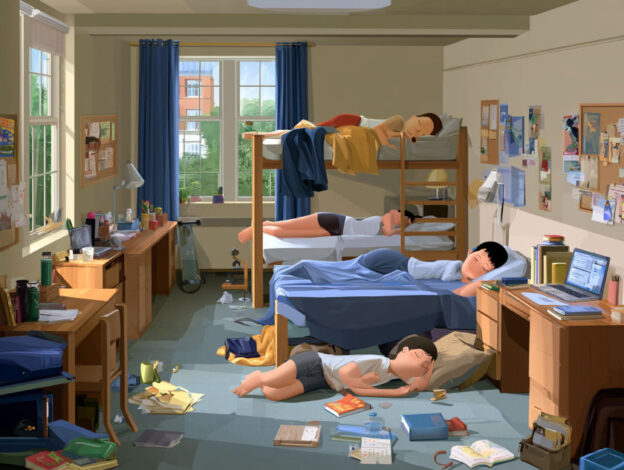
A bedroom that is too bright, noisy or hot could be quietly robbing young adults of a good night’s rest. New research from Penn State suggests that while these disturbances may not reduce the total amount of sleep young people get, they can significantly affect how well they sleep — with possible consequences for long-term health.
The study, recently published in Sleep Health, examined how bedroom conditions affected 372 young adults with an average age of 22. Researchers found that participants reported poorer sleep quality when their sleeping environment was too bright, hot or noisy. Surprisingly, these conditions did not appear to affect how long they slept, while bedrooms perceived as too cold showed no measurable effect on sleep.
“Young adults often have little control over their sleep environments,” said lead author Adwoa Dadzie, a doctoral candidate in biobehavioral health at Penn State. College dormitories, shared housing and small apartments can make it difficult to control noise, light and temperature. Yet repeated sleep disruptions could affect health and development over time, she said.
Sleep quality involves much more than simply counting hours. How quickly someone falls asleep, how often they wake during the night and how long they remain awake all contribute to whether sleep is restorative. Someone who spends many hours in bed but sleeps poorly may therefore feel less rested than someone who gets fewer hours of uninterrupted, high-quality sleep.
For 14 days, participants completed morning reports describing how well they had slept and whether noise, light or temperature had disturbed them. They also wore wrist sensors that objectively recorded when they slept, how long it took them to fall asleep and how much time they spent awake during the night.
The results showed different effects depending on the disturbance. When bedrooms were too bright, participants tended to fall asleep later, spend more time awake during the night and report poorer sleep quality. Environments that were too hot or noisy were also associated with poorer sleep, according to both participants’ reports and data collected by the wrist sensors.
Noise may be particularly troublesome because the brain does not completely tune out the surrounding environment during sleep. “Parts of our brain stay vigilant to our environment during sleep, especially noises of something that could be a threat,” said study co-author Orfeu Buxton, professor of biobehavioral health at Penn State. What counts as disruptive, however, differs from person to person. Someone accustomed to city noise, for example, may tolerate sounds that seem extremely loud to someone raised in a quieter setting.
The researchers said the findings offer some relatively simple ways to improve sleep, even for young adults who cannot change where they live. Ear plugs, noise-cancelling devices, sleep masks and blackout curtains may help reduce common disturbances. Developing good sleep habits during young adulthood could also pay dividends later in life, Buxton said, potentially reducing the effects of accumulated sleep loss as people grow older.
More information: Adwoa Dadzie et al, Daily associations between the physical environment and sleep among a diverse, national sample of young adults, Sleep Health. DOI: 10.1016/j.sleh.2026.07.010
Journal information: Sleep Health Provided by Penn State