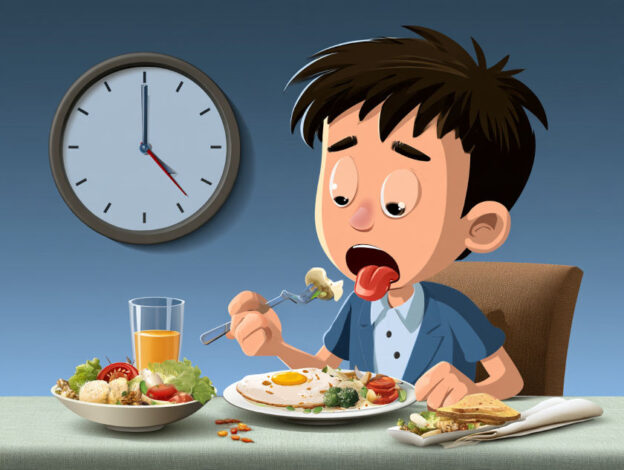
What if protecting your liver involves more than choosing healthy foods? The timing of your meals could also play an important role. New research suggests that eating late at night may increase the risk of liver disease, adding to growing evidence that when we eat can be just as important as what we eat.
Researchers at Oregon Health & Science University (OHSU) found that people who regularly ate after dinner or around bedtime were more likely to develop metabolic dysfunction-associated steatotic liver disease (MASLD), commonly known as fatty liver disease, and cirrhosis, a serious condition involving liver scarring. Published in Clinical Gastroenterology and Hepatology, the study found a 20% to 30% higher risk of liver disease among late-night eaters compared with those who avoided eating late.
Although previous studies have linked late-night snacking to obesity and cardiovascular disease, its potential impact on liver health has received less attention. “A few studies have hinted at this idea but this is among the first long-term analyses to explicitly draw the connection to fatty liver disease,” said lead author Dr. Robert Wilechansky, a hepatologist specialising in liver transplantation at OHSU.
To investigate, researchers examined dietary and lifestyle information from nearly 200,000 participants in three major US studies: the Nurses’ Health Study, Nurses’ Health Study II and Health Professionals Follow-up Study. Participants were grouped according to their reported eating habits, allowing researchers to examine associations between late-night eating and liver disease over time.
The findings are particularly significant because fatty liver disease affects as much as 30% of the US population. While most people with the condition do not develop cirrhosis, researchers believe adjusting meal times could offer a relatively simple way to support liver health without necessarily changing what people eat.
One possible explanation lies in the body’s internal clock, known as the circadian rhythm, which regulates sleep, metabolism and numerous biological processes. The liver is especially sensitive to these daily cycles. Eating when the body is preparing for sleep may interfere with its ability to process nutrients efficiently, potentially contributing to metabolic problems.
“We are seeing over and over again that the timing of behaviors, whether it’s sleep, eating, or exercise, really matters,” said co-author Dr. Andrew McHill, a sleep and circadian physiologist at OHSU. Previous research suggests that eating during the biological night can impair metabolism, potentially increasing the risk of obesity, diabetes and other health problems.
However, the researchers emphasise that the findings establish an association, not proof that late-night eating causes liver disease. The study relied on self-reported eating habits, which may introduce inaccuracies. OHSU researchers are now recruiting participants for a clinical study to determine whether eating earlier can improve liver health. Meanwhile, limiting food intake during the hours leading up to bedtime may be a practical habit worth considering.
More information: Robert Wilechansky et al, Late-Night Eating is Associated with MASLD and Cirrhosis: The Nurses’ Health Study and Health Professionals’ Follow-Up Study, Clinical Gastroenterology and Hepatology. DOI: 10.1016/j.cgh.2026.09.047
Journal information: Clinical Gastroenterology and Hepatology Provided by Oregon Health & Science University