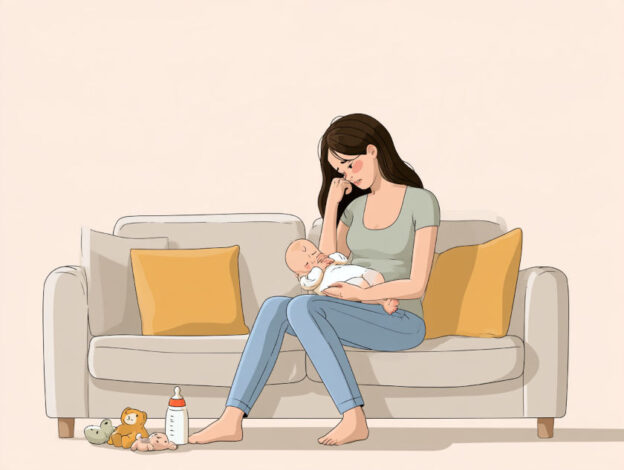
For many new mothers, seeking mental health support means navigating a difficult combination of work commitments, childcare responsibilities and financial pressures. A new study published in Women’s Health Issues reveals that nearly one in three postpartum women who need mental health care go without it, often because everyday obstacles stand between them and professional support.
Researchers analysed responses from more than 13,000 women participating in the 2022 Pregnancy Risk Assessment and Monitoring System, representing postpartum women across 16 US states. They found that 28.8% reported needing mental health care following childbirth, considerably higher than the 10–20% prevalence of postpartum mood and anxiety disorders estimated by previous studies relying on clinical screenings and diagnoses.
The findings carry particularly serious implications given that mental health conditions are the leading cause of pregnancy-related deaths in the United States. According to CDC data from 2017–2019, almost all these deaths are considered preventable through effective screening and access to appropriate care during pregnancy and after childbirth.
“Accessing mental health care after giving birth shouldn’t be a life and death issue,” said Rebecca Gourevitch, the study’s lead author and an assistant professor at the University of Maryland’s School of Public Health. “This study shows that in addition to current screening tools, it is also essential that women get the chance to report their own mental health needs.”
Among women unable to obtain the support they needed, three-quarters encountered logistical barriers. Finding time for appointments was particularly challenging, alongside difficulties securing affordable childcare, taking time off work and determining where to seek help. Although existing federal and state policies largely concentrate on expanding insurance coverage, reducing treatment costs and improving screening, the researchers argue that paid family leave, paid sick leave, affordable childcare and telemedicine deserve greater attention.
Allowing women to describe their own mental health needs may also uncover struggles that conventional screening methods overlook. Some women may not meet the clinical criteria for a mental health disorder, while others may lack access to professionals who can provide a diagnosis. Either way, their need for support remains real.
The researchers caution that even the reported figure of 28.8% could underestimate the true scale of the problem. Women covered by Medicaid, those without insurance, and Hispanic and Asian/Pacific Islander women were among the groups less likely to report needing care. Difficulty recognising symptoms, previous experiences of discrimination within healthcare settings and persistent mental health stigma may discourage women from acknowledging their struggles or seeking assistance.
“The biggest logistical barrier was not having time to get care, something every new mom can relate to,” said senior author Marie E. Thoma, an associate professor at the University of Maryland. “When you’re recovering from birth and caring for a newborn, your own care can be the first thing to go. This study helps pinpoint the barriers we can address to make mental health support fit into new moms’ lives.”
More information: Rebecca Gourevitch et al, Self-Reported Need for, Use of, and Barriers to Postpartum Mental Health Treatment, Women’s Health Issues. DOI: 10.1016/j.whi.2026.10.003
Journal information: Women’s Health Issues Provided by University of Maryland