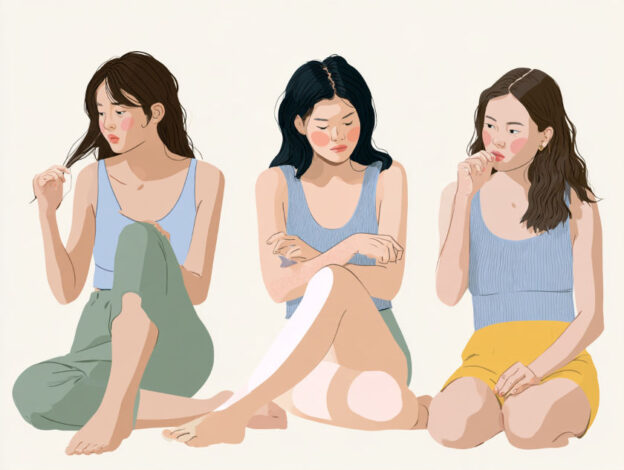
Hair pulling, skin picking and nail biting affect more than half of young people surveyed in a new University of Oxford study, with a substantial proportion finding these behaviours emotionally distressing. The research suggests that what are often dismissed as bad habits may reflect greater psychological difficulties, particularly among adolescents struggling with anxiety, depression or bullying.
Supported by the National Institute for Health and Care Research (NIHR) Biomedical Research Centre: Oxford Health, researchers surveyed more than 5,400 pupils aged 11 to 18, predominantly in Oxfordshire and Liverpool. As part of the wider OxWell Student Survey, participants were asked about their experiences of body-focused repetitive behaviours (BFRBs) and how much distress these behaviours caused them.
The findings, published in BMJ Mental Health, revealed that 58.5% of respondents reported at least one BFRB, while 13% experienced significant distress. Nail biting was the most prevalent behaviour (43.6%), followed by skin picking (31.3%) and hair pulling (14.5%). Among those reporting BFRBs, 17.6% experienced two or more. Hair pulling and skin picking caused considerably higher levels of distress, at 37% and 29% respectively, compared with 11% for nail biting.
Gender differences were particularly striking. Around one in four transgender and gender-diverse young people and one in six girls reported distressing BFRBs, compared with one in eighteen boys. Distressing behaviours were also reported by 34% of young people experiencing anxiety and depression and 27% of those who had experienced bullying.
Approximately one in five respondents identifying as autistic or having ADHD reported distressing BFRBs, roughly twice the rate among their peers without these conditions. However, researchers found that this disparity was largely explained by emotional difficulties and experiences of bullying rather than neurodivergence itself.
Lead author Professor Clare Mackay, from Oxford’s Department of Psychiatry, who has personally experienced BFRBs, warned that the distress associated with these behaviours frequently goes unnoticed. “BFRBs aren’t simply bad habits. They’re often signs that a young person is struggling. Asking whether someone ever pulls, picks or bites at themselves in a way that upsets them could open an important conversation. If we recognise these behaviours earlier, we have a much better chance of offering support before they become entrenched.”
Co-author Professor Polly Waite emphasised the importance of overcoming barriers to seeking help. “Shame and stigma can make it difficult for young people to talk about these behaviours or seek help.” Findings from the biennial OxWell Student Survey are shared with schools and local authorities to improve educational practices, mental health services and national wellbeing policies.
The research follows a separate qualitative study involving interviews with 12 adolescents who experienced hair pulling. Published in Psychology and Psychotherapy: Theory, Research and Practice, the study identified shame as a persistent emotion that could trigger, sustain and exacerbate the behaviour, further underscoring the need for greater awareness and appropriate psychological support.
More information: Clare Mackay et al, Body-focused repetitive behaviours are common, distressing and under-recognised: a cross-sectional study from the OxWell Student Survey, BMJ Mental Health. DOI: 10.1136/bmjment-2026-302871
Journal information: BMJ Mental Health Provided by University of Oxford