Wednesday, 19 Aug 2026
  • My Feed
  • My Saves
  • History
  • Blog
Living Well Study
  • Blog
  • Ageing Well
  • Brain Health
  • Healthy Diets
  • Physical Wellness
  • Wellness
  • 🔥
  • Wellness
  • older adults
  • Living Well
  • Brain Health
  • dementia
  • public health
  • Ageing Well
  • Health and Medicine
  • ageing populations
  • alzheimer disease
Font ResizerAa
Living Well StudyLiving Well Study
  • My Saves
  • My Feed
  • History
Search
  • Pages
    • Home
    • Search Page
  • Personalized
    • Blog
    • My Feed
    • My Saves
    • History
  • Categories
    • Ageing Well
    • Brain Health
    • Healthy Diets
    • Mental Wellness
    • Physical Wellness
    • Wellness
Have an existing account? Sign In
Follow US
© 2022 Foxiz News Network. Ruby Design Company. All Rights Reserved.
Living Well Study > Blog > Health and Medicine > Different Organs, Different Ageing Clocks: A Blood Test Could Reveal Yours
Health and Medicine

Different Organs, Different Ageing Clocks: A Blood Test Could Reveal Yours

support
Share
Different Organs, Different Ageing Clocks
SHARE

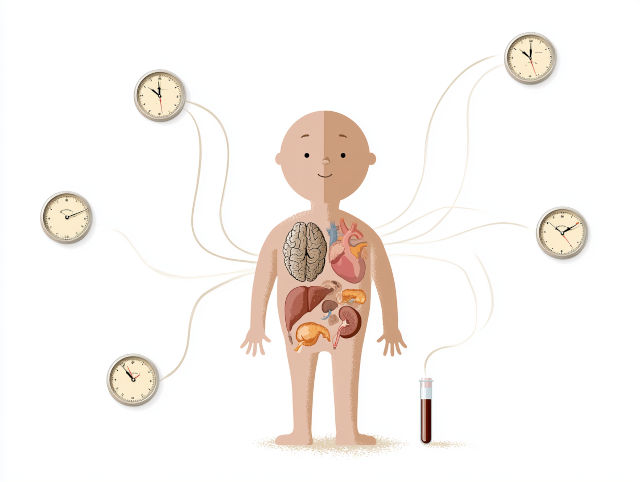
Researchers have developed artificial intelligence (AI)-based “tissue clocks” that can estimate the biological age of human organs from microscopic tissue images. Scientists at the CeMM Research Center for Molecular Medicine of the Austrian Academy of Sciences and the Ludwig Boltzmann Institute for Network Medicine (LBI-NetMed) at the University of Vienna analysed more than 25,000 tissue samples across 40 tissue types. Their findings, published in Nature Medicine, suggest that organs age at different rates and that some of these ageing patterns may even be detectable through blood samples.

People of the same chronological age can differ greatly in how old they appear or how well their bodies function. This raises an important question: do individual organs also age at different speeds? Led by CeMM and LBI-NetMed Principal Investigator André Rendeiro, the research team used AI to investigate how the microscopic architecture of human tissues changes with age, rather than focusing only on molecular markers such as DNA methylation or gene expression.

The researchers used data from the Genotype-Tissue Expression Project (GTEx), which collected samples from 983 individuals across 40 tissue types, including the brain, heart, lungs, pancreas, skin, and intestine. In total, they analysed 25,712 high-resolution tissue images, representing approximately 480 million individual image tiles, using advanced computer vision models.

The analysis showed that age was the strongest factor associated with changes in tissue appearance across all 40 tissue types. Building on this finding, the researchers developed “tissue clocks” capable of estimating biological age independently for different organs. These models predicted age with an average error of just 4.9 years. The estimated biological ages were also associated with established indicators of ageing, including shorter telomeres, tissue abnormalities, and the number of chronic diseases an individual had.

Importantly, the study found that organs do not follow the same ageing schedule. The lungs, kidneys, pancreas, and adrenal glands showed signs of accelerated ageing as early as ages 20 to 40, while other tissues followed more complex patterns later in life. The uterus showed a particularly notable change around menopause. Health conditions were also associated with organ-specific ageing: kidney failure was linked with accelerated ageing signals across several tissues, while diabetes had especially pronounced effects in the pancreas.

The tissue clocks also identified individuals whose organs appeared biologically older than their chronological age. According to the researchers, AI can detect subtle structural changes that may be difficult for the human eye to recognise, allowing ageing to be viewed as a process of architectural remodelling within tissues rather than simply the accumulation of molecular changes.

Because obtaining tissue samples is often invasive or impractical, the researchers investigated whether the same organ-ageing signals could be detected in blood. By linking blood-based gene expression with tissue age estimates from the same individuals, they developed predictors capable of estimating tissue-specific biological ageing using blood samples alone. This could potentially provide a much less invasive way to assess how individual organs are ageing.

The blood-based models detected ageing patterns associated with conditions including Alzheimer’s disease, Crohn’s disease, cystic fibrosis, vasculitis, diabetes, and stroke. Alzheimer’s disease produced its strongest ageing signal in the brain, while Crohn’s disease showed accelerated ageing across the gastrointestinal tract. Although further research is needed before these methods could become routine clinical tests, the findings suggest that combining AI, tissue imaging, and blood analysis could eventually help monitor organ health, detect disease-related changes earlier, and provide a more personalised picture of biological ageing.

More information: Ernesto Abila et al, Histological aging signatures for monitoring tissue-specific aging and disease, Nature Medicine. DOI: 10.1038/s41591-026-04566-5

Journal information: Nature Medicine Provided by CeMM Research Center for Molecular Medicine of the Austrian Academy of Sciences

TAGGED:ageing clocksbiological agebiological ageingorgan ageingtissue clocks
Share This Article
Email Copy Link Print
Previous Article Research Shows Waist Size Can Help Predict Health Risks
Leave a Comment

Leave a Reply Cancel reply

Your email address will not be published. Required fields are marked *

Recent Posts

  • Different Organs, Different Ageing Clocks: A Blood Test Could Reveal Yours
  • Research Shows Waist Size Can Help Predict Health Risks
  • PCB Contamination Detected in Chinese Tea, but Consumer Health Risks Remain Low
  • Socioeconomic Disadvantage Is Associated with Greater Physical Decline with Age
  • Early Life Adversity Leaves a Lasting Molecular Mark Across the Body

Tags

adolescents adverse effects ageing populations aging populations air pollution alzheimer disease amyloids anxiety artificial intelligence atopic dermatitis behavioral psychology biomarkers blood pressure body mass index brain cancer cancer research cardiology cardiovascular disease cardiovascular disorders caregivers children climate change clinical research cognition cognitive development cognitive disorders cognitive function cognitive neuroscience COVID-19 dementia depression diabetes diets discovery research disease control disease intervention disease prevention diseases and disorders environmental health epidemiology foods food science gender studies geriatrics gerontology gut microbiota health and medicine health care health care costs health care delivery heart disease heart failure home care human brain human health hypertension inflammation insomnia life expectancy life sciences longitudinal studies memory disorders menopause mental health metabolic disorders metabolism mortality rates neurodegenerative diseases neurological disorders neurology neuroscience nursing homes nutrients nutrition obesity older adults parkinsons disease physical exercise population studies preventive medicine psychiatric disorders psychological science psychological stress public health research impact risk assessment risk factors risk reduction skin sleep sleep apnea sleep disorders social interaction social research social sciences socioeconomics tobacco type 2 diabetes weight loss
August 2026
S M T W T F S
 1
2345678
9101112131415
16171819202122
23242526272829
3031  
« Jul    

This website is for information purpose only and is in no way intended to replace the advice, professional medical care, diagnosis or treatment of a doctor, therapist, dietician or nutritionist.

About | Contact | Cookie Policy | Digital Millennium Copyright Act Notice | Disclaimer | Privacy Policy | Terms of Service

You Might Also Like

Health and Medicine

Rising global burden of pancreatitis among older adults

By support
Health and Medicine

Smartphone Technology for Heart Rhythm Monitoring May Cut Healthcare Spending

By support
Health and Medicine

The biology of ageing and disease: A newly identified two-stage process

By support
Health and Medicine

Cardiac Structural Impairment Linked to Increased Risk of Long-Term Adverse Health Events and Mortality

By support
Living Well Study
Categories
  • Ageing Well
  • Brain Health
  • Healthy Diets
  • Mental Wellness
  • Physical Wellness
  • Wellness
LivingWellStudy
  • About
  • Contact
  • Cookie Policy
  • Digital Millennium Copyright Act Notice
  • Disclaimer
  • Privacy Policy
  • Terms of Service
Welcome Back!

Sign in to your account

Username or Email Address
Password

Lost your password?