Monday, 15 Jun 2026
  • My Feed
  • My Saves
  • History
  • Blog
Living Well Study
  • Blog
  • Ageing Well
  • Brain Health
  • Healthy Diets
  • Physical Wellness
  • Wellness
  • 🔥
  • Wellness
  • older adults
  • Living Well
  • Brain Health
  • dementia
  • public health
  • Ageing Well
  • alzheimer disease
  • physical exercise
  • mental health
Font ResizerAa
Living Well StudyLiving Well Study
  • My Saves
  • My Feed
  • History
Search
  • Pages
    • Home
    • Search Page
  • Personalized
    • Blog
    • My Feed
    • My Saves
    • History
  • Categories
    • Ageing Well
    • Brain Health
    • Healthy Diets
    • Mental Wellness
    • Physical Wellness
    • Wellness
Have an existing account? Sign In
Follow US
© 2022 Foxiz News Network. Ruby Design Company. All Rights Reserved.
Living Well Study > Blog > Public Health > Enhancing Longevity Through Improved Hand Dexterity
Public Health

Enhancing Longevity Through Improved Hand Dexterity

support
Share
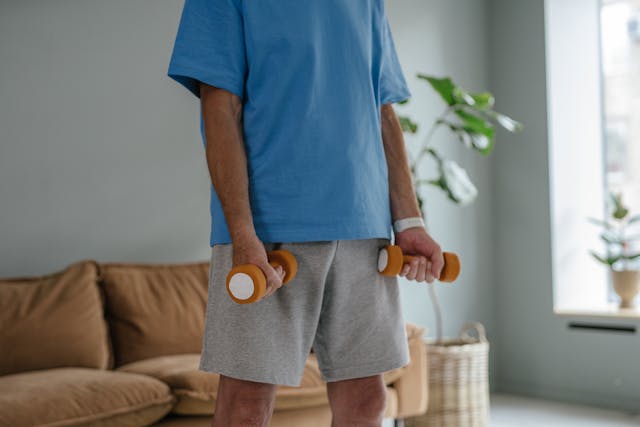
Photo by SHVETS production: https://www.pexels.com/photo/a-person-in-blue-shirt-and-gray-shorts-holding-a-dumbbells-8899533/
SHARE

Among older adults, the decline in lower limb strength—necessary for walking, standing, and maintaining balance—has long been recognised as a primary contributor to the need for long-term or nursing care. Previous research by the same team established a strong link between reduced leg function and the likelihood of requiring assistance in later life. However, while the role of lower limbs in mobility has been extensively studied, far less attention has been paid to hand function, despite its importance for performing everyday tasks such as dressing, cooking, eating, and personal hygiene. When hand dexterity declines, these basic self-care activities become increasingly challenging, which may lead to a gradual loss of independence and, ultimately, a greater need for professional care. Yet until recently, few studies had examined the degree to which declining manual ability is associated with future long-term care requirements.

To explore this relationship, the research team conducted a longitudinal study involving approximately 1,000 older residents of Kasama City, Japan’s Ibaraki Prefecture. These participants had previously undergone detailed physical fitness evaluations, including tests of hand dexterity and strength. Over a follow-up period of up to fourteen years, the researchers tracked whether these individuals eventually required long-term care. Their analysis revealed a significant trend: participants with poorer hand function faced a notably higher risk of needing nursing care than those with stronger, more agile hands. Even after controlling for factors such as age, sex, and lower-limb performance, diminished hand dexterity independently predicted a greater likelihood of care dependency.

A particularly novel aspect of this work was the discovery of a curvilinear dose–response relationship between hand function and the risk of requiring nursing care. Rather than a simple linear association, the findings showed that below a specific functional threshold, the risk rose sharply. Specifically, those who completed fewer than twenty-one circles in fifteen seconds during a dexterity test were significantly more likely to enter long-term care. However, once hand function exceeded this threshold, further improvements did not translate into a statistically significant reduction in risk, suggesting a performance plateau. This finding refines the understanding of how manual ability influences health outcomes, identifying a measurable benchmark for concern.

The implications of this research are considerable for both clinical practice and public health policy. Traditionally, efforts to prevent frailty and dependence in older adults have focused heavily on improving lower limb strength and balance. The present findings argue for a broader approach, emphasising that maintaining fine motor skills and grip strength is equally crucial for preserving autonomy. Regular activities that stimulate manual control—such as crafts, handwriting, musical practice, or targeted hand exercises—could therefore play a vital role in delaying or preventing care dependency. By identifying a quantifiable threshold of hand performance, the study also opens the door to practical screening measures that could alert healthcare providers to early declines before they become debilitating.

Ultimately, the study demonstrates that hand function, much like mobility, is a key determinant of healthy ageing. Its decline can subtly erode independence, while its preservation can extend the span of life lived without reliance on external care. As societies worldwide confront rapidly ageing populations, recognising the hands not merely as instruments of dexterity but as indicators of resilience and longevity marks an essential step toward ensuring longer, healthier, and more autonomous lives.

More information: Namhoon Lim et al, Dose-response Association between Hand Dexterity and Functional Disability: A Longitudinal Study from the Kasama Study, Annals of Geriatric Medicine and Research. DOI: 10.4235/agmr.25.0075

Journal information: Annals of Geriatric Medicine and Research Provided by University of Tsukuba

TAGGED:health care costsolder adultsphysical exercise
Share This Article
Email Copy Link Print
Previous Article Amino acid supplement could help older adults get more out of their exercise routine
Next Article Playing or listening to music in later life tied to sharply lower dementia risk, research shows
Leave a Comment

Leave a Reply Cancel reply

Your email address will not be published. Required fields are marked *

Recent Posts

  • Immigrants Experiencing Partial Acceptance in America Report Worse Health Outcomes
  • Early-Life Socioeconomic Factors May Leave a Lasting Imprint on Young Brains
  • Spatial Path Integration in Virtual Reality for Neurodegenerative Disease Prediction
  • The Brain’s Overnight Maintenance System: Sleep and Dementia Explained
  • Healthy Living May Help Offset Genetic Risk for Dementia

Tags

adolescents adverse effects ageing populations aging populations air pollution alzheimer disease amyloids anxiety artificial intelligence atopic dermatitis behavioral psychology biomarkers blood pressure body mass index brain cancer cancer research cardiology cardiovascular disease cardiovascular disorders caregivers children climate change effects clinical research cognition cognitive development cognitive disorders cognitive function cognitive neuroscience cohort studies COVID-19 dementia depression diabetes diets discovery research disease control disease intervention disease prevention diseases and disorders environmental health epidemiology foods food science gender studies geriatrics gerontology gut microbiota health and medicine health care health care costs health care delivery heart disease heart failure home care human brain human health hypertension inflammation insomnia life expectancy life sciences longitudinal studies memory disorders menopause mental health metabolic disorders metabolism mortality rates neurodegenerative diseases neurological disorders neurology neuroscience nursing homes nutrients nutrition obesity older adults parkinsons disease physical exercise population studies preventive medicine psychiatric disorders psychological science psychological stress public health research impact risk assessment risk factors risk reduction skin sleep sleep apnea sleep disorders social interaction social research socioeconomics tobacco type 2 diabetes weight loss
June 2026
S M T W T F S
 123456
78910111213
14151617181920
21222324252627
282930  
« May    

This website is for information purpose only and is in no way intended to replace the advice, professional medical care, diagnosis or treatment of a doctor, therapist, dietician or nutritionist.

About | Contact | Cookie Policy | Digital Millennium Copyright Act Notice | Disclaimer | Privacy Policy | Terms of Service

You Might Also Like

Physical Wellness

It Only Takes 15 Minutes a Day to Transform Your Health and Well-being

By support
Ageing Well

Mitigating Cognitive Fatigue and Ageing Effects Through Regular Exercise

By support
Ageing Well

Ongoing Physical Activity Helps Prevent Metabolic Syndrome

By support
Health Care

Falls Remain a Major Risk, Affecting One in Eight Older People in Ireland Every Year

By support
Living Well Study
Categories
  • Ageing Well
  • Brain Health
  • Healthy Diets
  • Mental Wellness
  • Physical Wellness
  • Wellness
LivingWellStudy
  • About
  • Contact
  • Cookie Policy
  • Digital Millennium Copyright Act Notice
  • Disclaimer
  • Privacy Policy
  • Terms of Service
Welcome Back!

Sign in to your account

Username or Email Address
Password

Lost your password?