Monday, 18 May 2026
  • My Feed
  • My Saves
  • History
  • Blog
Living Well Study
  • Blog
  • Ageing Well
  • Brain Health
  • Healthy Diets
  • Physical Wellness
  • Wellness
  • 🔥
  • Wellness
  • older adults
  • Living Well
  • Brain Health
  • dementia
  • public health
  • Ageing Well
  • alzheimer disease
  • physical exercise
  • mental health
Font ResizerAa
Living Well StudyLiving Well Study
  • My Saves
  • My Feed
  • History
Search
  • Pages
    • Home
    • Search Page
  • Personalized
    • Blog
    • My Feed
    • My Saves
    • History
  • Categories
    • Ageing Well
    • Brain Health
    • Healthy Diets
    • Mental Wellness
    • Physical Wellness
    • Wellness
Have an existing account? Sign In
Follow US
© 2022 Foxiz News Network. Ruby Design Company. All Rights Reserved.
Living Well Study > Blog > Wellness > Exploring a Novel Drug Target: Promising Insights for the Treatment of Osteoporosis Unveiled by Recent Study
Wellness

Exploring a Novel Drug Target: Promising Insights for the Treatment of Osteoporosis Unveiled by Recent Study

support
Share
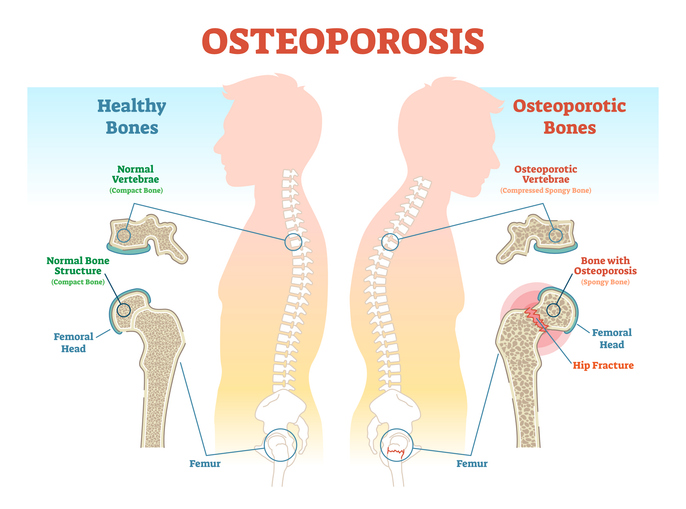
Osteoporosis examples vector illustration diagram with bone density. Image by VectorMine via iStock.
SHARE

Osteoporosis, a condition characterized by weak and fragile bones, is a pressing global health issue. It leads to approximately 8.9 million fractures annually, with a fracture occurring every three seconds. The elderly are particularly susceptible, as ageing weakens bones, often necessitating long-term care. As the population ages, there is a growing urgency for healthcare systems to discover effective treatments for this condition.

One promising treatment involves using parathyroid hormone (PTH), specifically a drug called teriparatide, which helps strengthen bones by promoting bone formation. However, PTH can also stimulate the production of osteoclasts, cells that break down bone tissue, which can sometimes counteract its bone-building effects. Understanding how PTH works at a molecular level is crucial to improving osteoporosis treatments and ensuring better patient outcomes.

Recently, researchers at Tokyo University of Science, led by Professor Tadayoshi Hayata and Ms. Chisato Sampei, investigated genes PTH affects in bone-forming cells called osteoblasts. Their study, published in May 2024 in the Journal of Cellular Physiology, aimed to identify new targets for improving osteoporosis therapies. In Japan, where approximately 12.8 million people have osteoporosis, finding effective treatments is particularly urgent to enhance the quality of life.

Using experiments with mouse cells and live mice treated with teriparatide, the researchers used advanced techniques to study how PTH influences gene activity. They discovered a gene called Gprc5a that becomes more active when PTH signalling is triggered. Gprc5a codes for a protein involved in cell signalling and has just been well-studied in the context of bone health.

Interestingly, when the researchers suppressed Gprc5a in their experiments, they observed increased activity in genes related to bone cell growth and maturation. This suggests that Gprc5a normally slows down these processes, potentially limiting the effectiveness of bone-strengthening treatments like teriparatide. Understanding this could lead to new strategies for enhancing the effects of existing osteoporosis treatments.

Further investigation revealed that Gprc5a interacts with a protein receptor called Activin receptor-like kinase 3 (ALK3), part of a pathway that influences bone development. By affecting this pathway, Gprc5a appears to regulate how bones form and grow. These findings provide valuable insights into the complex processes that maintain bone strength and offer new avenues for developing more targeted osteoporosis therapies in the future.

Prof. Hayata and his team’s study illuminates how PTH influences bone health through genes like Gprc5a. By unravelling these molecular mechanisms, researchers aim to enhance treatments for osteoporosis, potentially leading to better outcomes for patients worldwide. This research represents a significant step towards personalized medicine approaches that could customize treatments to individual patient’s needs, ultimately improving their quality of life and reducing the burden of osteoporosis on healthcare systems.

More information: Chisato Sampei et al, Gprc5a is a novel parathyroid hormone-inducible gene and negatively regulates osteoblast proliferation and differentiation, Journal of Cellular Physiology. DOI: 10.1002/jcp.31297

Journal information: Journal of Cellular Physiology Provided by Tokyo University of Science

TAGGED:aging populationsanatomybone formationhealth and medicinelife sciencesosteoblastsosteoclastsosteoporosis
Share This Article
Email Copy Link Print
Previous Article Vulnerability of Ohio’s Elderly to Extreme Weather
Next Article Revised study questions universal approach to vitamin D supplementation guidelines
Leave a Comment

Leave a Reply Cancel reply

Your email address will not be published. Required fields are marked *

Recent Posts

  • Spending Time Outdoors Linked to Higher Life Satisfaction
  • Exercise Could Play a Key Role in Helping People Stop Smoking
  • The Tiny Cellular Framework Behind Brain Development
  • ‘Forever Chemicals’ Found in Nearly Entire US Study Population, Researchers Report
  • Healthy Hearts May Still Face the Risk of Alzheimer’s Disease

Tags

adolescents adverse effects ageing populations aging populations air pollution alzheimer disease amyloids anxiety artificial intelligence atopic dermatitis behavioral psychology biomarkers blood pressure body mass index brain cancer cancer research cardiology cardiovascular disease cardiovascular disorders caregivers children climate change effects clinical research coffee cognition cognitive development cognitive disorders cognitive function cognitive neuroscience cohort studies COVID-19 dementia depression diabetes diets discovery research disease control disease intervention disease prevention diseases and disorders environmental health epidemiology foods food science gender studies geriatrics gerontology gut microbiota health and medicine health care health care costs health care delivery heart disease heart failure home care human brain human health hypertension inflammation insomnia life expectancy life sciences longitudinal studies memory disorders menopause mental health metabolic disorders metabolism mortality rates neurodegenerative diseases neurological disorders neurology neuroscience nursing homes nutrients nutrition obesity older adults parkinsons disease physical exercise population studies preventive medicine psychiatric disorders psychological science psychological stress public health research impact risk assessment risk factors risk reduction skin sleep sleep apnea sleep disorders social interaction social research socioeconomics type 2 diabetes weight loss
May 2026
S M T W T F S
 12
3456789
10111213141516
17181920212223
24252627282930
31  
« Apr    

This website is for information purpose only and is in no way intended to replace the advice, professional medical care, diagnosis or treatment of a doctor, therapist, dietician or nutritionist.

About | Contact | Cookie Policy | Digital Millennium Copyright Act Notice | Disclaimer | Privacy Policy | Terms of Service

You Might Also Like

Mental Wellness

Understanding How the Brain Learns from Rewards Could Unlock New Treatments for Depression

By support
Wellness

Research Reveals Mental Health Challenges Among Home Health Aides

By support
Wellness

Recent Research Indicates That Routine Exercise Before Hospitalisation Enhances Recovery in Heart Failure Cases

By support
Wellness

The Lasting Health Impacts of Incarceration

By support
Living Well Study
Categories
  • Ageing Well
  • Brain Health
  • Healthy Diets
  • Mental Wellness
  • Physical Wellness
  • Wellness
LivingWellStudy
  • About
  • Contact
  • Cookie Policy
  • Digital Millennium Copyright Act Notice
  • Disclaimer
  • Privacy Policy
  • Terms of Service
Welcome Back!

Sign in to your account

Username or Email Address
Password

Lost your password?