Tuesday, 11 Aug 2026
  • My Feed
  • My Saves
  • History
  • Blog
Living Well Study
  • Blog
  • Ageing Well
  • Brain Health
  • Healthy Diets
  • Physical Wellness
  • Wellness
  • 🔥
  • Wellness
  • older adults
  • Living Well
  • Brain Health
  • dementia
  • public health
  • Ageing Well
  • Health and Medicine
  • alzheimer disease
  • physical exercise
Font ResizerAa
Living Well StudyLiving Well Study
  • My Saves
  • My Feed
  • History
Search
  • Pages
    • Home
    • Search Page
  • Personalized
    • Blog
    • My Feed
    • My Saves
    • History
  • Categories
    • Ageing Well
    • Brain Health
    • Healthy Diets
    • Mental Wellness
    • Physical Wellness
    • Wellness
Have an existing account? Sign In
Follow US
© 2022 Foxiz News Network. Ruby Design Company. All Rights Reserved.
Living Well Study > Blog > Public Health > Replacing Red Meat with Salmon May Improve Health and Cut Carbon Emissions
Public Health

Replacing Red Meat with Salmon May Improve Health and Cut Carbon Emissions

support
Share
steak or salmon
SHARE

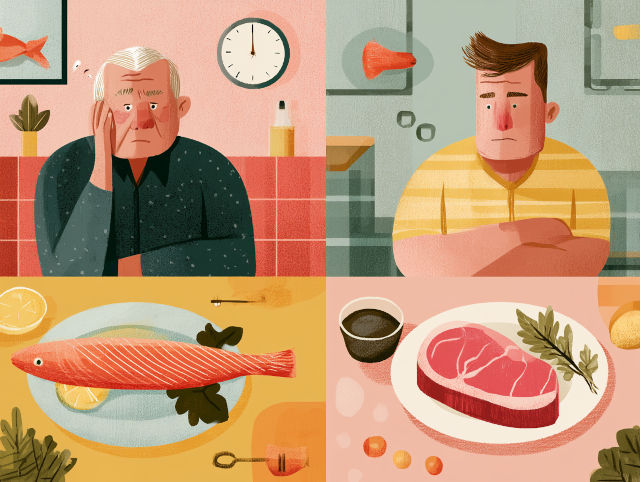
New research from the University of Bristol and the University of Southampton suggests that replacing one beef steak with salmon each week could significantly reduce carbon emissions while also supporting healthier diets. The study, published in the journal Environmental Research: Food Systems, found that the UK’s current meat consumption remains two to three times higher than recommended dietary guidelines. Researchers examined how different dietary changes could influence emissions between 2021 and 2050.

Using data from 4,000 UK households in the Family Food Dataset, the team modelled five dietary scenarios: continuing current eating habits, reducing overall meat and dairy consumption, swapping beef for salmon once a week, following the NHS Eatwell Guide, and adopting the EAT-Lancet Planetary Health Diet. The researchers then estimated the long-term carbon emissions associated with each approach.

If current dietary trends continue, food-related carbon emissions are projected to decline by 15% by 2050, roughly equivalent to the carbon produced by a return flight from London Heathrow to Madrid. However, replacing just one weekly portion of beef steak with UK-sourced salmon nearly doubled the reduction, cutting emissions by 28% over the same period. This saving is comparable to the emissions from a return flight between London Heathrow and Marrakech, Morocco. More substantial dietary changes produced even larger reductions, with lower meat consumption reducing emissions by 39%, the NHS Eatwell diet by 42%, and the Planetary Health Diet by 49%.

Lead author Dr Jenny Baverstock, Honorary Research Fellow at Bristol’s School of Biological Sciences and formerly Principal Enterprise Fellow at the University of Southampton, said simple dietary adjustments could make an important contribution to environmental sustainability. She noted that the salmon-for-beef substitution provides both nutritional and environmental benefits, demonstrating that health and sustainability goals can work together rather than compete against one another.

Globally, food and agriculture account for around 26% of human-caused greenhouse gas emissions, while the UK food system contributes approximately 20%. Animal agriculture alone is responsible for more than 80% of food industry emissions worldwide, with beef, lamb, and pork among the highest-impact protein sources. In contrast, fish, poultry, and legumes offer lower-emission alternatives. Researchers selected beef and salmon because they represent realistic and familiar choices for UK consumers and are largely produced domestically. The study estimated that this single substitution could reduce emissions by 7.3 kilograms of CO2 per person each week.

The researchers acknowledged that changing dietary habits across the population remains challenging and would require balancing the interests of livestock farmers and sustainable fishing industries. Nevertheless, they noted that UK seafood consumption currently falls well below government recommendations, while high consumption of processed and red meat is linked to increased risk of type 2 diabetes. Co-author Professor Guy Poppy from the University of Bristol said growing public concern about planetary health may encourage more people to adopt sustainable dietary choices. He added that current global trade uncertainties and food security concerns could also create opportunities for the UK to strengthen domestic fish production and improve long-term protein security.

More information: Jenny Baverstock et al, Adapting the source of protein in diets to reduce carbon emissions: a UK case study exploring aquaculture, Environmental Research Food Systems. DOI: 10.1088/2976-601X/ae6709

Journal information: Environmental Research Food Systems Provided by University of Bristol

TAGGED:carbon emissionsdietary protein
Share This Article
Email Copy Link Print
Previous Article Immigrants Experiencing Partial Acceptance in America Report Worse Health Outcomes
Next Article Older Adults Using Hearing Aids Effectively May Face Lower Dementia Risk, HKUMed Study Finds
Leave a Comment

Leave a Reply Cancel reply

Your email address will not be published. Required fields are marked *

Recent Posts

  • How Childhood Stress Leaves a Lasting Mark on Brain Cells
  • Obesity and Ageing May Share Common Biological Pathways
  • Unsafe Living Environments Elevate Fall Risk for Seniors
  • Optimizing Blood Pressure Control: A New Strategy
  • Study Highlights How Social Inequality Hinders Physical Activity

Tags

adolescents adverse effects ageing populations aging populations air pollution alzheimer disease amyloids anxiety artificial intelligence atopic dermatitis behavioral psychology biomarkers blood pressure body mass index brain cancer cancer research cardiology cardiovascular disease cardiovascular disorders caregivers children climate change clinical research cognition cognitive development cognitive disorders cognitive function cognitive neuroscience COVID-19 dementia depression diabetes diets discovery research disease control disease intervention disease prevention diseases and disorders environmental health epidemiology foods food science gender studies geriatrics gerontology gut microbiota health and medicine health care health care costs health care delivery heart disease heart failure home care human brain human health hypertension inflammation insomnia life expectancy life sciences longitudinal studies memory disorders menopause mental health metabolic disorders metabolism mortality rates neurodegenerative diseases neurological disorders neurology neuroscience nursing homes nutrients nutrition obesity older adults parkinsons disease physical exercise population studies preventive medicine psychiatric disorders psychological science psychological stress public health research impact risk assessment risk factors risk reduction skin sleep sleep apnea sleep disorders social interaction social research social sciences socioeconomics tobacco type 2 diabetes weight loss
August 2026
S M T W T F S
 1
2345678
9101112131415
16171819202122
23242526272829
3031  
« Jul    

This website is for information purpose only and is in no way intended to replace the advice, professional medical care, diagnosis or treatment of a doctor, therapist, dietician or nutritionist.

About | Contact | Cookie Policy | Digital Millennium Copyright Act Notice | Disclaimer | Privacy Policy | Terms of Service

You Might Also Like

Public Health

Spending Time Outdoors Linked to Higher Life Satisfaction

By support
Public Health

Hearing Loss Diminishes Job and Income Opportunities for Young Americans

By support
Public Health

The Role of Heart Health in Severe COVID-19 Outcomes During the Pandemic

By support
Public Health

FAU study finds lifestyle changes can slow cognitive decline

By support
Living Well Study
Categories
  • Ageing Well
  • Brain Health
  • Healthy Diets
  • Mental Wellness
  • Physical Wellness
  • Wellness
LivingWellStudy
  • About
  • Contact
  • Cookie Policy
  • Digital Millennium Copyright Act Notice
  • Disclaimer
  • Privacy Policy
  • Terms of Service
Welcome Back!

Sign in to your account

Username or Email Address
Password

Lost your password?