Thursday, 2 Jul 2026
  • My Feed
  • My Saves
  • History
  • Blog
Living Well Study
  • Blog
  • Ageing Well
  • Brain Health
  • Healthy Diets
  • Physical Wellness
  • Wellness
  • 🔥
  • Wellness
  • older adults
  • Living Well
  • Brain Health
  • dementia
  • public health
  • Ageing Well
  • alzheimer disease
  • physical exercise
  • mental health
Font ResizerAa
Living Well StudyLiving Well Study
  • My Saves
  • My Feed
  • History
Search
  • Pages
    • Home
    • Search Page
  • Personalized
    • Blog
    • My Feed
    • My Saves
    • History
  • Categories
    • Ageing Well
    • Brain Health
    • Healthy Diets
    • Mental Wellness
    • Physical Wellness
    • Wellness
Have an existing account? Sign In
Follow US
© 2022 Foxiz News Network. Ruby Design Company. All Rights Reserved.
Living Well Study > Blog > Living Well > The new dressing robot can imitate the actions of care workers
Living Well

The new dressing robot can imitate the actions of care workers

support
Share
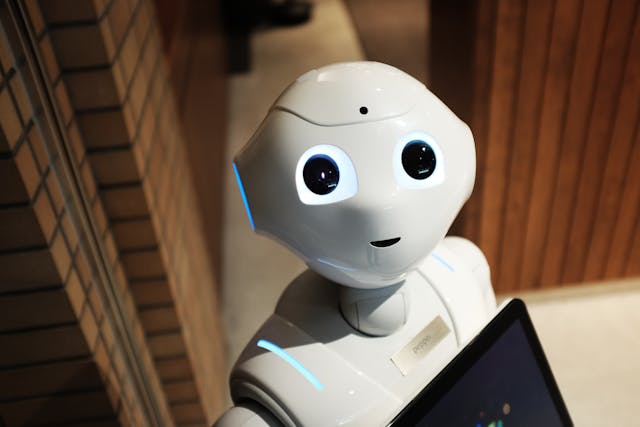
High-Angle Photo of Robot. Photo by Alex Knight: https://www.pexels.com/photo/high-angle-photo-of-robot-2599244/
SHARE

Researchers have made a breakthrough by developing a new robot capable of replicating care workers’ two-handed techniques for dressing individuals. Historically, robots designed to assist with dressing, aimed at supporting elderly individuals or those with disabilities, were constructed with only one arm. However, feedback indicated that such designs could lead to discomfort or impracticality for users.

Addressing this issue, Dr Jihong Zhu, affiliated with the University of York’s Institute for Safe Autonomy, introduced an innovative two-armed assistive dressing approach. This concept, which diverges from prior research, draws inspiration from caregivers’ methods, highlighting that specific manoeuvres are crucial to minimize discomfort and distress for the care recipient.

Implementing this technology can revolutionize the social care sector by enabling care workers to allocate more time to the health and mental well-being of those under their care rather than focusing solely on physical tasks.

Dr Zhu and his team embarked on a meticulous study to understand the movement patterns of care workers during the dressing process. By allowing a robot to observe and learn from these human actions and subsequently applying AI to create a model that replicates these tasks, they were able to underscore the necessity of using both hands for dressing, as opposed to one. This research also highlights the importance of arm angles and the occasional need for human intervention to adjust or halt specific robot movements.

Dr Zhu, representing the Institute for Safe Autonomy and the School of Physics, Engineering, and Technology at the University of York, expressed that practical tasks like dressing could be automated through robotics. That would free care workers to focus more on fostering companionship and monitoring the overall well-being of those in their care. He emphasized the importance of understanding real-time care worker tasks to apply this technology outside the laboratory setting successfully.

The research team utilized a method known as ‘learning from demonstration,’ which bypasses the need for expert programming. Instead, a robot learns by observing the required human motion, understanding that care workers use both arms to effectively attend to individuals with varying abilities. This dual-arm approach enables one hand to guide the individual’s hand through a garment. At the same time, the other adjusts the garment itself, overcoming the limitations of previous one-armed designs that demanded too much effort from patients.

Moreover, the team developed algorithms that allow the robotic arms to perform actions flexibly, such as pulling and lifting, while also stopping or altering movements based on a gentle human touch or guidance, without resistance from the robot.

Dr Zhu highlighted the significance of human modelling in enhancing the efficiency and safety of interactions between humans and robots. He stressed that beyond performing tasks, the robot must be able to pause or modify its actions mid-task, should the user wish so. Building trust in this human-robot interaction is paramount, with future research focused on testing the robot’s safety boundaries and its acceptance by those who most benefit from it.

More information: Jihong Zhu et al, Do You Need a Hand? – A Bimanual Robotic Dressing Assistance Scheme, IEEE Transactions on Robotics. DOI: 10.1109/TRO.2024.3366008

Journal information: IEEE Transactions on Robotics Provided by University of York

TAGGED:autonomous robotscaregivers
Share This Article
Email Copy Link Print
Previous Article Impoverished areas associated with increased risk of dementia and accelerated brain ageing
Next Article Investigating a possible new therapy for endometriosis
Leave a Comment

Leave a Reply Cancel reply

Your email address will not be published. Required fields are marked *

Recent Posts

  • The Key to a Fulfilling Retirement: Staying Social
  • Adopting a Healthy Lifestyle Linked to Slower Biological Ageing in Older Men
  • Innovative Wound Treatment Could Improve Healing and Recovery
  • Bringing Toxoplasmosis Into Focus: A Global Call for Recognition
  • Unravelling the Link Between Brain Iron Accumulation and Neurodegeneration

Tags

adolescents adverse effects ageing populations aging populations air pollution alzheimer disease amyloids anxiety artificial intelligence atopic dermatitis behavioral psychology biomarkers blood pressure body mass index brain cancer cancer research cardiology cardiovascular disease cardiovascular disorders caregivers children climate change effects clinical research cognition cognitive development cognitive disorders cognitive function cognitive neuroscience cohort studies COVID-19 dementia depression diabetes diets discovery research disease control disease intervention disease prevention diseases and disorders environmental health epidemiology foods food science gender studies geriatrics gerontology gut microbiota health and medicine health care health care costs health care delivery heart disease heart failure home care human brain human health hypertension inflammation insomnia life expectancy life sciences longitudinal studies memory disorders menopause mental health metabolic disorders metabolism mortality rates neurodegenerative diseases neurological disorders neurology neuroscience nursing homes nutrients nutrition obesity older adults parkinsons disease physical exercise population studies preventive medicine psychiatric disorders psychological science psychological stress public health research impact risk assessment risk factors risk reduction skin sleep sleep apnea sleep disorders social interaction social research socioeconomics tobacco type 2 diabetes weight loss
July 2026
S M T W T F S
 1234
567891011
12131415161718
19202122232425
262728293031  
« Jun    

This website is for information purpose only and is in no way intended to replace the advice, professional medical care, diagnosis or treatment of a doctor, therapist, dietician or nutritionist.

About | Contact | Cookie Policy | Digital Millennium Copyright Act Notice | Disclaimer | Privacy Policy | Terms of Service

You Might Also Like

Living Well

Light Daily Exercise Associated with Reduced Cancer Risk

By support
Living Well

Potential Link Between Air Pollution Exposure and Eczema Development

By support
Living Well

Healthy Eating Linked to Cardiometabolic Gains, Even Without Weight Reduction

By support
Living Well

US POINTER Trial Shows Structured Lifestyle Changes Can Slow Cognitive Decline

By support
Living Well Study
Categories
  • Ageing Well
  • Brain Health
  • Healthy Diets
  • Mental Wellness
  • Physical Wellness
  • Wellness
LivingWellStudy
  • About
  • Contact
  • Cookie Policy
  • Digital Millennium Copyright Act Notice
  • Disclaimer
  • Privacy Policy
  • Terms of Service
Welcome Back!

Sign in to your account

Username or Email Address
Password

Lost your password?