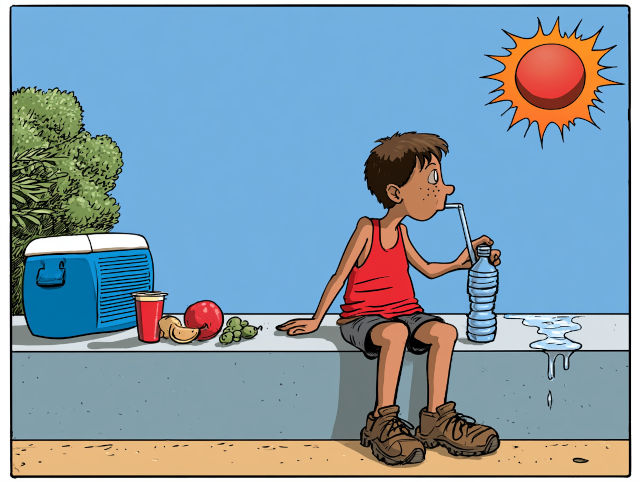
As extreme heat becomes more frequent and intense across California, understanding which communities are most affected and what support they need is increasingly important for protecting public health. A new University of California, Irvine study suggests that everyday conversations on social media could provide valuable insights into how people experience and respond to extreme heat.
Researchers analysed 24,598 heat-related posts on Twitter, now X, from across California between 2016 and 2022. They found that where people lived, how they travelled and the resources available to them were associated with differences in how they discussed extreme heat, including its effects on daily life and the strategies they used to cope. The findings were published in Environmental Research Communications.
“Social media gives us another window into how people are experiencing heat in their daily lives,” said senior author Suellen Hopfer, associate professor of health, society and behaviour at UC Irvine. She said these insights could help public health officials understand who heat-safety messages are reaching, identify communication gaps and better support particularly vulnerable communities.
Rather than focusing only on temperatures or heat-related illnesses, the researchers examined posts describing coping strategies and the effects of heat on everyday activities. Coping strategies included staying hydrated, using air conditioning, visiting a pool or changing exercise times. In contrast, reported impacts included health concerns, disrupted work, cancelled activities, concerns about pets or plants and increased household expenses. These patterns were compared with county-level indicators involving income, housing, transportation and tree canopy.
The researchers also used a large language model to sort thousands of posts according to how people discussed heat. The model’s classifications were checked against posts manually categorised by the research team. Depending on the category, including heat impacts, coping strategies and other content, the model achieved accuracy ranging from 74 to 90 per cent, demonstrating the potential of automated language analysis for examining large volumes of social media conversations.
Some of the clearest differences involved housing. Counties with higher proportions of people living in RVs, vans or boats were 15 per cent less likely to have positive heat-related posts and had 22 per cent lower odds of posts discussing coping strategies. Because these types of housing may have poor insulation and become dangerously hot, the findings suggest that residents could benefit from targeted communication about indoor heat safety.
Transportation patterns revealed another potential vulnerability. Counties with larger percentages of residents who walked, cycled or used public transport to commute had substantially greater odds of negative heat-related posts and posts describing effects on daily life. Counties with larger Hispanic populations also showed a slightly higher likelihood of posts about heat’s impacts and a lower likelihood of posts discussing coping strategies. The researchers caution, however, that social media activity should not be considered a direct measure of population-level vulnerability.
The researchers see social media as a complement to, rather than a replacement for, established public health surveillance. Heat-related posting increased as average monthly temperatures rose, suggesting online conversations can capture experiences that conventional datasets may miss. Combined with information about housing, transportation and socioeconomic conditions, these signals could help officials develop more targeted warnings, practical guidance and longer-term strategies, moving beyond one-size-fits-all messaging towards interventions that reflect how different communities experience and cope with extreme heat.
More information: Nicolas Rodriguez Garcia et al, Online expressions of heat risk: social media posting and social vulnerability in California, Environmental Research Communications. DOI: 10.1088/2515-7620/ae9359
Journal information: Environmental Research Communications Provided by University of California – Irvine