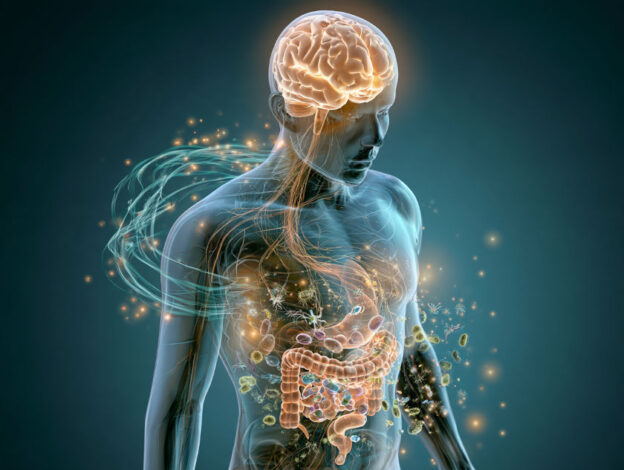
A new UCLA study has found a connection between how quickly the brain ages and bacteria and chemical byproducts in the gut, offering new clues about biological changes that may influence brain ageing long before noticeable symptoms appear.
Researchers have long used brain scans to estimate a person’s “brain age,” which can differ from their actual age. Previous studies have linked a brain that appears older than expected with poorer memory, thinking skills and mood. However, much of that research has focused on older adults or people with existing brain diseases, leaving questions about what these differences may mean in younger, generally healthy adults.
In a new study published in eBioMedicine, UCLA Health researchers analysed brain scans from nearly 1,500 adults across three separate groups. They examined how different regions of the brain communicate with one another while a person is at rest and used a computer model to estimate each participant’s brain age based on these communication patterns.
The researchers then compared each person’s estimated brain age with their chronological age to calculate what they called the Brain Aging Index (BAI). Across all three groups, participants whose brains appeared older than expected tended to perform worse on tests of working memory and executive function, including abilities related to focus, planning and organisation.
Participants with a higher BAI also reported more symptoms of depression. These associations consistently involved brain regions related to memory and self-referential thought, suggesting that signs of accelerated brain ageing may be connected with both cognitive performance and emotional well-being even before more obvious problems emerge.
In one of the study groups, researchers also analysed stool samples to explore possible connections between brain ageing and gut biology. A higher BAI was associated with specific gut bacteria and metabolic byproducts, including certain fat molecules, a cholesterol-related compound and lower levels of the hormone estetrol. The biological pathways identified were related to immune function, blood vessel health, communication between brain cells and cellular energy production.
“Brain ageing doesn’t suddenly begin when we get older, but the biological signals may be detectable decades earlier,” said senior author Dr. Arpana Church, co-director of the Goodman-Luskin Microbiome Center at UCLA Health. She said linking early brain changes with the gut microbiome and its metabolites could help researchers identify biological pathways associated with healthier or accelerated brain ageing.
Church said the findings could eventually help identify people at greater risk of cognitive or mood-related decline earlier in life. They also raise the possibility that gut health could become a target for future research into interventions aimed at supporting healthier brain ageing. More research will be needed to determine whether changing the gut microbiome can directly influence brain ageing, but the findings offer a promising direction for understanding prevention earlier in life.
More information: Kanhao Zhao et al, Brain-gut crosstalk associated with brain ageing in young and mid-life adults: a multicohort cross-sectional study, EBioMedicine. DOI: 10.1016/j.ebiom.2026.106468
Journal information: EBioMedicine Provided by University of California – Los Angeles Health Sciences