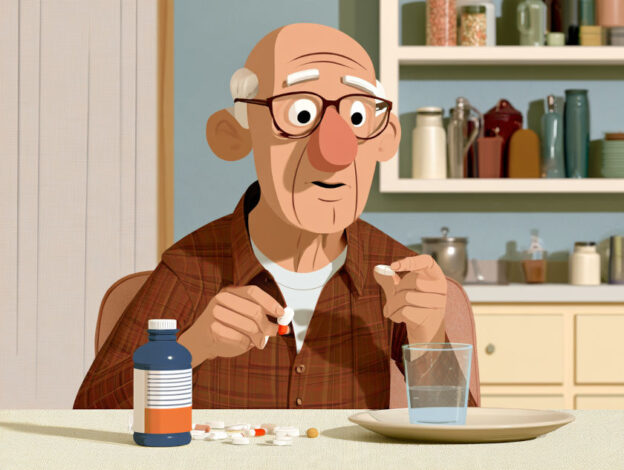
Adults aged 65 and older with cognitive disorders such as dementia may be particularly vulnerable to harmful effects from medications used to treat central nervous system conditions, including anxiety, sleep problems and psychosis. These medications can contribute to poorer mental health, more emergency department visits, longer and more frequent hospital stays, and a greater risk of premature death.
There is, however, some encouraging news. The proportion of older adults with cognitive disorders taking medications that may impair cognition declined significantly between 2011 and 2022, according to a recent study by researchers at the University at Buffalo. Among 2,796 independently living older adults with cognitive disorders, exposure to potentially inappropriate medications fell from 39.3% in 2011 to 29.3% in 2022.
“These drugs also act on the central nervous system, so they can be too much for older adults if inappropriately used,” says Haowen Hsu, PharmD, a postdoctoral fellow in the Department of Pharmacy Practice at the University at Buffalo and first author of the study, published in the Journal of the American Geriatrics Society.
One approach to reducing the risk is “deprescribing” — stopping inappropriate medications, reducing their dosage or frequency, or replacing them with safer alternatives. For example, an older adult who has taken a benzodiazepine such as Xanax for anxiety or a sleep aid such as Ambien for years may need a medication review because these drugs can affect balance, coordination and cognition.
The researchers used the American Geriatrics Society’s Beers Criteria, which identifies medications that may be inappropriate or harmful for older adults, and focused specifically on people diagnosed with cognitive disorders. Using data from the Medical Expenditure Panel Survey, the study population represented approximately 29.7 million older Americans with cognitive disorders between 2011 and 2022.
Although the study did not examine why potentially inappropriate medication use declined, Hsu says increased attention to medication safety in geriatric care may have contributed. Still, he cautions that the problem remains significant. “We were happy to see the percentages of harm decline over that 11-year period,” he says. “However, one-third of our target population is still exposed to these harmful medications, which isn’t good.”
The research is connected to the University at Buffalo’s Team Alice initiative, an interdisciplinary effort focused on protecting older adults from medication-related harm. David Jacobs, PharmD, PhD, a principal investigator with Team Alice, says older adults with cognitive disorders are particularly vulnerable because they may have difficulty tolerating medications that worsen memory or thinking. Regular medication reviews involving physicians, pharmacists, nurses and other health care providers could help identify potentially inappropriate prescriptions.
The findings take on added importance as populations age worldwide. Many older adults live with multiple chronic conditions and consequently take several medications, increasing the potential for harmful drug effects and interactions. The researchers say better medication reviews and assessment tools could help reduce preventable harm. At the same time, further research is needed to determine whether optimizing medication use can improve quality of life and reduce hospitalizations and emergency department visits among older adults with cognitive disorders.
More information: Haowen Hsu et al, Cognitive Potentially Inappropriate Medications, Quality of Life, and Healthcare Use in Older Adults With Cognitive Disorders, Journal of the American Geriatrics Society. DOI: 10.1111/jgs.70607
Journal information: Journal of the American Geriatrics Society Provided by University at Buffalo