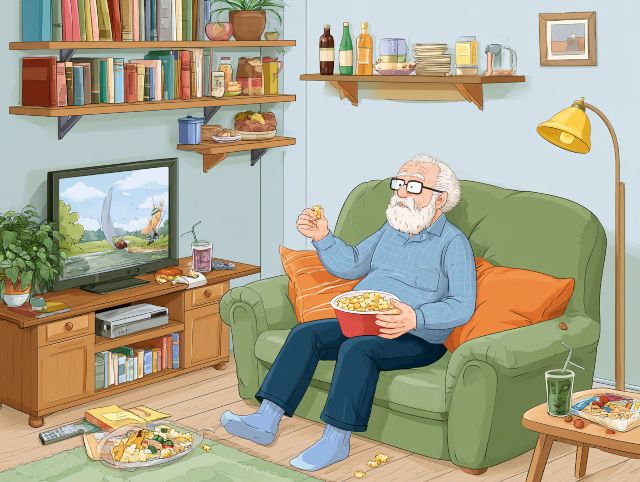
For decades, parents have warned that watching too much television would “rot your brain.” While that phrase may be an exaggeration, new research suggests the long-standing concern may contain some truth. A recent study published in Alzheimer’s & Dementia: Journal of the Alzheimer’s Association found that people who reported watching television very often during midlife were more likely to have smaller brain structures later in life. These included regions linked to memory, executive function and visual processing, along with greater damage to white matter—changes associated with ageing, stroke risk, cognitive decline and dementia. According to senior author David Raichlen of the USC Dornsife College of Letters, Arts and Sciences, the findings suggest that what people do while sitting may be just as important as how long they spend sitting.
The researchers analysed data from around 1,700 adults who joined the long-running Atherosclerosis Risk in Communities (ARIC) Study between 1987 and 1989. Participants, whose average age was 53, reported how frequently they watched television during their leisure time using a scale ranging from “never/seldom” to “very often.” They also provided information about how much of their working day was spent sitting. More than 20 years later, participants underwent MRI brain scans, allowing researchers to compare long-term brain health with earlier lifestyle habits.
People who reported watching television “very often” showed widespread structural differences in the brain compared with those who watched TV rarely. They had smaller brain volumes in regions commonly affected during the early stages of Alzheimer’s disease, as well as reduced frontal and occipital lobe sizes. They also displayed greater volumes of white matter hyperintensities, a marker of small blood vessel disease in the brain that has been linked to dementia and cognitive decline. Importantly, these associations remained even after researchers accounted for factors including physical activity, diabetes, body mass index, smoking and alcohol consumption.
One of the study’s most surprising findings was that sitting itself did not appear to explain the results. Participants who spent long periods sitting at work did not show the same brain changes. In fact, occupational sitting was associated with larger frontal and occipital lobes and lower levels of white matter abnormalities, suggesting better overall brain health. The researchers believe mentally stimulating work may help offset some of the negative effects commonly associated with prolonged sitting, highlighting that cognitive engagement could play an important protective role.
The study also found notable differences between men and women. When researchers analysed MRI scans separately by sex, most of the brain changes linked to both television viewing and occupational sitting were observed in men, suggesting they may be more susceptible to the neurological effects associated with these behaviours. However, the researchers caution that the reasons for these differences remain unclear and require further investigation before firm conclusions can be drawn.
Like any observational study, the research has limitations. Television viewing was self-reported rather than objectively measured, and participants did not receive brain scans at the beginning of the study, making it impossible to track structural changes over time directly. Even so, the findings raise important questions about how different sedentary activities affect long-term brain health. Rather than focusing solely on reducing sitting time, future public health advice may also encourage replacing passive activities such as television viewing with more cognitively engaging pursuits. As corresponding author Natan Feter notes, experts may need to broaden recommendations beyond simply moving more to include paying closer attention to how people spend their time while seated.
More information: Natan Feter et al, Associations of distinct sedentary behaviors with cortical, subcortical, and white matter hyperintensity volumes: Evidence from the ARIC study, Alzheimer’s and Dementia: Journal of the Alzheimer’s Association. DOI: 10.1002/alz.71582
Journal information: Alzheimer’s and Dementia: Journal of the Alzheimer’s Association Provided by University of Southern California