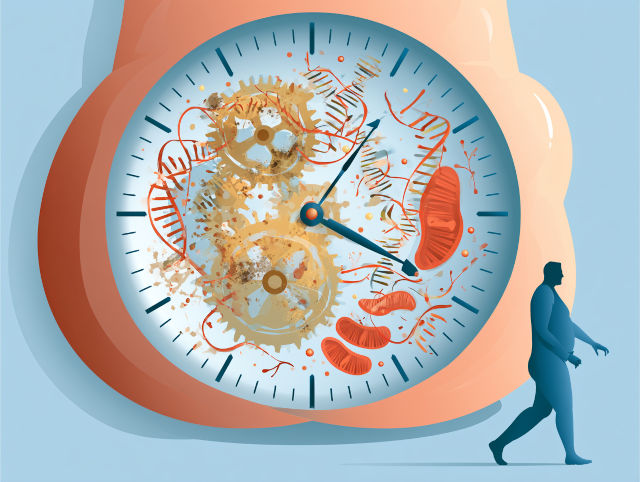
The global rise in obesity alongside rapid population aging has become a major public health concern. Increasing evidence suggests that excess body fat does more than raise the risk of chronic diseases—it may also accelerate the body’s biological aging process. A new review explores the close relationship between obesity and aging, highlighting the shared molecular mechanisms that connect the two and examining whether anti-obesity therapies could help slow aging and reduce the burden of age-related disease.
According to the review, aging is driven by a series of interconnected biological changes, including chronic inflammation, telomere shortening, mitochondrial dysfunction, genomic instability, impaired protein homeostasis, stem cell exhaustion, and disrupted nutrient sensing. Obesity appears to trigger many of these same processes, suggesting that it functions as an accelerator of biological aging rather than simply acting as an independent risk factor for disease.
One of the strongest biological links between obesity and aging is chronic low-grade inflammation. As fat tissue expands, it becomes infiltrated by immune cells that release inflammatory cytokines, creating persistent systemic inflammation. This inflammatory state contributes to insulin resistance, metabolic dysfunction, cardiovascular disease, and tissue damage, while closely resembling the process of “inflammaging”—the chronic, low-level inflammation that develops naturally with age.
Beyond inflammation, the review identifies several additional pathways through which obesity may hasten aging. These include telomere depletion, epigenetic alterations, mitochondrial dysfunction, stem cell exhaustion, genomic instability, protein homeostasis disruption, cellular senescence, and gut microbiome dysbiosis. Together, these interconnected mechanisms suggest that obesity affects many of the same biological systems that gradually decline during normal aging, reinforcing the concept that excess adiposity may speed up age-related deterioration.
The authors also review evidence that weight loss interventions may partially reverse some of these aging-related changes. Lifestyle strategies such as calorie restriction and regular exercise, as well as bariatric surgery, have been associated with improvements in metabolic health and reductions in biological markers linked to aging. These findings suggest that addressing obesity may not only reduce disease risk but also improve the biological processes that influence healthy aging.
The review further highlights the promise of modern anti-obesity medications, including liraglutide, semaglutide, tirzepatide, and orlistat. Beyond promoting weight loss, these therapies may reduce chronic inflammation, improve mitochondrial function, enhance telomerase activity, and limit oxidative stress—mechanisms that could help preserve cellular function and extend healthspan. While further research is needed to confirm their long-term effects on biological aging, the findings suggest that treating obesity may play an important role in promoting healthier aging and reducing the burden of age-related diseases.
More information: Rui Zhang et al, Obesity accelerates aging: Mechanisms and therapeutic implications, Genes & Diseases. DOI: 10.1016/j.gendis.2025.101980
Journal information: Genes & Diseases Provided by Compuscript Ltd