Retirement represents a significant life shift that profoundly influences an individual’s existence. For a portion of the population, it conjures images of a slower pace of life, relaxation, and the opportunity to savour life’s pleasures more fully. Conversely, for others, the cessation of a routine work schedule can usher in stress and uncertainties, particularly concerning financial stability and the ability to cover essential expenses and secure sufficient healthcare.
A groundbreaking study conducted by the Yale School of Public Health sheds light on the impact of retirement on mental health and the consequent need for inpatient mental health care among female workers in China. This study takes advantage of China’s unique retirement age policy and the comprehensive national available inpatient medical claims data.
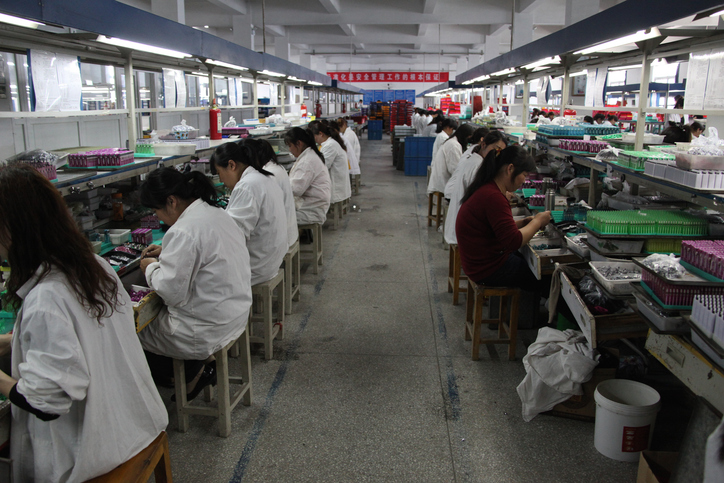
This investigation focuses on the disparities between women employed in physically demanding blue-collar roles, such as those in factories and trades, and those in white-collar positions involving office management and similar tasks.
China’s retirement system is distinguished by its occupation-specific mandatory retirement age for women. Those in blue-collar professions must retire at 50, while their white-collar counterparts continue working until they are 55.
The study meticulously analyzed hospital records from periods immediately before and after these designated retirement ages. It found that among blue-collar workers, the incidence of hospital admissions for mental health issues, including anxiety, depression, and stress-related disorders, surged post-retirement at 50. This pattern was not observed in white-collar female workers who retired at 55.
Moreover, the research highlighted that after retirement, blue-collar female retirees were more likely to seek emergency room (ER) assistance for mental health emergencies, noting a 16.6% uptick in ER visits for severe mental health conditions. No analogous increase was observed among the retired white-collar demographic.
The study’s findings advocate for proactive support tailored to at-risk blue-collar women to facilitate a smoother transition from work to retirement by enhancing their mental preparedness. Tianyu Wang, a co-lead author of the study, and Xi Chen, an associate professor of public health at Yale and a senior author, suggest that the deterioration in mental health among blue-collar women post-retirement could be attributed to the psychological and financial impact of job loss, compounded by their generally lower incomes and lesser capacity to adapt to significant life alterations.
These observations underscore how China’s retirement policies affect female workers differently based on their job types. The researchers call for further studies to identify optimal retirement ages and explore more adaptable retirement plans, especially as the population ages.
Given China’s status as home to the world’s most significant and most rapidly expanding elderly population, the study points to increasing economic challenges within the pension and healthcare systems, as highlighted by Ruochen Sun, a co-lead author. The current job-based retirement age policy, rooted in the 1950s when life expectancy was much lower, now sees around 20 million new retirees yearly, contributing to the country’s economic and social pressures.
The study focuses on the health outcomes of early retirement among female workers, leaving male workers—who retire at 60—unexamined. It emphasizes the necessity of integrating mental health considerations into retirement planning. According to Jody L. Sindelar, a co-senior author, enhancing the wages and benefits for low-income, blue-collar female workers and aiding them in better preparing for retirement could mitigate some challenges China faces in caring for its ageing population.
Though the research is specific to China, its findings offer valuable insights for policymakers worldwide, particularly in nations grappling with similar demographic shifts and concerns over retirees’ financial and social well-being.
More information: Tianyu Wang, Ruochen Sun, Jody L. Sindelar, Xi Chen. Occupational differences in the effects of retirement on hospitalizations for mental illness among female workers: Evidence from administrative data in China, Economics & Human Biology. DOI: 10.1016/j.ehb.2024.101367
Journal information: Economics & Human Biology Provided by Yale University