
Daily Archives: 11 April 2024

Using generative AI to convert inpatient discharge summaries into a language and format that is friendly for patients

This study, which analysed 50 discharge summaries, indicates that large language models (LLMs) can potentially render these summaries into formats that are much more accessible and understandable for patients than their original form in electronic health records. Despite this promise, hurdles need to be addressed, such as enhancing the accuracy, completeness, and safety of the translated summaries. Concerns over safety underscore the need for physician oversight in the early stages of implementation.

The core inquiry of this research was whether LLMs could effectively reformat discharge summaries to make them easier for patients to read and understand. The study’s findings revealed a notable improvement in the readability and comprehensibility of patient-friendly discharge summaries. The summaries were deemed completely comprehensive in 56 out of 100 evaluations, yet 18 reviews raised alarms about potential safety risks due to omissions and inaccuracies.

These outcomes are significant because they demonstrate that LLMs can indeed serve as tools for converting discharge summaries into patient-friendly language and structures. However, this potential comes with the caveat that before such a model can be implemented widely, it is imperative to address the concerns related to accuracy, completeness, and safety. The initial phase of introducing this innovative approach will necessitate a review by medical professionals to mitigate safety risks.

In essence, while the study underscores LLMs’ capacity to make discharge summaries more accessible to patients, it also highlights the importance of refining these tools to ensure they meet the highest standards of medical communication. The dual focus on innovation and safety reflects a cautious yet optimistic approach to leveraging AI in healthcare to enhance patient understanding and engagement in their care processes.

More information: Jonah Zaretsky et al, Generative Artificial Intelligence to Transform Inpatient Discharge Summaries to Patient-Friendly Language and Format, JAMA Network Open. DOI: 10.1001/jamanetworkopen.2024.0357

Journal information: JAMA Network Open Provided by JAMA Network
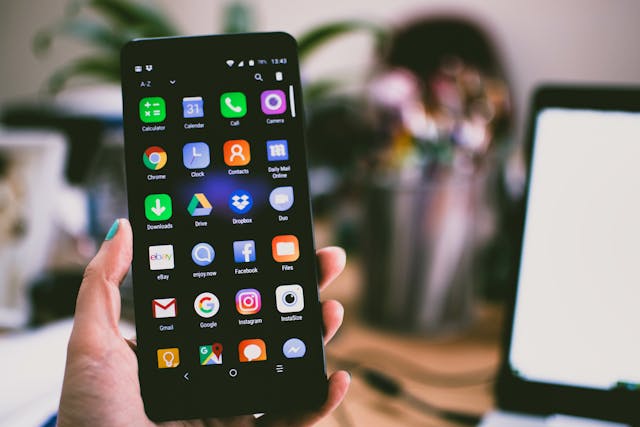
A smartphone self-assessment for memory can detect initial indicators of Alzheimer’s disease

The development of smartphone-based memory assessments, which have shown promise in identifying “mild cognitive impairment” (MCI), a precursor to Alzheimer’s disease, is a testament to the collaborative effort between researchers at the German Center for Neurodegenerative Diseases (DZNE), Otto-von-Guericke University Magdeburg, University of Wisconsin-Madison, and the Magdeburg-based company neotiv. This significant advancement, published in the journal npj Digital Medicine, results from a study involving 199 older adults and underscores the potential of mobile applications in Alzheimer’s research, clinical trials, and regular healthcare. The app, a product of this collective effort, is now available to healthcare professionals to assist in the early identification of memory issues.

Memory impairment is a hallmark symptom of Alzheimer’s disease, crucial for both diagnosis and research. Traditionally, memory tests are conducted in a clinical setting under the supervision of a healthcare professional, involving tasks like recalling words, listing items on a topic, or drawing shapes as per instructions. Due to their need for professional oversight, these tests must be administered at home.

Prof. Emrah Düzel, a leading figure in neurosciences at DZNE and the University of Magdeburg and an entrepreneur in medical technology, proposes a novel approach. He suggests that the ability to conduct these tests independently, akin to how one might use a long-term ECG, could facilitate earlier detection of memory impairments and closer monitoring of disease progression. That is especially pertinent given recent advances in treatments for Alzheimer’s, highlighting the importance of early diagnosis.

The collaboration between DZNE and the startup neotiv has yielded an app that empowers individuals to take control of their memory health. It allows them to perform memory tests independently using smartphones or tablets without professional oversight. The app, scientifically validated and now offered as a digital tool for doctors, aims to support the detection of MCI. Although MCI affects daily living minimally, it significantly increases the risk of developing Alzheimer’s dementia.

Dr David Berron, a research group leader at DZNE and co-founder of Neotiv, explains that the validation process compared this novel, unsupervised method with traditional, in-clinic neuropsychological tests. The findings revealed that the app’s technique is as effective as the in-clinic approach in detecting MCI with high precision, offering clinicians invaluable insights that might not be possible to obtain during a regular clinic visit. These results have been published in the respected journal “npj Digital Medicine”.

The study included participants from Germany and the USA, reflecting a range of cognitive states from healthy to those with MCI or subjective memory concerns. Participants engaged with the neotiv app over at least six weeks, conducting tests at their convenience. The app involves interactive memory tasks targeting various brain areas affected at different stages of Alzheimer’s. The German-US research team compared app-based results with traditional assessment outcomes, demonstrating the app’s efficacy in meaningful memory impairment assessment. Positive app findings could lead to further clinical examinations, while average results reassure individuals for the time being.

This approach is not only proving valuable in Alzheimer’s research but also inspiring a new era of cognitive assessments in clinical studies across several countries. Ongoing and future studies aim to validate this method in larger cohorts and investigate its utility in tracking Alzheimer’s progression. The challenge remains to integrate real-world self-assessment data with clinical profiles, a task that, according to current studies, is progressing well within the field.

More information: David Berron et al, A remote digital memory composite to detect cognitive impairment in memory clinic samples in unsupervised settings using mobile devices, npj Digital Medicine. DOI: 10.1038/s41746-024-00999-9

Journal information: npj Digital Medicine Provided by DZNE – German Center for Neurodegenerative Diseases