Sunday, 30 Aug 2026
  • My Feed
  • My Saves
  • History
  • Blog
Living Well Study
  • Blog
  • Ageing Well
  • Brain Health
  • Healthy Diets
  • Physical Wellness
  • Wellness
  • 🔥
  • Wellness
  • older adults
  • Living Well
  • Brain Health
  • dementia
  • public health
  • Ageing Well
  • Health and Medicine
  • ageing populations
  • alzheimer disease
Font ResizerAa
Living Well StudyLiving Well Study
  • My Saves
  • My Feed
  • History
Search
  • Pages
    • Home
    • Search Page
  • Personalized
    • Blog
    • My Feed
    • My Saves
    • History
  • Categories
    • Ageing Well
    • Brain Health
    • Healthy Diets
    • Mental Wellness
    • Physical Wellness
    • Wellness
Have an existing account? Sign In
Follow US
© 2022 Foxiz News Network. Ruby Design Company. All Rights Reserved.
Living Well Study > Blog > Ageing Well > Longer Gaps Between Meals Linked to Faster Disease Accumulation in Older Adults
Ageing Well

Longer Gaps Between Meals Linked to Faster Disease Accumulation in Older Adults

support
Share
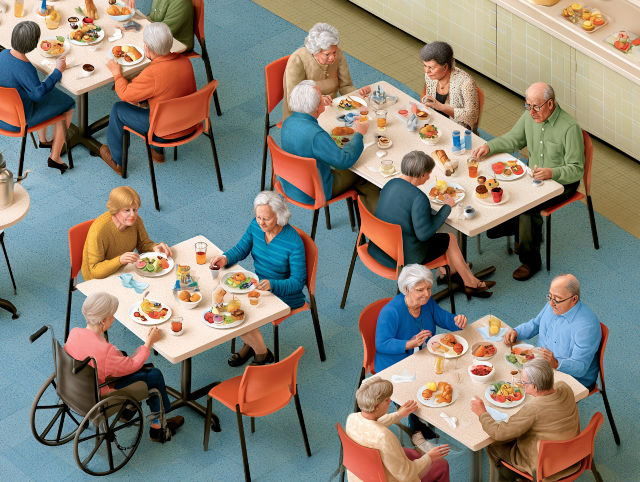
older adults having meals in cafeteria
SHARE

Older adults who typically went longer between meals accumulated chronic diseases more rapidly over time than those who had shorter meal intervals, according to a study from Karolinska Institutet published in the Journal of Internal Medicine. The association was particularly strong among adults aged 78 years and older.

Interest in fasting and meal timing has grown considerably in recent years, with some research exploring their potential effects on metabolism and health. However, much of this research has focused on younger and middle-aged adults, leaving uncertainty about whether longer periods without food have similar associations with health in later life.

To investigate, researchers examined whether the longest interval between meals during a typical day was associated with the rate at which older adults accumulated chronic diseases. The study focused on multimorbidity, or the presence of multiple chronic health conditions, which becomes increasingly common as people age.

The researchers analysed data from the Swedish National Study on Aging and Care in Kungsholmen (SNAC-K). The study included 2,981 people living in Stockholm who were aged 60 years or older when the research began. Participants were followed for up to 15 years, allowing researchers to track changes in their health and the development of chronic conditions over an extended period.

Participants provided information about the times they typically ate during a 24-hour period, which researchers used to estimate the duration of their longest daily interval between meals. The analysis found that longer gaps were associated with a faster accumulation of chronic diseases over time. Those whose longest daily interval between meals ranged from 14 to 24 hours accumulated diseases more rapidly than participants whose longest interval was between six and 11.5 hours.

The association was not limited to overall disease burden. Longer meal intervals were also linked to a faster accumulation of cardiovascular and neuropsychiatric diseases. However, researchers did not find the same association for musculoskeletal diseases, suggesting that the relationship between meal timing and health may vary depending on the type of chronic condition.

“Much of the research on fasting has been conducted in younger or middle-aged populations. Our findings suggest that the associations may be different in older adults, particularly among the oldest age groups,” said Adrián Carballo Casla, the study’s last author and a postdoctoral researcher at the Aging Research Center, Department of Neurobiology, Care Sciences and Society at Karolinska Institutet. The findings were especially pronounced among participants aged 78 and older, highlighting the importance of studying meal patterns specifically in older populations.

The researchers cautioned that the findings show an association rather than a cause-and-effect relationship. The study cannot establish that longer periods between meals directly caused participants to accumulate chronic diseases more quickly, or whether other health, lifestyle or behavioural factors contributed to the observed pattern. Nevertheless, the results suggest that findings about fasting in younger populations may not necessarily apply to older adults and that age should be carefully considered when examining the potential health effects of meal timing.

More information: Luis Kalmbach et al, Habitual fasting duration and accelerated multimorbidity in older adults, Journal of Internal Medicine. DOI: 10.1111/joim.70150

Journal information: Journal of Internal Medicine Provided by Karolinska Institutet

TAGGED:ageingchronic disease accumulationchronic diseasesfastinghealthy ageingintermittent fastingmeal gapsmeal intervalsolder adults
Share This Article
Email Copy Link Print
Previous Article Digital Wellness Program Supports Better Mental Health for Adults with Chronic Conditions
Next Article New Mothers May Need Time Before Feeling Ready to Care for Their Baby
Leave a Comment

Leave a Reply Cancel reply

Your email address will not be published. Required fields are marked *

Recent Posts

  • Connecting People with Nature and Community May Reduce Loneliness
  • New Mothers May Need Time Before Feeling Ready to Care for Their Baby
  • Longer Gaps Between Meals Linked to Faster Disease Accumulation in Older Adults
  • Digital Wellness Program Supports Better Mental Health for Adults with Chronic Conditions
  • Why We Remember Differently as We Get Older

Tags

adolescents adverse effects ageing populations aging populations air pollution alzheimer disease amyloids anxiety artificial intelligence atopic dermatitis behavioral psychology biomarkers blood pressure body mass index brain cancer cancer research cardiology cardiovascular disease cardiovascular disorders caregivers children climate change clinical research cognition cognitive development cognitive disorders cognitive function cognitive neuroscience COVID-19 dementia depression diabetes diets discovery research disease control disease intervention disease prevention diseases and disorders environmental health epidemiology foods food science gender studies geriatrics gerontology gut microbiota health and medicine health care health care costs health care delivery heart disease heart failure home care human brain human health hypertension inflammation insomnia life expectancy life sciences longitudinal studies memory memory disorders menopause mental health metabolic disorders metabolism mortality rates neurodegenerative diseases neurological disorders neurology neuroscience nursing homes nutrients nutrition obesity older adults parkinsons disease physical exercise population studies preventive medicine psychiatric disorders psychological science psychological stress public health research impact risk assessment risk factors risk reduction skin sleep sleep apnea sleep disorders social research social sciences socioeconomics tobacco type 2 diabetes weight loss
August 2026
S M T W T F S
 1
2345678
9101112131415
16171819202122
23242526272829
3031  
« Jul    

This website is for information purpose only and is in no way intended to replace the advice, professional medical care, diagnosis or treatment of a doctor, therapist, dietician or nutritionist.

About | Contact | Cookie Policy | Digital Millennium Copyright Act Notice | Disclaimer | Privacy Policy | Terms of Service

You Might Also Like

Wellness

The Outbreak Worsened Depression Among Elderly Diabetics

By support
Wellness

Older Adults Under Stress Face Greater Challenges Recovering from Surgery

By support
Ageing Well

Complex Interconnections Between Social Isolation, Loneliness, and Frailty Among Older Adults

By support
Health and Medicine

Money Management in Older Adults Falters with Onset of Dementia

By support
Living Well Study
Categories
  • Ageing Well
  • Brain Health
  • Healthy Diets
  • Mental Wellness
  • Physical Wellness
  • Wellness
LivingWellStudy
  • About
  • Contact
  • Cookie Policy
  • Digital Millennium Copyright Act Notice
  • Disclaimer
  • Privacy Policy
  • Terms of Service
Welcome Back!

Sign in to your account

Username or Email Address
Password

Lost your password?