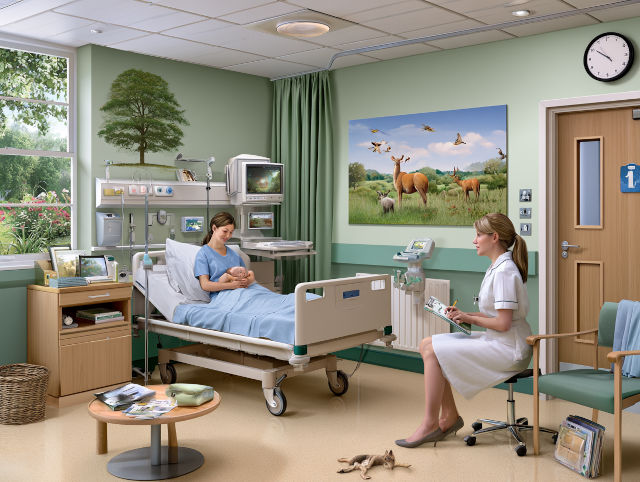
The first days after childbirth bring major physical and emotional changes. Although rooming-in, where mothers and newborns remain together around the clock, is standard practice in many maternity wards, not every new mother feels ready to care for her baby independently immediately after delivery. A new study suggests that this sense of readiness depends less on physical recovery than on a mother’s emotional well-being.
Researchers from Wroclaw Medical University investigated the factors that influence how prepared women feel to care for their newborns. Published in the Journal of Clinical Medicine, the study found that psychological factors, particularly anxiety and the ability to cope with difficult emotions, were more strongly associated with maternal readiness than postpartum pain or normal physiological changes following childbirth.
The study included 200 women in a maternity ward 48 to 72 hours after giving birth. Participants rated how ready they felt to care for their newborn independently during the day and at night, as well as their readiness to breastfeed. Researchers also examined pain, anxiety, mood, social support, psychological flexibility and postpartum changes in blood parameters to determine which factors were most closely linked to perceived readiness.
The findings suggest that readiness for newborn care involves much more than practical skills, physical health or previous parenting experience. Instead, it reflects whether a woman feels that she has sufficient physical and emotional resources to care for her baby independently at that particular moment. The researchers emphasised that feeling unready should not be interpreted as a measure of a mother’s competence or parenting ability.
Anxiety emerged as one of the strongest factors. Women with higher anxiety levels on the second day after childbirth reported feeling significantly less ready to care for their newborn independently and to breastfeed. Psychological flexibility, or the ability to function effectively despite uncomfortable thoughts, emotions or physical sensations, was also important. By comparison, postpartum pain and the normal decline in haemoglobin levels appeared to have much less influence on perceived readiness.
The researchers also found that readiness to breastfeed and readiness for independent newborn care were related but distinct. Women who felt prepared to breastfeed generally reported greater readiness for newborn care, but being motivated or prepared to breastfeed did not necessarily mean feeling capable of providing around-the-clock care. Some mothers may therefore feel confident about feeding their baby while still needing additional assistance with other aspects of newborn care.
The findings could have practical implications for maternity care. Rather than assuming that childbirth automatically means a woman is ready for 24-hour newborn care, healthcare professionals could briefly assess anxiety levels and ask mothers how prepared they feel. The study also found that women were more likely to report high readiness during the daytime than at night, suggesting that nighttime care may be particularly demanding and that some mothers could benefit from additional support during these hours.
The researchers argue that postpartum care should be more individualised and responsive to mothers’ changing needs. Simple conversations about emotional well-being and perceived readiness could help identify women who need extra assistance, while practical guidance from midwives and lactation consultants may help build confidence. Because readiness can differ considerably between women and may change from day to day, rooming-in and other postpartum practices should take both physical recovery and emotional well-being into account.
More information: Anna Prokopowicz et al, Maternal Readiness for Newborn Self-Care in the Early Postpartum Period: Associations with Maternal Psychophysical State and Declared Breastfeeding Readiness, Journal of Clinical Medicine. DOI: 10.3390/jcm15124522
Journal information: Journal of Clinical Medicine Provided by Wroclaw Medical University