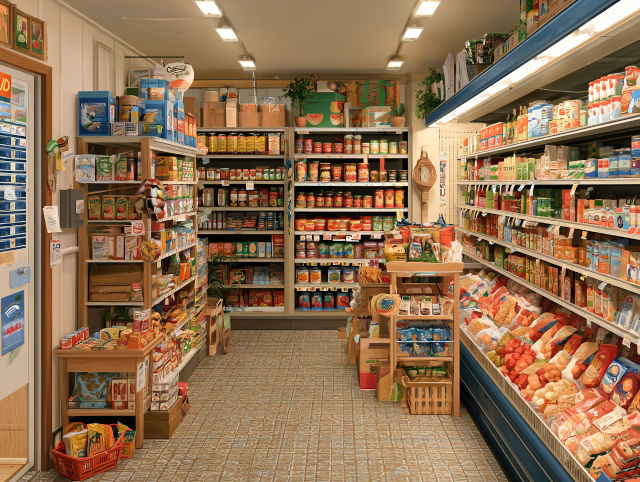
Consumers may save money by buying groceries at dollar stores, but those savings could come with health trade-offs. New research from the University of California, Riverside has found an association between greater access to dollar store food and higher rates of obesity, high blood pressure, high cholesterol and type 2 diabetes across the United States.
The study, published in BMC Public Health, also found that greater access to traditional grocery stores was associated with better health outcomes. The relationships remained even after researchers accounted for socioeconomic factors such as income and unemployment. Despite their growing role as food retailers, dollar stores are classified by the U.S. Census as general merchandise outlets rather than grocery stores, meaning they are often overlooked in studies of food access and consumption.
“Higher grocery costs are pushing people to buy highly processed, lower quality food at dollar stores, and it is negatively impacting their health in a similar way to fast food,” said Ryan Bruellman, a UC Riverside doctoral student in genetics, genomics and bioinformatics and the study’s first author. Bruellman began the research out of an interest in unconventional places where Americans increasingly purchase groceries.
To investigate their potential health impact, Bruellman analysed data from the Centers for Disease Control and Prevention’s 500 Cities Project, which covers major metropolitan areas and cities across the continental United States. The study examined Dollar General, Dollar Tree, 99 Cents Only Stores and Family Dollar, which together represented about 34,000 locations. According to Bruellman, dollar stores now collectively outnumber traditional grocery stores across the country.
Using geographic information system software, Bruellman mapped the number of dollar stores and traditional grocery stores located within a 10-minute drive of residential areas. He then compared store accessibility with community health data and a social vulnerability index, which reflects socioeconomic challenges that can make it more difficult for residents to afford groceries and access other resources.
Dollar store access was significantly associated with poorer health outcomes across regions, although the strength of the relationship varied geographically. The effects were particularly notable in the South and Midwest, where dollar stores and traditional grocery stores were found in roughly equal proportions. Results also differed between individual cities. In Philadelphia, for example, the data did not fully capture bodegas and independent grocery stores, which may provide residents with additional food choices and reduce reliance on dollar stores.
Bruellman emphasised that the concern is not low prices themselves, but the nutritional quality of the foods commonly available at these outlets. Rather than reducing the number of dollar stores, he suggested improving the selection of healthier foods. Partnerships between dollar stores and local farmers, for example, could make fresh fruits and vegetables more readily available to customers who already depend on these stores for groceries.
Other approaches could include locating farmers’ markets and food banks closer to communities heavily served by dollar stores. Such measures could expand access to nutritious foods without removing an important source of affordable groceries. Ultimately, Bruellman hopes the findings will encourage policymakers and researchers to look beyond conventional supermarkets when considering food access and public health. “The overarching thing is we shouldn’t think of traditional grocery stores as the only places to get food. People need to look beyond that,” he said.
More information: Ryan Bruellman et al, Beyond proximity: how food quality in dollar and grocery stores influences health, BMC Public Health. DOI: 10.1186/s12889-026-28145-y
Journal information: BMC Public Health Provided by University of California – Riverside