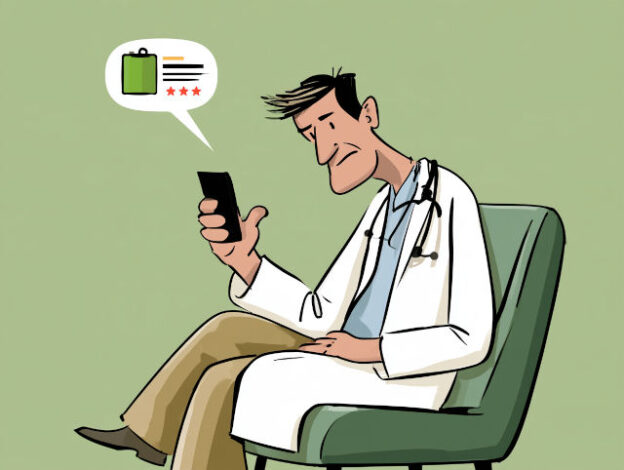
Fake clinician reviews are often perceived as more trustworthy and helpful than genuine ones, according to a Simon Fraser University study. Researchers found that fraudulent reviews can appear more credible because they often contain richer personal health details than real patients are comfortable sharing publicly.
The findings highlight a gap between the information people want when choosing a healthcare provider and what genuine patients are willing to disclose online. “Patients naturally want detailed information when they’re choosing a healthcare provider. A real patient might simply say a doctor was helpful, while a fake review tells a detailed story about symptoms, diagnosis and treatment,” says Aishwarya Deep Shukla, associate professor at the Beedie School of Business and lead author of the study.
“People are drawn to stories. Unfortunately, these deceptive reviews have the kind of information real patients don’t usually share publicly and can influence decisions about who people trust with their care,” Shukla says. The study, published in Internet Research, examined 35,000 clinician reviews collected in India between 2015 and 2017, covering specialties ranging from family medicine to dentistry and dermatology.
Researchers verified 8,313 fake reviews posted by healthcare providers and associated clinic staff, some of whom impersonated patients. They took advantage of a security flaw in an online platform that invited patients to leave reviews after appointments. The researchers then analysed a representative random sample of 5,000 reviews to compare the characteristics of fraudulent and genuine posts.
The analysis found that fake reviews tended to be longer and included more information about symptoms, diagnoses, medications and treatments. They also received more “helpful” votes and scored higher on a measure of perceived trustworthiness than genuine reviews. Shukla says the tactics identified in the research remain relevant today and may be amplified by advances in generative artificial intelligence (AI).
“When I look at reviews now, I see the same patterns of length and detail. The double-edged sword of AI is that it’s helping real people write more complete and useful reviews, but it’s also helping bad actors produce detailed fake reviews at scale,” Shukla says. This makes it increasingly important for online platforms and patients to consider how reviews are created and verified rather than assuming that greater detail means greater authenticity.
Shukla recommends stronger safeguards, including appointment-linked review systems, authenticated anonymous reviews and improved moderation. He also suggests redesigning review formats so patients can provide meaningful information without revealing sensitive personal details. Longer-term solutions could include verified review systems managed by healthcare organisations or public agencies that confirm a patient relationship while preserving anonymity.
Fake reviews may be particularly common in areas where providers compete for patients or clients, including private dentistry, psychology, counselling and physiotherapy services. Shukla advises people to look for consistent themes across many reviews rather than relying on one or two detailed stories, and to be cautious of reviews containing unusually specific medical information. Providers with few or no reviews should not automatically be dismissed, as many satisfied patients never post reviews. Online ratings should also be considered alongside professional credentials, personal recommendations and direct interactions with a clinic.
More information: Aishwarya Deep Shukla et al, The illusion of trust and the paradox of disclosure: how fake physician reviews exploit privacy concerns, Internet Research. DOI: 10.1108/INTR-01-2024-0042
Journal information: Internet Research Provided by Simon Fraser University