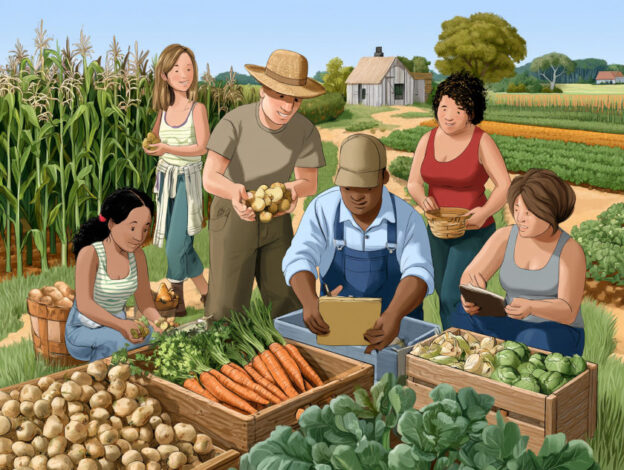
A sustainable farming programme is helping resettled refugees and immigrants improve their mental and physical well-being while developing the skills needed to run their own agricultural businesses, according to new research from the University of Kansas. The findings suggest that working outdoors, building social connections and having greater control over their work can provide participants with a stronger sense of independence, purpose and belonging.
New Roots is a four-year training programme in Kansas City, Missouri, that helps resettled refugees, immigrants and English-language learner farmers develop sustainable agriculture-based businesses. Participants lease a quarter-acre plot at the programme’s 7.5-acre farm, where they gain hands-on experience in sustainable farming and entrepreneurship.
University of Kansas researchers Joonmo Kang and Cheryl Holmes began studying New Roots after visiting the farm in 2022. The research team attended meetings and events, built relationships with staff, trainees and volunteers, and conducted focus groups and interviews to understand participants’ experiences better. The study was conducted in collaboration with New Roots organisers Benjamin Carpenter of Cultivate KC and Kristin Selby of Catholic Charities of Northeast Kansas.
Farmers frequently described benefits to both their mental and physical health. Many also held full-time jobs in warehouses, meatpacking plants or service industries, where they reported limited flexibility, repetitive work and few opportunities to interact with colleagues. By contrast, farming gave them greater freedom to set their own hours, connect with others and experience a stronger sense of value in their work.
“That sense of flexibility and agency meant so much to them,” Kang said. Although participants might earn more from their regular employment, many continued farming because of the independence and camaraderie it provided. New Roots also gave participants an opportunity to build something of their own as entrepreneurs. As one farmer told the researchers, “You are your own boss.”
Participants receive training in climate-resilient growing, pest management and equipment use, as well as business planning, taxes and record keeping. They also learn how to market and sell produce through farmers’ markets, Community Supported Agriculture programmes and wholesale channels. Many had previous farming experience before arriving in the United States. Still, New Roots helps them adapt their knowledge to American business practices, laws and tax requirements while providing English-language classes during the non-growing season.
The researchers also found that social connection was an important part of the programme. Farmers, staff and their families formed relationships through everyday activities, shared meals and work on the farm. Participants also enjoyed meeting customers at farmers’ markets, where selling produce became an opportunity to share culturally significant foods, recipes and agricultural knowledge with the broader Kansas City community. Kang described these exchanges as a form of “reciprocity” rather than simply commercial transactions.
Published in the Journal of Community Practice, the study also demonstrates the value of community-based participatory research. Kang said the researchers deliberately spent years listening, building trust and gathering community input before concluding. In much the same way that New Roots creates belonging through farming, the research process sought to build relationships through shared work, mutual learning and collaboration while producing findings that could benefit both the organisation and the communities it serves.
More information: Joonmo Kang et al, Empowering Communities Through Sustainable Urban Agriculture: A Case Study of Farmer Training Program for Resettled Refugees, Journal of Community Practice. DOI: 10.1080/10705422.2026.2708030
Journal information: Journal of Community Practice Provided by University of Kansas