Saturday, 25 Jul 2026
  • My Feed
  • My Saves
  • History
  • Blog
Living Well Study
  • Blog
  • Ageing Well
  • Brain Health
  • Healthy Diets
  • Physical Wellness
  • Wellness
  • 🔥
  • Wellness
  • older adults
  • Living Well
  • Brain Health
  • dementia
  • public health
  • Ageing Well
  • Health and Medicine
  • alzheimer disease
  • physical exercise
Font ResizerAa
Living Well StudyLiving Well Study
  • My Saves
  • My Feed
  • History
Search
  • Pages
    • Home
    • Search Page
  • Personalized
    • Blog
    • My Feed
    • My Saves
    • History
  • Categories
    • Ageing Well
    • Brain Health
    • Healthy Diets
    • Mental Wellness
    • Physical Wellness
    • Wellness
Have an existing account? Sign In
Follow US
© 2022 Foxiz News Network. Ruby Design Company. All Rights Reserved.
Living Well Study > Blog > Health and Medicine > Common myths about water intake and spicy foods debunked
Health and Medicine

Common myths about water intake and spicy foods debunked

support
Share
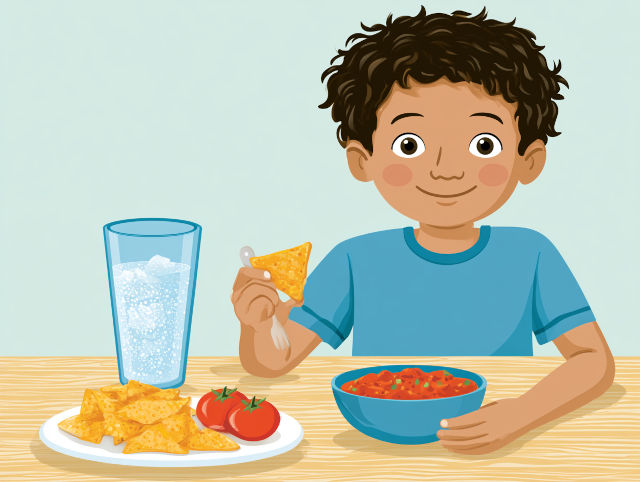
kid eating chips and salsa
SHARE

Researchers are challenging two long-standing pieces of nutrition advice: that drinking water during meals helps you eat less, and that spicy foods encourage overeating. A new study from Cornell University found little evidence that water at mealtimes promotes fullness. Instead, people who drank more water during a meal tended to eat more. At the same time, a separate experiment showed that adding extra spice to a snack slowed eating and reduced how much participants consumed overall.

The researchers found that for every additional 100 grams of water participants drank during a meal, they ate about 39 more grams of food, or roughly 49 extra calories. People who frequently alternated between bites of food and sips of water also ate more, with each additional switch linked to about 4.4 extra grams of food consumed. The team believes this may be because alternating between food and water delays sensory-specific satiety – the natural decline in a food’s appeal as you continue eating – helping meals stay enjoyable for longer.

“There’s been this widespread advice that if we drink water, it fills us up,” said Paige Cunningham, assistant professor in Cornell’s Division of Nutritional Sciences and corresponding author of the study, published in Appetite. “But water is emptied quickly from the stomach, so it likely doesn’t fill us up for long. Instead, water may increase how much we eat, providing lubrication which can speed up eating, and preventing a dry mouth which can prolong enjoyment of the food.” The analysis combined data from two previous laboratory studies involving 86 adults who ate as much beef chilli or chicken tikka masala as they wanted. At the same time, every bite and sip was recorded.

One unexpected finding was that participants who drank water more quickly during their meals actually ate less. Cunningham said the reason remains unclear and may be related to how long water stays in the mouth or reflects the overall length of a meal. “This was a secondary analysis looking at associations,” she said. “We are following up on this right now so we can make those causal inferences.”

In a separate study published in Food Quality and Preference, 49 adults ate tortilla chips with either a mild or spicy salsa, with the only difference being the amount of cayenne pepper. Participants consumed 28% less of the spicy snack and ate about 30% more slowly than when eating the mild version. Water intake remained unchanged, suggesting the reduction in food consumption was linked to the slower eating pace rather than increased thirst. “The takeaway is that adding spice to one part of the snack can significantly influence how much people eat overall,” Cunningham said.

Together, the studies suggest that common assumptions about water and spicy foods may need rethinking. Drinking more water during meals was associated with eating more, while adding spice appeared to slow eating and reduce overall food intake. However, the researchers caution that both experiments were conducted under controlled laboratory conditions using a limited range of foods, including chilli, tikka masala, tortilla chips and salsa. More research is needed to determine whether the same effects occur with different foods and in everyday eating situations.

More information: Paige Cunningham et al, Water intake, switching between bites and sips, and drinking behavior are associated with food intake across meals varying in spiciness: A secondary analysis of two randomized crossover studies, Appetite. DOI: 10.1016/j.appet.2026.108698

Journal information: Appetite Provided by Cornell University

TAGGED:dieteticshealth care
Share This Article
Email Copy Link Print
Previous Article Temperature Perception: How the Body Senses Heat and Cold
Next Article New Analysis in Nature Reviews Microbiology Examines the Impact of Climate Change on Waterborne Diseases
Leave a Comment

Leave a Reply Cancel reply

Your email address will not be published. Required fields are marked *

Recent Posts

  • Living Environment May Affect Women’s Heart Health for Decades, Study Suggests
  • Study Shows How the Adolescent Brain Reshapes Memory
  • Study Finds Frequent TV Watching Associated with Smaller Brain Structures
  • Overweight May Contribute to Cancer Risk More Than Previously Thought
  • New Analysis in Nature Reviews Microbiology Examines the Impact of Climate Change on Waterborne Diseases

Tags

adolescents adverse effects ageing populations aging populations air pollution alzheimer disease amyloids anxiety artificial intelligence atopic dermatitis behavioral psychology biomarkers blood pressure body mass index brain cancer cancer research cardiology cardiovascular disease cardiovascular disorders caregivers children climate change climate change effects clinical research cognition cognitive development cognitive disorders cognitive function cognitive neuroscience COVID-19 dementia depression diabetes diets discovery research disease control disease intervention disease prevention diseases and disorders environmental health epidemiology foods food science gender studies geriatrics gerontology gut microbiota health and medicine health care health care costs health care delivery heart disease heart failure home care human brain human health hypertension inflammation insomnia life expectancy life sciences longitudinal studies memory disorders menopause mental health metabolic disorders metabolism mortality rates neurodegenerative diseases neurological disorders neurology neuroscience nursing homes nutrients nutrition obesity older adults parkinsons disease physical exercise population studies preventive medicine psychiatric disorders psychological science psychological stress public health research impact risk assessment risk factors risk reduction skin sleep sleep apnea sleep disorders social interaction social research socioeconomics tobacco type 2 diabetes weight loss
July 2026
S M T W T F S
 1234
567891011
12131415161718
19202122232425
262728293031  
« Jun    

This website is for information purpose only and is in no way intended to replace the advice, professional medical care, diagnosis or treatment of a doctor, therapist, dietician or nutritionist.

About | Contact | Cookie Policy | Digital Millennium Copyright Act Notice | Disclaimer | Privacy Policy | Terms of Service

You Might Also Like

Health and Medicine

Fall Prevention Clinics: A Smart Investment in Older Adult Health

By support
Health and Medicine

An AI-Driven Review of a Century of Ageing Research Reveals Trends and Gaps

By support
Health and Medicine

Blood-Based Test Could Guide More Precise Breast Cancer Therapy for Older Women

By support
Healthy Food

Consuming Entire Small Fish May Extend Lifespan, According to Japanese Research

By support
Living Well Study
Categories
  • Ageing Well
  • Brain Health
  • Healthy Diets
  • Mental Wellness
  • Physical Wellness
  • Wellness
LivingWellStudy
  • About
  • Contact
  • Cookie Policy
  • Digital Millennium Copyright Act Notice
  • Disclaimer
  • Privacy Policy
  • Terms of Service
Welcome Back!

Sign in to your account

Username or Email Address
Password

Lost your password?