
Daily Archives: 7 August 2024

Research Reveals Cuffless Blood Pressure Monitor Improves and Simplifies Hypertension Control

A researcher from Brigham and Women’s Hospital’s recent study evaluated an innovative cuffless device that measures blood pressure at the wrist, providing hundreds of readings over several days to assist in cardiovascular risk evaluation and hypertension management. Globally, high blood pressure is the leading cause of death, affecting one in every two adults, yet only a quarter of those with hypertension have their condition under control. This underscores the critical need for new strategies for managing blood pressure effectively. The study, undertaken at Brigham and Women’s Hospital—a key institution within the Mass General Brigham healthcare system—explored the benefits of a cuffless blood pressure monitor that uses optical sensors to continuously and unobtrusively record readings. Published in Frontiers in Medicine, the research highlights significant advancements in diagnosing and managing hypertension facilitated by the adoption of cuffless technology.

Dr. Naomi Fisher of the Division of Endocrinology, Diabetes, and Hypertension at Brigham and Women’s Hospital and the study’s corresponding author emphasized the practicality of cuffless devices. She noted that these devices enable easy and reliable blood pressure monitoring outside the traditional clinical setting, potentially revolutionizing hypertension management by providing many more readings, both day and night. This increased frequency helps confirm hypertension diagnoses and guide medication adjustments more accurately. Medical guidelines increasingly support at-home blood pressure monitoring for a more accurate hypertension diagnosis and management. This shift is because blood pressure readings taken in a clinical setting can often be inaccurate; for example, some patients experience ‘white coat hypertension’ where their blood pressure spikes in medical settings, while others may have ‘masked hypertension,’ showing regular readings in a clinic but elevated levels at home.

Time-in-Target-Range (TTR), which reflects how often a patient’s blood pressure stays within the normal range, is emerging as a vital metric for assessing cardiovascular health. However, achieving an accurate TTR requires more frequent blood pressure readings than possible with conventional cuffs, which can be cumbersome and uncomfortable—in collaboration with colleagues from Aktiia SA, a Swiss biotech company, Dr Fisher analyzed over 2.2 million blood pressure readings from 5,189 participants across Europe and the UK using a cuffless wrist monitor developed by Aktiia. This device collected an average of 29 readings per day, significantly more than the four daily readings usually recommended, totalling an average of 434 readings per participant over 15 days.

By assessing TTR over these 15 days, researchers could stratify participants by the percentage of readings within the target range and compare these classifications to those derived from traditional monitoring methods. They discovered that conventional methods often misclassified between 26 and 45 per cent of subjects, whereas continuous monitoring for seven days could achieve over 90 per cent accuracy in risk classification. This level of frequency and accuracy in monitoring can primarily be achieved through cuffless technology.

Despite the promising results, the Aktiia device has yet to be approved by the U.S. Food and Drug Administration. Still, it has undergone multiple validations and is available over the counter in Europe and the UK. Efforts to evaluate and establish standards for such devices in the U.S. are ongoing. Dr. Fisher asserts that cuffless devices could fundamentally alter the landscape of blood pressure monitoring and hypertension management. By facilitating continuous, out-of-office blood pressure readings and leveraging this data to assess time-in-target range, cuffless devices show immense promise as predictors of cardiovascular risk, signalling a significant shift in the paradigm of blood pressure monitoring.

More information: Naomi D. L. Fisher et al, Optimizing time-in-target-range assessment for blood pressure: insights from a large-scale study with continual cuffless monitoring, Frontiers in Medicine. DOI: 10.3389/fmed.2024.1396962

Journal information: Frontiers in Medicine Provided by Brigham and Women’s Hospital
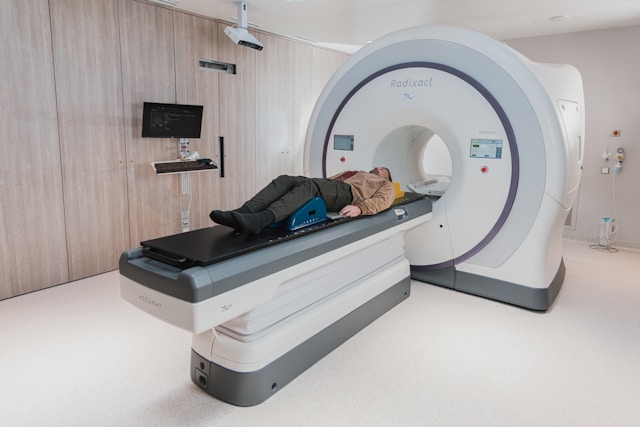
Brain Imaging Links on MRI Indicate Progression of Parkinson’s Disease

A study recently published in the journal Radiology by the Radiological Society of North America (RSNA) reveals that MRI images illustrating the brain’s structural and functional layout can forecast the progression of brain atrophy in individuals diagnosed with early-stage, mild Parkinson’s disease.

Parkinson’s disease is a neurodegenerative disorder identified by symptoms such as tremors, slow movements, or stiffness. These symptoms tend to worsen over time and may expand to include cognitive decline and sleep disturbances. Over 8.5 million people globally suffer from this condition, which has doubled over the last quarter-century, data from the World Health Organization (WHO) indicates.

A notable hallmark of Parkinson’s disease is the accumulation of abnormal alpha-synuclein protein variants within the brain. Under normal conditions, this protein exists benignly in the brain. Still, malfunctions in Parkinson’s misfold into aggregates that gather inside nerve cells, forming what are known as Lewy bodies and Lewy neurites. These aggregates further propagate throughout the brain, impairing nerve function.

The research team sought to determine whether visualising the structural and functional networks across the brain, using connectome maps derived from MRI scans, could predict the pattern of atrophy progression in patients with mild Parkinson’s disease. To this end, they analysed MRI data from 86 patients with mild Parkinson’s and 60 healthy controls to create these connectomes, subsequently developing an index to measure disease exposure.

The study found significant correlations between disease exposure at one and two years and brain atrophy at two and three years post-initial assessment. Models that included disease exposure effectively forecasted the accumulation of grey matter atrophy over three years in several brain regions.

Dr Federica Agosta, M.D., PhD, an associate professor of neurology at the Neuroimaging Research Unit of IRCCS San Raffaele Scientific Institute in Milan, Italy, and co-author of the study, remarked on the significance of these findings. She highlighted that the brain’s connectome, encompassing structural and functional aspects, demonstrated potential in predicting the progression of grey matter alterations in patients with mild Parkinson’s disease.

Dr Agosta further explained that neuron deterioration and the build-up of abnormal proteins could interfere with neural connections, hindering the transmission of neural signals and information integration across different brain areas. The study underscores the importance of MRI in intervention trials aimed at halting or slowing down the progression of the disease, particularly when tailored to individual patient data.

As the progression of Parkinson’s disease varies among patients, future research models should account for individual-specific starting conditions and incorporate personalised data to enhance their predictive accuracy. Dr. Agosta concluded by stressing the critical goal in neuroscience of understanding the brain’s network dynamics through the study of the human connectome, aspiring to identify new biomarkers that could influence the progression of Parkinson’s disease.

More information: Silvia Basaia et al, Brain Connectivity Networks Constructed Using MRI for Predicting Patterns of Atrophy Progression in Parkinson Disease, Radiology. DOI: 10.1148/radiol.232454

Journal information: Radiology Provided by Radiological Society of North America

Knitting fosters tranquility and order in the lives of individuals with mental health challenges

Research from the University of Gothenburg has identified knitting as a beneficial activity for individuals managing mental health conditions, presenting it as a means to instil calm and introduce structure into their lives. The popularity of knitting has surged recently, further evidenced by hand-knitted items being named the Christmas gift of the year in Sweden in 2022. This surge in interest supports the broader research narrative that knitting enhances personal health and enriches the quality of life, aligning with cultural trends that embrace craft and mindfulness.

The study, published in the Journal of Occupational Science, was led by Joanna Nordstrand, an occupational therapist and PhD candidate at the University of Gothenburg. Nordstrand, who also knits in her free time, suggests that knitting is more than a hobby; it is a therapeutic endeavour that helps individuals cope with life’s challenges and improves mental health. Her findings are based on analyses of 600 posts from Ravelry, an international online fibre arts forum where individuals share their experiences and discuss their hobbies.

The research identified three main ways knitting aids in mental health: it provides a relaxing escape, offers a sense of identity and community among knitters, and introduces a structured routine to the daily lives of those involved. These elements collectively contribute to significant improvements in mental health, making knitting a valuable, low-stakes social context for many.

Participants in the study expressed profound appreciation for knitting, noting it as an occupation that provides immediate relaxation and mental clarity and contributes to long-term health benefits. Some described how knitting helped clarify their thoughts, making mental processes more accessible to manage. The engagement in knitting during stressful times, such as waiting in hospital rooms or managing anxiety, was frequently highlighted as more beneficial than traditional medical interventions like medication.

Nordstrand and her fellow researchers advocate for recognising knitting’s therapeutic potential within the health system. They emphasise that occupational therapy aims to facilitate manageable and fulfilling daily lives, and the simple act of knitting with needles and yarn could be an underutilised tool in achieving this goal. The personal anecdotes from the study underline knitting’s role as a powerful alternative to more conventional therapeutic practices, offering immediate and enduring mental health advantages.

More information: Joanna Nordstrand et al, Promoting health through yarncraft: Experiences of an online knitting group living with mental illness, Journal of Occupational Science. DOI: 10.1080/14427591.2023.2292281

Journal information: Journal of Occupational Science Provided by University of Gothenburg

Palliative Care is Often Overlooked in Nursing Home Settings

Palliative care, which focuses on alleviating symptoms and reducing the stress of serious illnesses, remains significantly underutilised in nursing homes despite the high prevalence of conditions such as cancer, dementia, Parkinson’s disease, heart failure, and chronic obstructive pulmonary disease among residents. A qualitative study published in the Journal of the American Geriatrics Society explores the inadequate use of palliative care referrals in these settings and offers strategies to address this gap. The research reviews existing referral patterns and proposes a robust framework to enhance palliative care referrals in nursing homes.

It is crucial to note that palliative care is broader than hospice care and can be provided to individuals at any stage of a severe illness, often in conjunction with other treatments. The extent of palliative care required can vary depending on the individual needs of nursing home residents. Some may need just a single consultation to adjust medications and develop a care plan, while others with persistent symptoms or frequent changes in their condition may require ongoing support.

Kathleen Unroe, M.D., MHA, co-author of the study and a research scientist at the Regenstrief Institute, emphasised the importance of palliative care in these facilities. She noted that while palliative care is essential for residents with advanced diseases, especially those with advanced dementia, it is not uniformly available across all U.S. nursing homes. The availability of non-hospice palliative care is particularly scarce, often depending on geographic location.

Dr. Unroe, an associate professor of medicine at the Indiana University School of Medicine – Indianapolis, pointed out that primary care providers in nursing homes are capable of delivering substantial supportive care. However, there are instances where the expertise of palliative care consultants is crucial for providing specialised care. Despite the clear need, the implementation of palliative care services is fraught with challenges, though it is successfully being integrated in some facilities and regions. The study aims to gather insights from professionals in the field to develop best practice models and establish standard care protocols.

The researchers stress the need for nursing home staff to be aware of and trained in palliative care to identify residents needing such services effectively. They propose exploring five key areas to pinpoint residents with unmet palliative care needs. Dr Unroe highlighted the need for innovative solutions to provide palliative care training to frontline staff and primary care providers, thus ensuring that residents’ complex care needs are met. Furthermore, systematic processes must be established to identify those requiring a higher level of specialised palliative care.

The team continues to evaluate current practices and develop new evidence-based tools and models to enhance and standardise palliative care in nursing homes. Creating scalable models that can be broadly implemented aims to ensure all nursing home residents have equitable access to palliative care. Connie S. Cole, PhD, DNP, from the University of Colorado and the study’s lead author, emphasised the importance of implementing standardised referral criteria to facilitate equitable access to palliative care. She also stressed the value of educating residents and their families about palliative care, enabling them to make informed decisions about their care preferences.

More information: Connie S. Cole et al, Palliative care in nursing homes: A qualitative study on referral criteria and implications for research and practice, Journal of the American Geriatrics Society. DOI: 10.1111/jgs.18938

Journal information: Journal of the American Geriatrics Society Provided by Regenstrief Institute