Daily Archives: 2 August 2024

Research Unveils Causes of Bias in AI Models for Medical Imaging Analysis

Artificial intelligence models are increasingly integrated into medical diagnostic processes, particularly in analysing imaging data like X-rays. Research has indicated that these AI systems do not consistently perform well across different demographic groups, often underperforming in diagnostic accuracy for women and individuals from diverse ethnic backgrounds.

In an intriguing development, a 2022 study by MIT researchers demonstrated that AI models could reliably predict a patient’s race from their chest X-rays, a task that even experienced radiologists cannot achieve. This capability, however, comes with significant implications. The same team has discovered that the accuracy of these models in predicting demographic details correlates with substantial fairness gaps in medical diagnostics. Essentially, models better at identifying demographic characteristics tend to have more significant disparities in diagnosing diseases across different racial and gender groups. This suggests that the AI might be taking demographic shortcuts in its evaluations, leading to potentially incorrect diagnoses for certain groups, such as women and Black individuals.

Marzyeh Ghassemi, an associate professor at MIT, underscored the connection between AI’s ability to predict demographics and its uneven performance across groups, a link that had not been previously established. The study underscores the urgent need to address these biases, as they could potentially lead to harmful consequences for patient care.

The researchers have explored methods to enhance the fairness of these models. They found that retraining the AI with an emphasis on reducing biases showed promising results, but only when the models were applied to patients similar to those they were trained on. When used on patients from different hospitals, the fairness gaps reemerged, suggesting that the debiasing efforts were only sometimes effective.

Haoran Zhang, an MIT graduate student and lead author of the study, advises that hospitals should rigorously test external AI models with their demographic data to ensure any fairness claims are valid in their specific context. This is crucial because models often perform best on the data they were trained on and may need to generalise better across different settings.

The FDA has approved many AI-enabled medical devices for use in radiology, highlighting the growing reliance on AI in medical diagnostics. However, the discovery that these models can inadvertently learn and utilise demographic information to make predictions—even when not explicitly trained—raises concerns about their application and the ethical implications of their use.

The study employed AI models on publicly available chest X-ray datasets to predict several medical conditions and examine their performance. The findings revealed not only variability in accuracy based on gender and race but also a correlation between the models’ demographic prediction accuracy and their fairness gaps. This indicates that the AI may be using demographic features as proxies in its diagnostic processes, which could undermine the fairness and efficacy of medical diagnostics.

To combat these issues, the researchers employed training models to improve subgroup robustness and group adversarial methods to strip demographic information from the training process. Both approaches succeeded, but their effectiveness could have been enhanced when the data closely resembled the training set.

The persistence of fairness gaps in other datasets underscores a significant challenge: models debiased in one context may not maintain their fairness in another. This variability highlights the complexity of AI in medicine and the crucial need for continuous vigilance and adaptation to ensure these technologies serve all patients equitably.

Ghassemi’s team plans to continue exploring new methods to refine AI’s ability to make fair and accurate predictions across diverse patient populations. The research underscores the critical necessity for hospitals to thoroughly evaluate AI models with their specific demographic data before implementation. This responsible deployment and development of AI technologies in healthcare is a vital step in ensuring unbiased medical outcomes.

More information: Yuzhe Yang et al, The limits of fair medical imaging AI in real-world generalization, Nature Medicine. DOI: 10.1038/s41591-024-03113-4

Journal information: Nature Medicine Provided by Massachusetts Institute of Technology

Pregnant and Postpartum Women with Depression at Increased Risk of Cardiovascular Disease

Women diagnosed with perinatal depression are at a greater risk of developing cardiovascular disease within the next two decades compared to those who do not experience such depression during or after pregnancy, a study published in the European Heart Journal today reveals.

Perinatal depression, defined as depression occurring during pregnancy or following childbirth, affects approximately 20% of women globally. This groundbreaking research is the inaugural study to examine cardiovascular health after perinatal depression, analysing data from about 600,000 women. It discovered notably higher risks of conditions such as high blood pressure, ischemic heart disease, and heart failure.

The study was conducted by Dr Emma Bränn, Dr Donghao Lu, and their team at the Karolinska Institutet in Stockholm, Sweden. Dr Lu noted that prior research by their group linked perinatal depression with a heightened risk of various health issues, including premenstrual and autoimmune disorders, suicidal behaviour, and even premature death. “Given that cardiovascular disease is a leading cause of death worldwide, our team was keen to explore whether a history of perinatal depression could be indicative of an increased risk of cardiovascular diseases,” Dr Lu explained.

The researchers utilised the Swedish Medical Birth Register for this study, which documents every birth in Sweden. They compared 55,539 Swedish women diagnosed with perinatal depression between 2001 and 2014 with 545,567 Swedish women who gave birth during the same period but did not suffer from perinatal depression. Follow-up continued until 2020 to monitor the onset of any cardiovascular diseases.

The findings revealed that 6.4% of women with perinatal depression developed cardiovascular disease, compared to 3.7% of those without perinatal depression, reflecting a 36% increased risk. The risks of developing high blood pressure, ischemic heart disease, and heart failure were about 50%, 37%, and 36% higher, respectively, among those with perinatal depression.

Dr Bränn, the study’s senior author, emphasised the importance of these findings in identifying individuals at higher risk of cardiovascular disease to mitigate this risk. “These results underscore the significance of comprehensive maternal care that equally focuses on physical and mental health,” she remarked. The pathways through which perinatal depression may lead to cardiovascular disease are still not well understood, indicating a need for further research to develop effective prevention strategies for both depression and cardiovascular disease.

In a notable comparison, the study also examined sisters of women who suffered from perinatal depression and found that they had a 20% increased risk of cardiovascular disease. Dr Bränn suggested that genetic or familial factors might play a role in this disparity. “There might be other contributing factors, similar to those observed in other forms of depression and cardiovascular disease, such as changes in the immune system, oxidative stress, and lifestyle changes associated with major depression,” she added.

More information: Donghao Lu et al, Perinatal depression and risk of maternal cardiovascular disease: a Swedish nationwide study, European Heart Journal. DOI: 10.1093/eurheartj/ehae170

Journal information: European Heart Journal Provided by European Society of Cardiology

Physicians May Soon Utilize Facial Temperature to Diagnose Metabolic Diseases Early

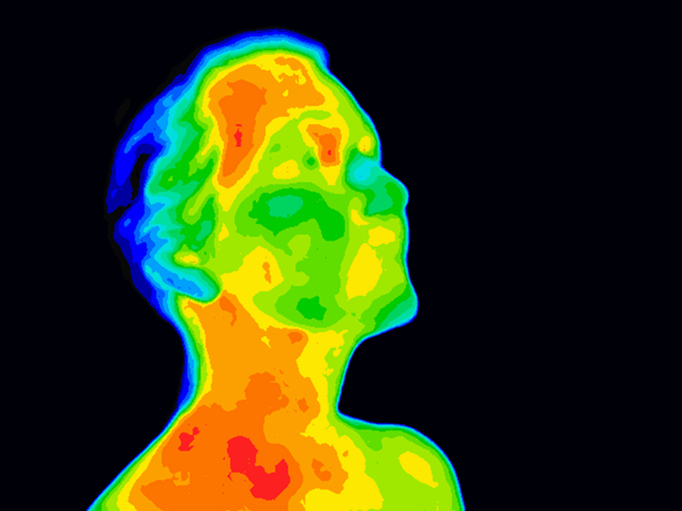
Researchers have identified that variations in facial temperature could indicate high blood pressure, with cooler noses and warmer cheeks serving as potential signs. This discovery arises from findings that link distinct temperatures in various facial regions to chronic diseases like diabetes and hypertension. These subtle thermal differences are invisible to human touch. Still, they can be accurately detected using AI-based analysis of spatial temperature patterns, which requires thermal imaging technology and a data-trained model. This research was detailed in a publication on July 2 in the journal Cell Metabolism, suggesting that with further study, this non-invasive technique could be used by doctors for early disease detection.

Jing-Dong Jackie Han, the study’s corresponding author from Peking University in Beijing, commented on the broader implications of their findings, noting, “Aging is a natural process, but our tool has the potential to promote healthy ageing and help people live disease-free.” The research team had previously utilized 3D facial analysis to predict biological age—an indicator of how well one’s body is ageing and the associated risk of diseases such as cancer and diabetes. Curiosity about whether other facial features like temperature could also indicate health status led to this new avenue of research.

The team analyzed the facial temperatures of over 2,800 Chinese participants ranging from 21 to 88 years old. The data was then used to train AI models that predict a person’s ‘thermal age.’ Key facial regions were identified where temperatures correlated significantly with age and health status, including the nose, eyes, and cheeks. It was found that the temperature of the nose decreases with age more rapidly than other facial areas, suggesting that individuals with warmer noses tend to have a younger thermal age, while temperatures around the eyes generally increase with age.

Furthermore, the study revealed that individuals with metabolic disorders such as diabetes and fatty liver disease experienced faster thermal ageing, often showing higher temperatures in the eye area compared to healthy individuals of the same age. People with elevated blood pressure also exhibited higher temperatures in the cheek areas. The research team attributed these increases in temperature mainly to a rise in cellular activities related to inflammation, including repairing damaged DNA and fighting infections, which heat specific facial regions.

In an exciting twist, the researchers explored whether physical activity could influence thermal age. They instructed 23 participants to jump rope at least 800 times daily for two weeks. To their surprise, participants reduced their thermal age by five years after the exercise regimen, suggesting a profound potential benefit of regular physical activity on one’s thermal and biological ageing.

Looking ahead, Han and her team are keen to investigate whether thermal facial imaging could predict other diseases, such as sleep disorders or cardiovascular issues. “We hope to apply thermal facial imaging in clinical settings, as it holds significant potential for early disease diagnosis and intervention,” Han explains. This advancement in medical imaging, combined with AI technology, offers a promising new frontier in proactively managing health and disease.

More information: Zhengqing Yu et al, Thermal facial image analyses reveal quantitative hallmarks of aging and metabolic diseases, Cell Metabolism. DOI: 10.1016/j.cmet.2024.05.012

Journal information: Cell Metabolism Provided by Cell Press

Cardiac Health May Be the Leading Risk Factor for Future Dementia Incidence

A new study led by researchers from UCL suggests that dementia risk factors linked to cardiovascular health may have become more prominent over time compared to other factors like smoking or lower educational attainment. The research, published in The Lancet Public Health, examines shifts in the prevalence of dementia risk factors and their potential implications for future dementia rates.

Currently, approximately 944,000 individuals are living with dementia in the UK, with 52% of the population, or 34.5 million people, knowing someone diagnosed with the disease. Dementia remains a leading cause of death in the UK, especially among women, where it has been the top cause of death since 2011.

The study underscores a growing focus on modifiable risk factors, which, if eliminated, could theoretically prevent around 40% of dementia cases, according to UCL-led research. The researchers reviewed 27 papers, incorporating global data from 1947 to 2015, with the most recent study published in 2020. They assessed the data for dementia risk factors from each study and calculated the proportion of dementia cases attributable to each factor over time.

Dementia typically arises from a mix of genetic and environmental factors, including hypertension, obesity, diabetes, educational level, and smoking habits. The findings indicated that lower educational levels and smoking rates have declined over time, correlating with a decrease in dementia rates. Conversely, obesity and diabetes rates have climbed, paralleling an increase in their contribution to dementia risk.

Hypertension remains a significant dementia risk factor, although proactive management of this condition has also improved over time. Dr Naaheed Mukadam, the lead author from UCL Psychiatry, noted that cardiovascular risk factors have increasingly influenced dementia risk, warranting more focused intervention for future prevention efforts.

The study also highlights societal shifts—increased educational attainment in wealthier nations and reduced smoking rates in Europe and the USA, driven by societal changes and higher costs, have rendered these factors less significant in dementia risk. These trends suggest that broad interventions at the population level could markedly affect the prevalence of dementia risk factors, and governments should consider implementing global educational policies and smoking restrictions to mitigate these risks.

More information: Naaheed Mukadam et al, Changes in prevalence and incidence of dementia and risk factors for dementia: an analysis from cohort studies, The Lancet Public Health. DOI: 10.1016/S2468-2667(24)00120-8

Journal information: The Lancet Public Health Provided by University College London