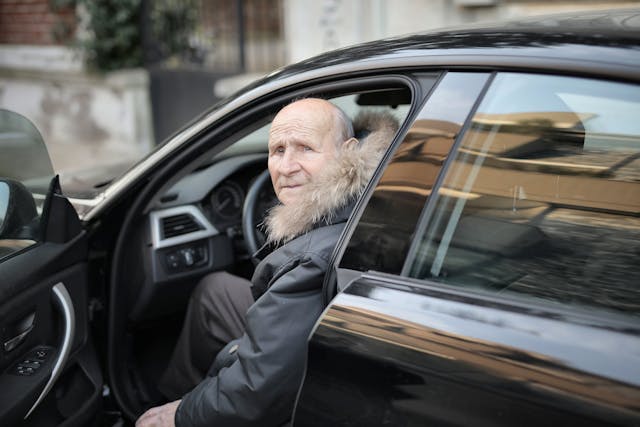
New findings from the University of East Anglia (UEA) reveal that older drivers with diminished spatial orientation capabilities face more challenges while executing turns across oncoming traffic. Spatial orientation, a crucial skill set for drivers, involves mentally ascertaining one’s or one’s vehicle’s position relative to the surroundings.
Sol Morrissey, a doctoral student at UEA’s Norwich Medical School, underscores the profound implications of ageing on driving safety. As individuals age, a myriad of changes can impact driving behavior, yet the specific role of cerebral alterations in this behavior remains largely uncharted. Morrissey’s study illuminates that older adults with compromised spatial orientation tend to drive less frequently and report more difficulties while driving. A striking discovery is an association between poor spatial orientation and heightened challenges in navigating turns across oncoming traffic, a well-known precursor to serious road accidents. This revelation hints at the potential future integration of spatial orientation tests in driving safety assessments for the elderly, a measure that could significantly enhance road safety.
The study, conducted between February and August 2021, involved 804 participants, averaging 71. Criteria for inclusion were being 65 or older, holding a valid driving license, and driving at least once a week. Participants provided information through online surveys covering demographics, health, driving history and habits, and incidents, in addition to assessments of spatial memory and navigation skills. They also underwent neuropsychological tests to evaluate cognitive performance in various domains.
Results highlighted a direct link between spatial orientation deficits and driving difficulties among the elderly, reinforcing previous studies that identified processing speed as a crucial factor affecting driving in older adults. Spatial orientation emerged as the sole cognitive skill significantly impacting driving behaviour, underscoring its importance in safely navigating turns and judging vehicle positioning.
The overrepresentation of older adults in multi-vehicle intersection crashes points to spatial orientation deficits as a significant individual risk factor. The study’s findings further demonstrate that poor spatial orientation, reduced processing speed, and episodic memory are associated with increased driving difficulty and avoidance of challenging driving scenarios.
Professor Michael Hornberger of Norwich Medical School underscores the robustness of spatial orientation deficits as an indicator of driving performance in the elderly. He advocates for the consideration of these deficits in future driving assessments to bolster road safety among the ageing population. With the projected increase in the number of older drivers, comprehending and addressing the challenges posed by age-related physiological changes and health conditions become pivotal for maintaining both independence and safety. The study’s findings offer a beacon of hope, suggesting that incorporating spatial orientation tests in driving safety assessments can potentially mitigate the risks associated with ageing and driving.
Traditionally, research on the impact of ageing on driving has focused more on physical and sensory functions, with less attention given to cognitive changes despite their known significance. The UEA study contributes valuable normative data on cognitive functioning in healthy older adults, utilizing online cognitive assessments to offer a more convenient and efficient alternative to traditional in-person tests for monitoring changes in driving fitness over time.
The researchers also propose that spatial orientation’s role in driving difficulty could explain the reduced road safety observed in individuals with Mild Cognitive Impairment (MCI) and Alzheimer’s disease. However, they acknowledge limitations such as reliance on self-reported driving behaviours and their study’s lack of environmental context. Future research could include naturalistic driving measures and explore cognitive functioning trajectories to inform the frequency and fitness methods to drive assessments and monitoring.
More information: Sol Morrissey et al, The Impact of Spatial Orientation Changes on Driving Behavior in Healthy Aging, Journal of Gerontology. DOI: 10.1093/geronb/gbad188
Journal information: Journal of Gerontology Provided by University of East Anglia
