Several years after the United States started to gradually recover from the enforced COVID-19 lockdowns, new findings from the University of Colorado Boulder indicate that a significant number of older adults continue to spend more time at home and less time engaging socially in public areas compared to their pre-pandemic habits. This research highlights that over half of the older adult population still avoids the social scene, driven by fears of infection and a social atmosphere they find increasingly uncomfortable and hostile.
Jessica Finlay, an assistant professor of geography, shared insights from her recent research through a series of papers. She pointed out that for many, the pandemic still significantly impacts their lives. “The pandemic is not over for a lot of folks,” she remarked, acknowledging that some individuals feel neglected in the current recovery phase.
This study is particularly relevant in the context of what the U.S. Surgeon General has described as an ‘epidemic of loneliness,’ with older adults, especially those who are immunocompromised or have disabilities, being acutely vulnerable. Finlay elaborated on how the pandemic has profoundly transformed ageing Americans’ community dynamics and daily routines, posing long-lasting effects on their physical, mental, social, and cognitive well-being.
As a health geographer and environmental gerontologist, Finlay is particularly interested in how social and physical environments influence health outcomes as people age. Her curiosity about the long-term effects of the pandemic was piqued in March 2020 when restaurants, gyms, grocery stores, and other communal spaces were suddenly closed under shelter-in-place directives. This prompted her to initiate the COVID-19 Coping Study in collaboration with Lindsay Kobayashi, an epidemiologist at the University of Michigan. Their ongoing study began with a baseline survey followed by monthly updates, gathering responses from nearly 7,000 individuals aged 55 and over across the United States.
The research has been particularly attentive to the evolving social landscape, surveying participants at critical moments, including shortly after the murder of George Floyd in May 2020 and following the attack on the U.S. Capitol in January 2021. The findings collectively depict a concerning scenario where a large segment of the older population remains isolated while the rest of society moves forward.
Results from one of the papers published in February in the journal Wellbeing, Space and Society show that 60% of respondents now spend more time at home, 75% dine out less frequently, and over half report decreased attendance at cultural, artistic, and religious gatherings compared to their life before the pandemic. Despite the survey being two years old, more recent data from spring 2023 continues to reflect similar trends, indicating persistent changes in these individuals’ social and entertainment routines.
Another study, “I just can’t go back,” reveals that 80% of participants hesitate to revisit certain public places. The research presents personal accounts, like that of a 72-year-old man who cannot envision returning to a gym, highlighting the deep-seated apprehensions about public gatherings in enclosed spaces.
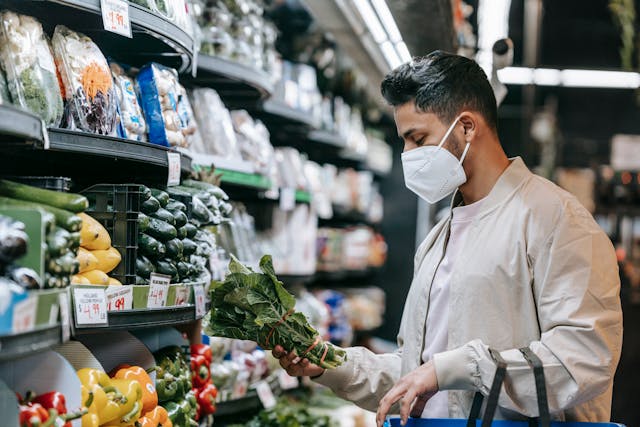
Respondents who still venture into public places like grocery stores do so with minimal interaction, quickly moving in and out to avoid prolonged contact. This shift in behaviour is a stark departure from the pre-pandemic norms, where casual conversations were commonplace. Many participants expressed concerns about contracting or transmitting the virus to vulnerable family members, and the social stigma associated with mask-wearing and social distancing only reinforces their reluctance to engage publicly.
However, it’s not all grim. Finlay points out some positive shifts, such as a 10% increase in older adults exercising outdoors more frequently and a small subset who have embraced the digital expansion of meetings, concerts, and classes. Yet, she remains concerned about the broader health implications of reduced spontaneous social interactions, often called ‘third places’ in sociological terms. The absence of these interactions, she warns, can heighten the risk of premature death, mental illness, and dementia, comparable to the health risks of smoking 15 cigarettes a day.
Finlay advocates for societal adaptations that could reintegrate older adults into public life, suggesting enhancements like outdoor dining, ventilated cultural spaces, and accommodations for masked or hybrid events. She also calls for a more understanding approach towards those who continue to practice caution in their social interactions, emphasizing that for many, overcoming the pandemic is not merely a matter of choice but a complex challenge shaped by various personal factors. Her work aims to foster a more inclusive environment that acknowledges and addresses these continued disparities in the post-pandemic landscape.
More information: Jessica Finlay et al, Altered place engagement since COVID-19: A multi-method study of community participation and health among older americans, Wellbeing Space and Society. DOI: 10.1016/j.wss.2024.100184
Journal information: Wellbeing Space and Society Provided by University of Colorado Boulder
