Daily Archives: 15 May 2024

Exploring the intricate connection between age, looks, and health: new insights on wrinkles and wisdom

The intricate interplay between physical appearance and mental and physical health as we age forms the crux of new research recently published in the journal Psychology and Aging.

Julie Ober Allen, an assistant professor of health promotion at the University of Oklahoma, spearheaded this research. It reveals that 59% of adults aged 50 to 80, in a nationally representative survey of Americans, believe they appear younger than their peers. These individuals reported more positive ageing experiences, such as being sought after for advice and possessing a strong sense of purpose. Conversely, those who felt they looked older than their contemporaries experienced more negative interactions. Allen’s research highlights that ageism—which encompasses stereotypes, prejudices, and discrimination based on age—can lead to chronic stress and have detrimental health effects.

Allen explains, “Ageism often presents itself through micro-aggressions.” For example, complimenting an older individual on looking suitable for their age or assuming they are inept with technology can trigger a stress response akin to a fight or flight reaction. To cope, some might turn to stress-eating sweets or smoking, which are behaviours linked to adverse health outcomes.

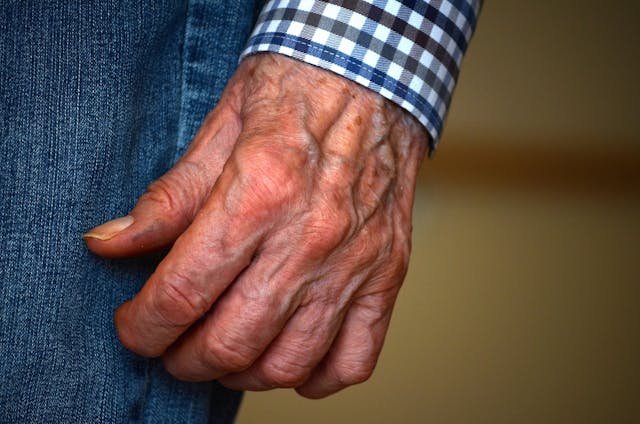
Allen’s team delved into how physical appearance is a surrogate for age. Individuals displaying characteristics typically associated with old age, like grey hair or wrinkles, are more likely to be stereotyped and face discrimination. According to Allen, this bias originates from the American cultural fixation on youth and specific beauty standards.

“We asked participants how much time and effort they devote to looking younger, which is a complex question as it can reinforce certain stereotypes,” Allen remarked. About 35% of participants admitted investing time and money to appear younger. Interestingly, these individuals reported positive and negative ageing experiences in society. Those who successfully appeared younger faced less discrimination, yet they might also have experienced increased anxiety and discomfort about their ageing appearance.

Allen emphasizes that ageism, unlike other forms of discrimination such as racism, sexism, or homophobia, is often disregarded and more socially tolerated. Her findings indicate that ageism affects both genders equally and that older adults from all racial and ethnic backgrounds across the US experience it.

“People often assume women are more affected by ageism, but the data doesn’t support this,” she stated. “Men and women might experience it differently, but both genders are impacted.”

Allen’s research conclusively shows that individuals who perceive themselves as looking younger enjoy more positive experiences and better mental and physical health outcomes. Moreover, those who appear more youthful experience less age-related discrimination. However, Allen suggests focusing solely on looking young might not be the best approach for ageing Americans.

“We should prioritize healthy behaviours, which also affect ageing and appearance. Engaging in regular exercise, maintaining a healthy weight, and abstaining from smoking can help you appear younger as you age. Thus, appearance is a beneficial secondary result,” she explained. “By adopting healthy behaviours, you not only enhance your health but also improve your quality of life and reduce functional limitations.”

More information: Allen, J. O., Moïse, V., Solway, E., Cheney, M. K., Larson, D. J., Malani, P. N., Singer, D., & Kullgren, J. T. How Old Do I Look? Aging Appearance and Experiences of Aging Among U.S. Adults Ages 50–80, Psychology and Aging. DOI: 10.1037/pag0000800

Journal information: Psychology and Aging Provided by The University of Oklahoma

Scientists utilise wearable technology to monitor stress levels during sleep

Imagine a scenario where the subtle fluctuations in an individual’s stress levels could be pinpointed while they peacefully slumber, all thanks to wearable technology. A groundbreaking study conducted by researchers from the University of Vermont, published recently in PLOS Digital Health, illuminated this possibility. For the first time, alterations in perceived stress levels have been detected through sleep data analysis, marking a significant stride towards identifying biomarkers that could serve as early indicators for individuals requiring additional support.

Laura Bloomfield, a research assistant professor of mathematics and statistics and the study’s lead author, underscores the significance of sleep in maintaining both physical and mental well-being. She highlights the discernible changes in stress levels within sleep patterns, emphasising that “changes in stress are visible”.

Delving into the baseline sleep data, the researchers uncovered consistent correlations between individuals’ perceived stress scores and various sleep metrics such as total sleep duration, resting heart rate, heart rate variability, and respiratory rate. While it may come as no surprise that many participants fell short of the recommended 8 to 10 hours of sleep for young adults, every minute of sleep proved consequential. For each additional hour of recorded sleep, the likelihood of reporting moderate-to-high stress decreased by approximately 38 per cent. Similarly, nightly resting heart rates emerged as informative indicators, with each additional beat per minute correlating with a 3.6 per cent increase in the likelihood of experiencing stress.

Bloomfield’s involvement as a principal investigator in the Lived Experience Measured Using Rings Study (LEMURS) underscores the commitment to unravelling the intricate relationship between wearable technology and individuals’ mental well-being. LEMURS, a longitudinal study initiated at UVM in 2022, meticulously tracks hundreds of first- and second-year college students around the clock using wearable Oura ring biosensors and surveys probing their well-being. This study marks the inaugural peer-reviewed publication from LEMURS, showcasing the potential of wearables to unveil shifts in mental health status.

The research unveils the predictive capabilities of Oura ring sleep measures concerning participants’ perceived stress levels. Bloomfield underscores the potential for real-time identification of heightened stress levels, paving the way for timely interventions. She underlines the necessity for comprehending the nexus between sleep measures and mental health indicators as the foundational step towards implementing effective interventions.

The genesis of the LEMURS project lies in the visionary minds of Chris Danforth, professor of applied mathematics at UVM’s Vermont Complex Systems Center, and Laura Bloomfield, MD/Ph.D. Their overarching objective revolves around harnessing wearable technologies to enhance the health and well-being of young individuals through personalised feedback. Supported by a grant from MassMutual, LEMURS endeavours to address the prevalent issues of insufficient sleep and heightened stress among college students. The research ambit extends beyond mere observation, focusing on evaluating the efficacy of exercise, nature excursions, and group therapy interventions.

The multifaceted approach of LEMURS involves leveraging biometric data obtained from Oura rings, coupled with subjective responses from routine surveys, to garner insights into participants’ stressors and emotional states. Mikaela Fudolig, a research assistant professor of mathematics and statistics, underscores the potency of the vast dataset generated by LEMURS. She highlights the convergence of various data streams—from ring data and survey responses to nature exposure metrics and blood work—as the crux of the study’s efficacy.

The longitudinal nature of LEMURS affords a rare opportunity to track participants’ health trajectories over an extended period. With two cohorts of first-year students enrolled since its inception, LEMURS aims to provide comprehensive insights into physical and mental well-being dynamics throughout the college years and beyond. Fudolig elucidates the significance of synthesising diverse data sources, portraying it as the cornerstone of the study’s endeavour.

The meticulous analysis of sleep patterns among LEMURS participants has unearthed intriguing insights, particularly regarding heart rate dynamics. Fudolig highlights the emergence of distinct heart rate curves, particularly among female participants, correlating with reported impairments in daily functioning due to anxiety or depression.

The COVID-19 pandemic has exacerbated pre-existing mental health challenges among young individuals, underscoring the urgency of initiatives like LEMURS. Bloomfield underscores the pressing need for accessible support systems tailored to the unique needs of young adults navigating the tumultuous terrain of college life. The study’s findings shed light on the pervasive burden of stress within this demographic, with a staggering 64% of responses reflecting moderate-to-high stress levels.

Bloomfield emphasises the nuanced nature of interpreting stress signals derived from biometric data, acknowledging the myriad factors influencing individuals’ stress responses. Despite the resilience inherent in this demographic, the study serves as a poignant reminder of the underlying issues confronting young adults, advocating for proactive interventions to safeguard their mental and physical well-being.

More information: Laura S. P. Bloomfield et al, Predicting stress in first-year college students using sleep data from wearable devices, PLOS Digital Health. DOI: 10.1371/journal.pdig.0000473

Journal information: PLOS Digital Health Provided by University of Vermont