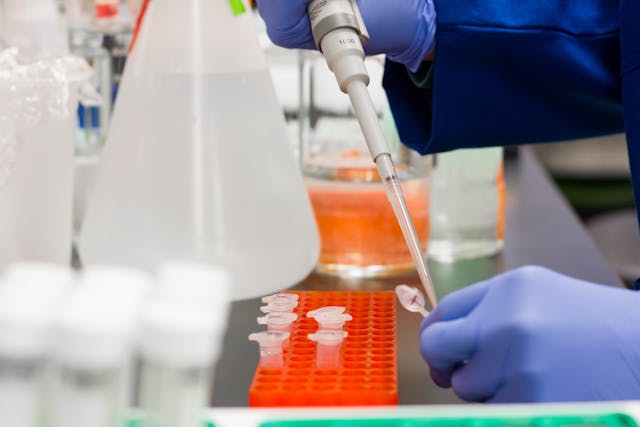
An international research project, spearheaded by the Translational Synthetic Biology Laboratory within the Department of Medicine and Life Sciences (MELIS) at Pompeu Fabra University, has successfully engineered a strain of Cutibacterium acnes, a common skin bacterium, to produce and secrete a molecule aimed at alleviating acne symptoms. This engineered bacterium has been tested on skin cell lines, and experiments with mice have confirmed its effectiveness. This breakthrough paves the way for synthetic biology to transform non-engineerable bacteria into agents that can manage skin conditions and other diseases through biotherapeutic methods.
The research consortium includes eminent scientists from prestigious institutions such as the Bellvitge Biomedical Research Institute (Idibell), the University of Barcelona, the Protein Technologies Facility of the Centre for Genomic Regulation, Phenocell SAS, Medizinische Hochschule Brandenburg Theodor Fontane, Lund University, and Aarhus University.
Acne is a prevalent skin ailment caused by the clogging or inflammation of pilosebaceous follicles. Manifestations range from whiteheads and blackheads to more severe forms like pustules and nodules, predominantly affecting areas such as the face, forehead, chest, upper back, and shoulders. While acne commonly appears during adolescence, it does not discriminate by age.
For more severe acne cases, traditional treatments have included antibiotics to eradicate bacteria within the follicles or isotretinoin (also known as Accutane), a vitamin A derivative that promotes the death of sebocytes—epithelial cells producing sebum. Nevertheless, these treatments can disrupt the balance of skin microbiota due to their non-selective bacterial eradication or cause severe side effects like photosensitivity and congenital disabilities.
The study, published today in Nature Biotechnology, describes how the researchers modified the genome of Cutibacterium acnes to enable the secretion of the NGAL protein, which mimics the action of isotretinoin. This protein effectively reduces sebum production by promoting the apoptosis of sebocytes.
Nastassia Knödlseder, the study’s lead author and a postdoctoral researcher at the UPF Translational Synthetic Biology Laboratory, commented on the innovation: “We have devised a topical treatment that leverages what nature already provides. By engineering a naturally occurring skin bacterium to produce therapeutic agents, we have opened the door to treating not only acne but potentially other conditions as well.”
Engineering C. acnes, previously deemed intractable for genetic modification, was overcome by improving methods for DNA delivery, enhancing the stability of DNA within the cell, and optimizing gene expression. The research team, led by Marc Güell, employed regulatory strategies to develop a biocontainment approach that eliminates concerns related to mobile genetic elements, plasmids, or antibiotic resistance markers, ensuring the safety of the synthetic bacterium for potential therapeutic applications.
The synthetic C. acnes wereld secreted NGAL in tests, regulating sebum production in cell cultures. Although initially tested in mice, whose skin differs significantly from human skin, the researchers underscore the need for alternative models that more closely resemble human skin, such as 3D skin models, to validate these findings further.
Looking ahead, Güell highlights the broader implications of their work: “Our technology platform is not limited to treating acne. It can potentially be used to engineer any bacterium to treat a wide range of diseases, from skin conditions to immune system disorders, by delivering genetic modifications that enable bacteria to sense and respond to bodily changes.”
The ongoing research under the European ‘SkinDev’ project aims to extend this technology to tackle atopic dermatitis, a chronic inflammatory skin condition prevalent among young children, by engineering C. acnes to address this and potentially other dermatological disorders.
This innovative approach to creating living therapeutics holds promise for transforming the treatment of skin conditions and other diseases, offering a new realm of possibilities in medical science. Given the safe and effective history of non-engineered C. acnes in clinical settings, the researchers remain optimistic about the potential application of these engineered microbes in human patients.
More information: Nastassia Knödlseder et al, Delivery of a sebum modulator by an engineered skin microbe in mice, Nature Biotechnology. DOI: 10.1038/s41587-023-02072-4
Journal information: Nature Biotechnology Provided by Universitat Pompeu Fabra