Daily Archives: 18 May 2024

New tool developed for investigating the mechanisms of cancer, autoimmunity, and neurodegeneration through screening

The team has pioneered an innovative screening tool, scSNV-seq, that delves into the intricate relationship between genetic alterations and gene activity, potentially shedding light on the origins of various diseases, from cancer to cardiovascular conditions. This state-of-the-art tool revolutionises the field by enabling the simultaneous investigation of numerous DNA mutations previously identified in genetic studies within a single experiment. Its versatility and effectiveness pave the way for developing sophisticated diagnostic methods and treatments.

The scSNV-seq method is not just a theoretical concept but a practical tool that empowers scientists to quickly evaluate the effects of numerous genetic alterations in cells that have not been previously screened. This approach provides a holistic perspective by linking these changes directly to cellular functions, enabling researchers to identify specific mutations that contribute to diseases. This practical application is crucial for developing targeted therapies.

A recent study published in Genome Biology highlights the application of scSNV-seq by researchers at the Wellcome Sanger Institute and their collaborators at Open Targets and EMBL’s European Bioinformatics Institute (EMBL-EBI). In this study, scSNV-seq was applied to the blood cancer gene JAK1, where it precisely determined the impacts of mutations, unveiling a previously unknown “halfway house” phenotype that fluctuates between different states, a discovery not achievable with earlier methodologies.

scSNV-seq is designed for versatility across various cell types, including challenging primary cells like T cells and stem-cell-derived neurons. It accommodates different editing techniques, such as base and prime editing. When applied on a large scale, this technique has the potential to revolutionise our understanding of the genetic alterations that drive cancer and aid in decoding genetic risks for complex diseases like Alzheimer’s, arthritis, and diabetes.

Despite the exponential growth in the identification of genetic variants linked to diseases, thanks to advancements in human genetics and the increased affordability of DNA sequencing technologies, the tools available for interpreting these variants often need to be improved, sometimes relying on laborious manual processes. Additionally, when introducing specific mutations using advanced gene-editing tools, current screening methods struggle to differentiate between cells where the editing was unsuccessful and those where it introduced benign changes without affecting cellular behaviour.

To tackle these challenges, researchers developed scSNV-seq, a technique that directly correlates the genetic makeup of a cell with its gene activity. The effectiveness of scSNV-seq was demonstrated through experiments on the JAK1 gene, associated with inflammation and cancer, to observe the effects of specific DNA modifications on cell behaviour. This technique categorised genetic alterations into three groups: benign, loss of function, and altered function, and revealed mutations that resulted in an intermediate phenotype cycling between states—insights unattainable with previous methods.

Dr Sarah Cooper, the first author of the study from the Wellcome Sanger Institute, emphasised the significance of scSNV-seq in the current genetic landscape, where the rate of variant discovery surpasses our capacity to interpret their impacts. She noted that scSNV-seq is already being used to explore how genetic variants associated with Alzheimer’s and Parkinson’s diseases affect brain cells.

Dr Andrew Bassett, the senior author of the study, also from the Wellcome Sanger Institute, highlighted that their technique uniquely connects mutation effects to cellular behaviours, uncovering downstream impacts previously invisible with older technologies. He remarked that this method accelerates the identification of causal genetic mutations, enhancing diagnostics and deepening our understanding of molecular disease mechanisms, ultimately paving the way for more targeted and effective treatments.

More information: Sarah E. Cooper et al, scSNV-seq: high-throughput phenotyping of single nucleotide variants by coupled single-cell genotyping and transcriptomics, Genome Biology. DOI: 10.1186/s13059-024-03169-y

Journal information: Genome Biology Provided by Wellcome Sanger Institute
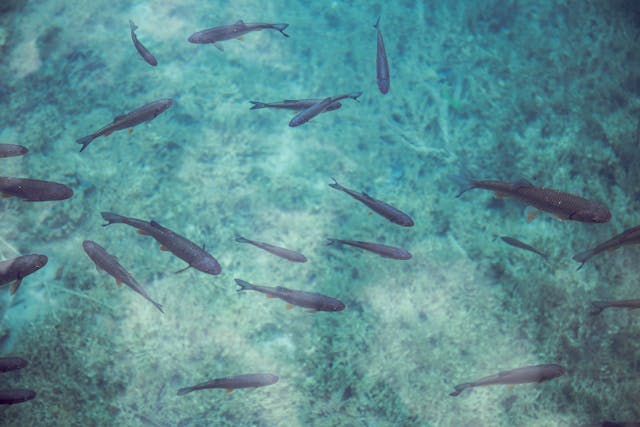
Adult fish face challenges in recovering within marine protected areas

In the vast expanse of the ocean, age holds profound significance in safeguarding marine life. A robust cohort of adult organisms is imperative for perpetuating generations in the underwater realm. However, despite the noble intentions behind their establishment, many marine protected areas (MPAs) need to fulfil their fundamental purpose: revitalising struggling fish populations. In a groundbreaking study unveiled on April 4 in Global Change Biology, researchers embarked on a pioneering quest to scrutinise the age composition of reef-dwelling fish within marine sanctuaries. Their findings were stark: across the board, the populations of adult fish within these havens either stagnated or dwindled.

Steve Canty, a marine ecologist affiliated with the Smithsonian Environmental Research Center and one of the study’s principal investigators, underscored the pivotal role of adult fish in marine ecosystems. He elucidated, “Adult fish play a pivotal role in multiple facets. They constitute the primary catch in commercial fisheries, thereby sustaining the livelihoods and nutritional needs of coastal communities. Moreover, it is the adults that foster reproduction and replenish fish stocks, wherein size assumes paramount importance. Larger and older female fish yield greater quantities of superior-quality eggs, thus emerging as linchpins in the restoration of fish populations.”

This revelation assumes heightened significance against the backdrop of the global race to achieve the “30 by 30” target, which aims to conserve 30% of the Earth’s oceans by 2030. Envisioned during the United Nations Biodiversity Conference in December 2022, this ambitious objective holds profound implications. However, its realisation hinges on the judicious selection of sites conducive to the flourishing of marine life while concurrently accommodating the needs of coastal communities.

The study, conducted in the realm of the Mesoamerican Reef, sheds light on this problem. Extending over 600 miles along the coasts of southern Mexico, Belize, Guatemala, and Honduras, the Mesoamerican Reef stands as the longest reef in the Western Hemisphere. Renowned as a biodiversity hotspot, this region harbours over 500 fish species and 60 varieties of corals and hosts one of the most extensive congregations of whale sharks on the planet. Moreover, the marine resources of this ecosystem underpin the sustenance and food security of over a million individuals.

Delving deeper, the researchers scrutinised the biomass of adult versus juvenile fish across 139 reef sites, comprising 111 protected and 28 unprotected areas. Within the Mesoamerican Reef, protected sites are categorised into three tiers: “fully protected areas,” where fishing activities are entirely prohibited; “highly protected areas,” permitting limited activities such as subsistence and catch-and-release sport fishing; and “general use zones,” where commercial fishing is often permitted albeit subject to restrictions on specific methods or equipment. Alarmingly, only a meagre 24% of the marine protected areas under scrutiny qualified as either fully or highly protected.

Melanie McField, co-author and director of the Healthy Reefs Initiative, lamented the intrinsic challenges associated with curtailing fishing activities. She remarked, “Prohibiting fishing in any marine domain poses a formidable challenge, seemingly conflicting with inherent human instincts. Nonetheless, the comprehensive protection and stringent enforcement of these areas represent the most efficacious strategy for nurturing larger fish populations capable of stimulating stock recoveries and augmenting overall fish yields beyond the confines of fully protected zones.”

Drawing upon data furnished by the Healthy Reefs Initiative, the research team meticulously analysed fish biomass trends spanning 12 years, from 2006 to 2018. Their findings painted a disturbing picture: despite their avowed objective of replenishing fish stocks, merely 8% of the surveyed sites witnessed significant upsurges in adult biomass. Conversely, the majority of sites exhibited no discernible alteration, with 28 sites reporting declines. A common thread among the declinatory sites was the prevalence of heavy coastal development in proximity, coupled with elevated sea surface temperatures. Notably, these sites predominantly fell within general use zones, characterised by lax enforcement and susceptibility to unabated exploitation.

Abel Valdivia, a marine conservation scientist affiliated with the World Wildlife Fund and co-author of the study, underscored the pernicious ramifications of minimal protection within weakly enforced MPAs. He elucidated, “Contrary to conventional wisdom, scant protection within feeble MPAs proves more deleterious than the absence of protection altogether. It engenders continued and concentrated exploitation sans efficacious oversight. Unlike open-access zones, where fishing pressure may be dispersed, inadequately protected areas succumb to unchecked coastal development, escalating sea temperatures, and deficient enforcement, thereby precipitating declines in adult biomass.”

However, amidst the bleak panorama, a glimmer of hope emanates from the 11 sites where adult fish populations experienced resurgences. Commonalities among these sites include their location within fully protected areas boasting robust enforcement measures, limited occurrences of sea surface temperature anomalies, and adjacency to regions characterised by a diminished human footprint.

This panoramic vista of the Mesoamerican Reef proffers invaluable insights into the global pursuit of the “30 by 30” conservation agenda. The cornerstone of MPA efficacy lies in the implementation of stringent enforcement mechanisms and prudent management practices bolstered by robust community engagement. Furthermore, the imperative of selecting sites cognisant of climate change emerges as a linchpin in this conservation endeavour. While certain oceanic domains may inevitably succumb to the ravages of warming waters, identifying sites capable of serving as climate refuges for both adult and juvenile life stages assumes paramount importance.

Justin Nowakowski, another lead author and ecologist affiliated with the Smithsonian Environmental Research Center, underscored the disparate responses exhibited by adult and juvenile fish to management interventions and environmental perturbations. He postulated, “Adult and juvenile fish evince disparate sensitivities to stressors such as climate change, thereby undermining the local efficacy of MPAs. The crux of the matter lies in identifying optimal sites for new MPAs to maximise positive outcomes for regional fisheries. This necessitates a nuanced understanding of the distinct requirements of adult and juvenile life stages, failing which, we risk overlooking the holistic picture.”

The study furnishes a clarion call to action, urging policymakers and stakeholders to recalibrate existing conservation paradigms. By prioritising robust enforcement, community participation, and climate-resilient site selection, the aspirations encapsulated within the “30 by 30” agenda may yet metamorphose into tangible realities, fostering the rejuvenation of our planet’s marine ecosystems.

More information: Steven W. J. Canty et al, Interplay of management and environmental drivers shifts size structure of reef fish communities, Global Change Biology. DOI: 10.1111/gcb.17257

Journal information: Global Change Biology Provided by Smithsonian