
Daily Archives: 8 May 2024

Older adults are eager to communicate using emojis; they simply struggle with understanding their usage

A recent study conducted by the University of Ottawa sheds light on how emojis are interpreted across different age groups. It revealed that while older adults comprehend the meanings of emojis, they often need to learn to use them more frequently than their younger counterparts. This hesitation stems from a need for more confidence in using technology for communication, challenging the stereotype that older generations are resistant or incapable of adopting modern digital language such as emojis.

The research led by Isabelle Boutet, an Associate Professor at the School of Psychology within the University’s Faculty of Social Sciences, emphasizes that the reluctance among older adults to use emojis does not arise from an inability to understand them. Instead, it points to a lower tendency to employ emojis, a limited variety in their emoji use, and discomfort in interpreting the symbols. Contrary to the assumption that older individuals cannot accurately interpret emojis, the study found that confidence in using emojis and technology primarily affects their usage patterns.

This comprehensive examination of emoji use across generations, including participants over 60, aimed to document how age and generational differences impact emojis. To investigate how age influences these factors, it assessed several aspects of emoji adoption, such as usage frequency, diversity, ease of interpretation, and accuracy in understanding emojis. Among the findings, the emoji for surprise—a face with wide eyes and raised eyebrows—was identified as particularly challenging for older adults to interpret, followed by emojis representing happiness.

The study observed that as age increases, individuals tend to find emojis more challenging to use, display less confidence in their emoji usage capabilities, and are generally less engaged with technology where emojis are prevalent. This trend led the researchers to conclude that older adults are motivated and able to use emojis but need more confidence and technological expertise.

Recognizing the potential benefits of emojis in enhancing communication, fostering intergenerational connections, combating loneliness, and helping individuals achieve social and emotional objectives, Boutet advocates for initiatives to encourage emoji use among older adults. The importance of these initiatives is underscored by the need to bridge the gap between different generations, fostering understanding and connection in an increasingly digital world.

More information: Isabelle Boutet et al, Are older adults adapting to new forms of communication? A study on emoji adoption across the adult lifespan, Computers in Human Behavior Reports. DOI: 10.1016/j.chbr.2024.100379

Journal information: Computers in Human Behavior Reports Provided by University of Ottawa
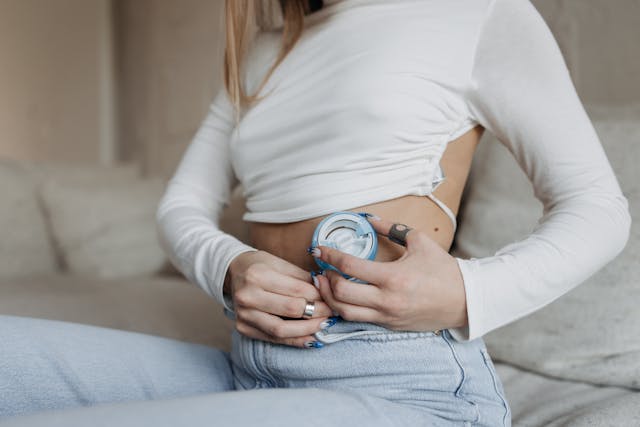
Hybrid insulin pumps are highly effective in adults with type 1 diabetes

New advanced insulin pumps are transforming the management of type 1 diabetes by continuously monitoring blood sugar levels and using specific algorithms to administer insulin doses automatically, maintaining stable glucose levels. This cutting-edge technology, Advanced Hybrid Closed Loop (AHCL), features a pump that continuously delivers insulin through a tube connected to a thin cannula placed in the subcutaneous fatty tissue. In recent years, these pumps have become available in Sweden to treat type 1 diabetes.

Blood sugar control has been a primary focus of a study conducted in collaboration with Sahlgrenska University Hospital Östra, with the findings published in the Journal of Diabetes Science and Technology. The study included 142 randomly selected adults with type 1 diabetes treated with one of two AHCL pumps at six different diabetes clinics across Sweden. The average age of the participants was 42 years, and they had been using their AHCL pump for just over one and a half years.

The results showed a notable improvement in blood sugar control among patients using the hybrid pumps. Insulin therapy aims to maintain blood sugar levels within a specific range, between 3.9 and 10 mmol/L. The study found that the time patients spent within this target range increased by approximately three and a half hours daily. Before starting pump therapy, patients’ blood sugar levels were within this range 57% of the time, on average. With the hybrid insulin pumps, this average increased to 71.5%.

Additionally, the risk of organ damage was reduced, as indicated by Dr. Ramanjit Singh, a Resident Physician affiliated with research at the University of Gothenburg and the study’s lead author. Dr Singh highlighted the significance of the improvement, noting that even an additional hour within the target range is crucial for reducing the risk of organ damage. The new treatment also reduced the time patients spent with dangerously low blood sugar levels, from 0.7% to 0.3% during the day, without increasing the occurrence of severe sugar dips.

Participants also reported high satisfaction levels with the advanced insulin pump compared to their previous diabetes treatments. In a research survey, they rated their experience on a scale from minus 18 (worst) to plus 18 (best), with an average score of plus 14.8.

Despite the treatment’s effectiveness, the researchers noted the potential for further improvement. Approximately one-third of the patients experienced skin reactions to the adhesive in the infusion sets or sensors.

Professor Marcus Lind, a leading figure in diabetology at the Sahlgrenska Academy and head of the diabetes research unit at Sahlgrenska University Hospital Östra, emphasized the potential for even more significant improvements in blood sugar levels as more patients receive the new treatment. This could further reduce organ damage and improve overall prognosis. He also highlighted the importance of developing products that are more skin-friendly and conducting more extensive studies to assess the safety of the treatment.

The insulin pumps used in the study, MiniMed™ 780 G and Tandem® t:slim X2™ with Control IQ™, represent significant advancements in the field. The study was an academic research project conducted independently of the companies responsible for these pumps, underscoring its objectivity and the significance of the findings in advancing diabetes treatment.

More information: Ramanjit Singh et al, Effects, safety, and treatment experience of advanced hybrid closed loop systems in clinical practice among adults living with type 1 diabetes, Journal of Diabetes Science and Technology. DOI: 10.1177/19322968241242386

Journal information: Journal of Diabetes Science and Technology Provided by University of Gothenburg