Daily Archives: 1 July 2024

Exploring a Novel Drug Target: Promising Insights for the Treatment of Osteoporosis Unveiled by Recent Study

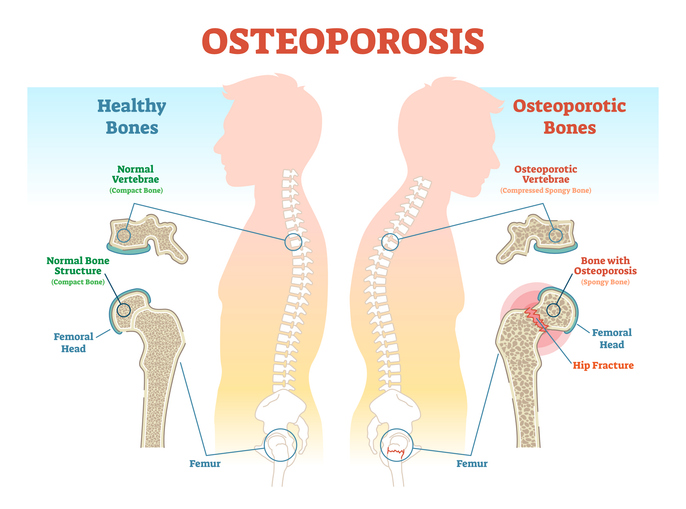
Osteoporosis, a condition characterized by weak and fragile bones, is a pressing global health issue. It leads to approximately 8.9 million fractures annually, with a fracture occurring every three seconds. The elderly are particularly susceptible, as ageing weakens bones, often necessitating long-term care. As the population ages, there is a growing urgency for healthcare systems to discover effective treatments for this condition.

One promising treatment involves using parathyroid hormone (PTH), specifically a drug called teriparatide, which helps strengthen bones by promoting bone formation. However, PTH can also stimulate the production of osteoclasts, cells that break down bone tissue, which can sometimes counteract its bone-building effects. Understanding how PTH works at a molecular level is crucial to improving osteoporosis treatments and ensuring better patient outcomes.

Recently, researchers at Tokyo University of Science, led by Professor Tadayoshi Hayata and Ms. Chisato Sampei, investigated genes PTH affects in bone-forming cells called osteoblasts. Their study, published in May 2024 in the Journal of Cellular Physiology, aimed to identify new targets for improving osteoporosis therapies. In Japan, where approximately 12.8 million people have osteoporosis, finding effective treatments is particularly urgent to enhance the quality of life.

Using experiments with mouse cells and live mice treated with teriparatide, the researchers used advanced techniques to study how PTH influences gene activity. They discovered a gene called Gprc5a that becomes more active when PTH signalling is triggered. Gprc5a codes for a protein involved in cell signalling and has just been well-studied in the context of bone health.

Interestingly, when the researchers suppressed Gprc5a in their experiments, they observed increased activity in genes related to bone cell growth and maturation. This suggests that Gprc5a normally slows down these processes, potentially limiting the effectiveness of bone-strengthening treatments like teriparatide. Understanding this could lead to new strategies for enhancing the effects of existing osteoporosis treatments.

Further investigation revealed that Gprc5a interacts with a protein receptor called Activin receptor-like kinase 3 (ALK3), part of a pathway that influences bone development. By affecting this pathway, Gprc5a appears to regulate how bones form and grow. These findings provide valuable insights into the complex processes that maintain bone strength and offer new avenues for developing more targeted osteoporosis therapies in the future.

Prof. Hayata and his team’s study illuminates how PTH influences bone health through genes like Gprc5a. By unravelling these molecular mechanisms, researchers aim to enhance treatments for osteoporosis, potentially leading to better outcomes for patients worldwide. This research represents a significant step towards personalized medicine approaches that could customize treatments to individual patient’s needs, ultimately improving their quality of life and reducing the burden of osteoporosis on healthcare systems.

More information: Chisato Sampei et al, Gprc5a is a novel parathyroid hormone-inducible gene and negatively regulates osteoblast proliferation and differentiation, Journal of Cellular Physiology. DOI: 10.1002/jcp.31297

Journal information: Journal of Cellular Physiology Provided by Tokyo University of Science

Vulnerability of Ohio’s Elderly to Extreme Weather

A recent study, conducted with a sense of urgency, focused on emergency preparedness among older adults in central Ohio. It has brought to light significant vulnerabilities to extreme weather events. According to findings published in the International Journal of Disaster Risk Science, nearly 1 in 5 older adults in the region reported being unprepared for emergencies or unsure about their readiness. This is particularly concerning as older adults face heightened risks during disasters. Smitha Rao, lead author and assistant professor of social work at The Ohio State University, stressed that despite Ohio’s historical perception as relatively safe from extreme weather, climate change projections indicate increasing risks such as heavy rainfall, extreme heatwaves, and air pollution.

Based on data from the 2021 Central Ohio Regional Assessment on Aging (CORAA) Survey, the study included 1,417 adults aged 65 and older across eight counties. It revealed that 78% of respondents were adequately prepared for emergencies, 13% were not, and 9% were uncertain. Preparedness levels varied significantly by county, with factors like lower income, living in subsidised housing, and having disabilities correlating with lower readiness. For example, in Fayette County, where socioeconomic vulnerabilities were pronounced—such as a median income under $40,000 and high rates of subsidised housing and disability—only 68% of older adults were prepared compared to 94% in Union County.

Weather-related disruptions disproportionately affected older adults in Fayette County. Residents reported missing health appointments or being unable to access essential services, work, or social activities due to severe weather conditions. These disruptions underscored the lack of robust social and economic support systems for vulnerable populations during emergencies. Holly Dabelko-Schoeny, co-investigator and professor of social work at Ohio State’s Age-Friendly Innovation Center, highlighted the implications for policymakers and service providers in ensuring adequate support for older adults in such circumstances.

Rao emphasised the role of local policies, such as tax levies for senior services, in bolstering emergency preparedness among older populations. Counties like Fayette, lacking such levies, may benefit from targeted interventions and increased resource allocation to improve readiness and resilience. The study also called for enhanced public awareness and education on climate risks among older adults, particularly in regions traditionally perceived as less vulnerable. Moving forward, researchers aim to foster a sense of community collaboration by working with community partners and county leaders to translate these findings into actionable strategies, including tailored outreach and educational initiatives aimed at enhancing emergency preparedness and resilience among older adults in Ohio.

More information: Smitha Rao et al, Extreme Weather Disruptions and Emergency Preparedness Among Older Adults in Ohio: An Eight-County Assessment, International Journal of Disaster Risk Science. DOI: 10.1007/s13753-024-00548-8

Journal information: International Journal of Disaster Risk Science Provided by The Ohio State University

Study Reveals Higher Alzheimer’s Risk Among Black Adults in Polluted Areas in the US

A study conducted jointly by Duke and Columbia Universities has brought to light urgent environmental injustices affecting older, non-white adults. These individuals are disproportionately located in areas with higher air pollution and close proximity to toxic disposal sites. P. Murali Doraiswamy, MBBS, FRCP, a professor at Duke University’s School of Medicine and senior author of the study, emphasised the pressing need to quantify the combined environmental risks contributing to Alzheimer’s disease, despite the substantial investment in understanding its genetics and pathology.

Published in the Journal of Alzheimer’s Disease Reports on May 14, 2024, the study underscores the critical role of residential addresses in healthcare, akin to assessing cardiovascular health or ordering diagnostic imaging. It reveals that middle-aged women residing in green spaces experience cognitive benefits, whereas those in economically disadvantaged neighbourhoods with higher air pollution face increased Alzheimer’s disease risks.

The study focused on 107 participants aged 55–95 with mild cognitive impairment from New York City, NY, and Durham, NC, evaluating the efficacy of cognitive training therapies over 78 weeks. Alisa Adhikari, the study’s lead author, highlighted the need for comprehensive research capturing various environmental factors and available resources related to neurodegenerative disorders like Alzheimer’s disease.

Co-author Adaora Nwosu integrated data from the Environmental Justice Index (EJI) of the Center for Disease Control, revealing that non-white participants, mainly Black enrollees, face higher environmental burdens such as ozone exposure, diesel exhaust, and limited access to recreational parks. They also experience greater social vulnerability, likely influenced by historical injustices.

While the study did not establish direct correlations between race, location, and cognitive decline, analysis of EJI data revealed significant differences in pollution levels between study sites, suggesting geographical disparities impacting cognitive health outcomes. Dr. Doraiswamy emphasised the study’s insights in prompting a reconsideration of the homogeneity assumption regarding environmental exposures in clinical trials.

The research team recognises that the solution to these disparities lies in collaboration. They plan a larger national study involving thousands of participants, incorporating objective measures such as MRI scans to track cognitive health longitudinally. Dr Doraiswamy concluded that it is only through collaboration between clinical and environmental researchers that we can effectively mitigate racial disparities and ensure equitable access to environments conducive to brain health.

More information: Alisa Adhikari et al, Characterizing Neighborhood Vulnerabilities in Mild Cognitive Impairment using the Environmental Justice Index, Journal of Alzheimer’s Disease Reports. DOI: 10.3233/ADR-240020

Journal information: Journal of Alzheimer’s Disease Reports Provided by IOS Press

Closing the Care Gap: CU Anschutz Researchers Aim to Enhance Heart Disease Treatment for Women

Researchers from the Ludeman Family Center for Women’s Health Research have recently published a significant paper in the Journal for Women’s Health Research, highlighting critical issues in the diagnosis and treatment of coronary heart disease (CHD) in women. Led by Stacy Trent, MD, MPH, the team underscores the distinct manifestation of CHD in women compared to men, resulting in different symptoms and treatment responses.

According to Trent, CHD is frequently underdiagnosed and undertreated in women, contributing to higher mortality rates compared to men. She emphasises that many hospitals and emergency rooms still adhere to standards of care based on symptoms more commonly observed in men, which increases the likelihood of misdiagnosis and delays in appropriate treatment.

To address these challenges, the American Heart Association/American College of Cardiology has introduced a new section in their Guideline for the Evaluation of Chest Pain, explicitly focusing on women’s unique aspects of chest pain. Trent’s paper identifies key elements from this section that could significantly enhance the timely and effective diagnosis and treatment of heart disease in women.

The research recommends several measures based on these guidelines. Firstly, doctors are encouraged to consider both the commonalities and differences in symptoms between sexes, noting that women often present with symptoms such as chest pain, shortness of breath, or nausea. Secondly, the use of high-sensitivity troponins with sex-specific cutoffs is advocated for diagnosing heart attacks, which has been shown to reduce false negatives in females and false positives in males. Additionally, the paper stresses the importance of employing evidence-based clinical decision pathways to stratify patient risks, suggesting that sex-specific high-sensitivity troponin cutoffs could enhance accuracy in risk assessment for women.

The publication coincides with President Biden’s Executive Order to advance women’s health research, particularly in areas like cardiovascular disease. Amy Huebschmann, MD, MSc, senior author and lead scientist at the Ludeman Center, underscores the need for immediate action to bridge the existing care gap for women. She asserts that illuminating effective ways for clinicians to address sex-specific symptoms and treatments is crucial in this endeavour.

In concluding remarks, the authors urge healthcare leaders to drive organisational changes to ensure CHD is recognised and managed appropriately across all patient demographics. Their call to action emphasises the imperative of swiftly implementing these research findings into clinical practice to improve outcomes for women affected by heart disease.

More information: Stacy A. Trent et al, Toward Personalized and Equitable Chest Pain Pathways: Considerations Related to Sex and Gender Differences, Journal of Women’s Health. DOI: 10.1089/jwh.2024.0242

Journal information: Journal of Women’s Health Provided by University of Colorado Anschutz Medical Campus