Daily Archives: 23 July 2024

Nutritional supplements decelerate disease progression in the advanced stages of ‘dry’ age-related macular degeneration

In a recent data analysis, researchers at the National Institutes of Health (NIH) discovered that daily intake of a supplement enriched with antioxidant vitamins and minerals can decelerate the progression of late-stage dry age-related macular degeneration (AMD). This finding suggests a potential for individuals in the late stages of the disease to maintain their central vision. The study involved a re-examination of the original retinal scans from participants in the Age-Related Eye Diseases Studies (AREDS and AREDS2), revealing that for those with late-stage dry AMD, the antioxidant supplements reduced the growth of geographic atrophy areas towards the central foveal region of the retina. The results were published in the journal Ophthalmology.

Tiarnan Keenan, M.D., Ph.D., from the NIH’s National Eye Institute (NEI) and lead author of the study, highlighted the established benefits of AREDS2 supplements in slowing the progression from intermediate to late AMD. He explained that the new analysis demonstrates that these supplements are also beneficial in managing disease progression in patients with late-stage dry AMD, endorsing the continued use of AREDS2 supplements for individuals with this condition.

The analysis involved a detailed review of the initial retinal scans of participants from the AREDS (comprising 318 participants with 392 eyes) and AREDS2 (involving 891 participants with 1210 eyes) trials who had developed dry AMD. Researchers calculated the location and growth rate of their geographic atrophy regions. While the supplements showed minimal benefit for those with geographic atrophy in the central vision, they significantly slowed the atrophy expansion towards the fovea by about 55% over three years for most participants whose atrophy was situated farther from the fovea.

Typically, in the early and intermediate stages of AMD, the retina accumulates small yellow deposits known as drusen, composed of fatty proteins. As the disease advances to the late stage, it can lead to the formation of leaky blood vessels (“wet” AMD) or the loss of light-sensitive cells in the retina (“dry” AMD). Over time, the resulting geographic atrophy gradually enlarges, leading to progressive central vision loss.

The original AREDS trial demonstrated that a supplement formula containing antioxidants (vitamin C, E, and beta-carotene), zinc, and copper could slow the progression from intermediate to late-stage AMD. The subsequent AREDS2 trial improved the formula’s effectiveness and safety by replacing beta-carotene with the antioxidants lutein and zeaxanthin. However, these early findings did not consider a phenomenon known as “foveal sparing” in the dry form of late AMD. Although all retinal regions are light-sensitive, the fovea provides the sharpest central vision. Many individuals with dry AMD initially develop geographic atrophy outside this foveal region and only experience central vision loss when the atrophy reaches the foveal area.

Keenan emphasized the critical nature of high acuity central vision for activities such as reading and driving. He pointed out that antioxidant supplementation could offer a simple yet effective way to slow central vision loss, even in late-stage dry AMD. With plans to validate these findings further through a dedicated clinical trial soon, there is hope for new therapeutic options to help those affected by this challenging condition.

More information: Tiarnan D.L. Keenan et al, Oral Antioxidant and Lutein/Zeaxanthin Supplements Slow Geographic Atrophy Progression to the Fovea in Age-Related Macular Degeneration, Ophthalmology. DOI: 10.1016/j.ophtha.2024.07.014

Journal information: Ophthalmology Provided by NIH / National Eye Institute
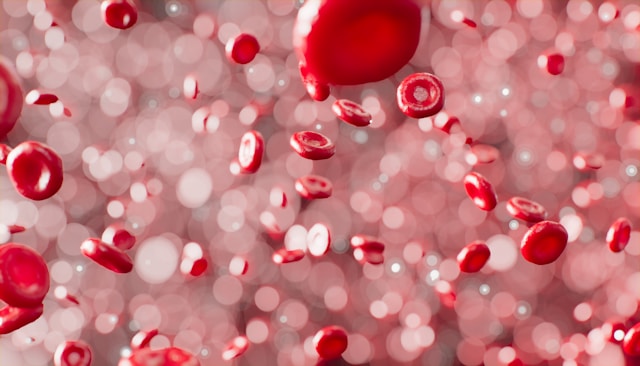
Blood Protein Levels Indicate Risk for Over 60 Diseases

A study examining thousands of proteins from a mere droplet of blood has illustrated their potential to foretell the advent of numerous diverse illnesses. This groundbreaking research, detailed in an article released today, 22 July 2024, in Nature Medicine, is a collaborative effort involving significant institutions such as GSK, Queen Mary University of London, University College London, Cambridge University, and the Berlin Institute of Health at Charité Universitätsmedizin in Germany.

This extensive proteomics investigation, the largest of its kind, utilised data from the UK Biobank Pharma Proteomics Project (UKB-PPP). It analysed around 3,000 plasma proteins from over 40,000 randomly selected participants of the UK Biobank. These protein measurements are linked to the participants’ electronic health records. Employing sophisticated analytical techniques, the researchers identified a ‘signature’ of 5 to 20 critical proteins for predicting each disease studied.

The findings highlighted the efficacy of protein ‘signatures’ in predicting the emergence of 67 diseases, including multiple myeloma, non-Hodgkin lymphoma, motor neurone disease, pulmonary fibrosis, and dilated cardiomyopathy. These protein-based prediction models surpassed traditional models that rely on routinely recorded clinical data, such as blood cell counts, cholesterol levels, kidney function, and diabetes tests (glycated haemoglobin), in most cases examined.

Moreover, the implications of this research are profound, especially in the context of well-established cardiovascular risk scores, which have been used to predict and mitigate the risk of future cardiovascular events such as heart attacks and strokes. This new approach offers fresh predictive possibilities for a myriad of diseases, including those that are rare and often take a lengthy period to diagnose, thereby opening up opportunities for timely and accurate diagnoses.

However, the research calls for further validation across different populations, including those with and without symptoms of diseases and among various ethnic groups, to ensure its broad applicability and reliability.

The lead author, Professor Claudia Langenberg, who is the Director of the Precision Healthcare University Research Institute (PHURI) at Queen Mary University of London and Professor of Computational Medicine at the Berlin Institute of Health at Charité Universitätsmedizin, emphasised the novelty and potential of these findings. She pointed out that while measuring specific proteins like troponin for diagnosing heart attacks is standard, the vast array of proteins now measurable in human blood presents new markers that could revolutionise screening and diagnostic processes. She highlighted the critical need for proteomic studies across different populations to validate these findings and the development of cost-effective, clinically standard tests to measure disease-relevant proteins.

Dr Julia Carrasco Zanini Sanchez, the first author and a research student at GSK and the University of Cambridge at the time of the study, now a postdoctoral researcher at PHURI, shared her excitement about the performance of several protein signatures. These signatures, which were comparable or even superior to existing proteins used in screening tests, such as the prostate-specific antigen for prostate cancer, underscore the potential of these signatures for early detection. This could lead to improved prognosis for a range of severe diseases, identifying numerous promising leads for further clinical evaluation.

Dr Robert Scott, co-lead author and Vice President and Head of Human Genetics and Genomics at GSK, reflected on the significance of this work for drug development. Identifying patients most likely to benefit from new medicines is a perennial challenge, and this study showcases the potential of large-scale proteomic technologies in pinpointing individuals at high risk for various diseases. This aligns with GSK’s strategy to leverage technology to deepen understanding of human biology and disease, aiming to enhance success rates and efficiency in drug discovery and development.

More information: Julia Carrasco-Zanini et al, Proteomic signatures improve risk prediction for common and rare diseases, Nature Medicine. DOI: 10.1038/s41591-024-03142-z

Journal information: Nature Medicine Provided by Queen Mary University of London

An Innovative Approach to Assessing Aging and Disease Risk Using the Protein Aggregation Clock

Professors Dorothee Dormann and Edward Lemke from Johannes Gutenberg University Mainz (JGU), who also serve as adjunct directors at the Institute of Molecular Biology (IMB) in Mainz, have introduced the idea of a “protein aggregation clock” as a novel method for assessing ageing and disease risk. They discussed this concept in a new perspective article they published in Nature Cell Biology.

As humans age, the DNA and proteins that constitute our bodies undergo various changes, diminishing our bodily functions and increasing susceptibility to age-related diseases such as cardiovascular diseases, cancer, and Alzheimer’s disease. A significant change is the misfolding and subsequent aggregation of proteins into amyloids within our cells. These protein aggregates, mainly formed from a category of proteins known as intrinsically disordered proteins (IDPs), which lack a fixed structure and account for about 30 per cent of cellular proteins, are a hallmark of ageing cells. These proteins are more flexible, resembling strands of cooked spaghetti, and are especially prone to form amyloids.

The accumulation of these aggregates, especially in long-lived cells like neurons or muscle cells, is a well-known phenomenon as we age and is associated with numerous age-related diseases, including neurodegenerative conditions like Alzheimer’s and Parkinson’s disease. Consequently, multiple aggregates could indicate cellular health and the likelihood of developing age-related diseases.

In their article, Dormann and Lemke suggest that tracking IDP aggregation might serve as a biological “clock” to gauge an individual’s health and biological age. The potential development of this concept into a sensitive diagnostic tool is a source of optimism. It could enable early diagnosis of age-related diseases and identify individuals at risk before they show symptoms, thereby allowing for preventative interventions. Additionally, it could be employed to evaluate the efficacy of new treatments aimed at reducing protein aggregation, thus helping to delay or prevent age-related diseases.

However, the realization of a routine diagnostic test based on protein aggregation is still a distant goal. Dormann emphasized the necessity of enhancing our understanding of the fundamental mechanisms behind IDP aggregation. Meanwhile, Lemke expressed hope that further research into IDP dynamics and technological advancements could eventually make reading a protein aggregation clock a reality.

While various biological “clocks” based on nucleic acids like DNA already exist, a protein-based clock could provide a valuable complement to these tools. Proteins are pivotal in all cellular functions and are abundantly present in cells. By advancing the protein aggregation clock, Dormann and Lemke aim to make a significant contribution to the field of gerontology, inspiring hope for the development of strategies for healthy ageing and the prevention of age-related diseases.

More information: Dorothee Dormann et al, Adding intrinsically disordered proteins to biological ageing clocks, Nature Cell Biology. DOI: 10.1038/s41556-024-01423-w

Journal information: Nature Cell Biology Provided by Johannes Gutenberg University of Mainz

Recent research reveals: Specific age group dislikes fruit chunks in yogurt

If you’ve noticed your six-year-old becoming particularly picky about the textures in their meals, there’s no need for concern—it’s a phase that will pass. A recent study by the Department of Food Science at the University of Copenhagen has shown that children at this age often prefer smoother food textures. They reject crunchy peanut butter, jam with seeds, and yoghurts containing fruit pieces. The research involved 485 children aged between five and twelve, who were presented with six foods in smooth and textured versions. These included bread, orange juice, peanut butter, strawberry jam, yoghurt, and tomato soup. The children were shown illustrations of each food variant and asked to indicate their preferences.

The study’s findings are significant, with 76 per cent of six-year-olds consistently choosing the smoother versions of these foods, the highest rate of preference for any age group studied. Dr Ching Yue Chow, the study’s lead author, noted that while many people may recognise a general aversion to lumpy food among children, this study is the first to pinpoint six-year-olds as having an extreme dislike for food textures. To ensure the accuracy of these findings, the study used natural foods rather than hypotheticals or substitutes, a method that has proven effective in garnering consistent responses in previous studies.

Dr Chow suggests this aversion to textured food could be linked to a natural protective instinct at six. Food neophobia—fear of new or unfamiliar foods—is thought to be an evolutionary response designed to prevent children from consuming potentially harmful substances as they start exploring the world more independently. This cautious approach to food typically peaks around ages six to seven. The study also examined whether the size of food chunks affected the children’s preferences but found no clear patterns. Regardless of the size, the presence of chunks was generally the main issue.

Interestingly, children’s tolerance for textured foods increases as they age. This change correlates with their growing independence and social influences, such as peer interactions, encouraging them to try new foods. Dr. Chow highlighted that the preference for chunkier foods gradually increases, particularly from seven to twelve years old.

Despite the challenges posed by the ‘anti-chunk phase’ at age six, parents are encouraged to introduce new foods with patience and persistence. Dr Chow recommends presenting new dishes multiple times—often between eight to fifteen times—before a child may start to accept and enjoy them. This consistent approach typically yields positive results.

Moreover, Dr. Chow advises against using rewards or pressures to encourage children to eat their vegetables. For example, offering a dessert like ice cream to reward eating broccoli can backfire. Once the reward is removed, the child’s interest in the healthy option typically wanes. Similarly, pressuring children to eat certain foods can lead to negative associations, making them even less likely to enjoy them. This comprehensive study sheds light on the developmental food preferences of children and offers valuable insights for parents navigating the complexities of their children’s dietary habits.

More information: Ching Yue Chow et al, Oral size perception and texture preferences for particle-containing foods in children aged 5–12, Journal of Texture Studies. DOI: 10.1111/jtxs.12848

Journal information: Journal of Texture Studies Provided by University of Copenhagen – Faculty of Science