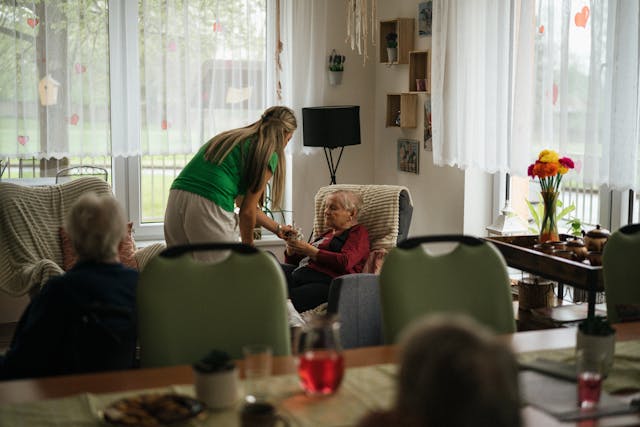
No individual connected with nursing homes – whether they are residents, their families, friends, staff, or administrators – can ignore the profound influence of the pandemic on these critical facilities that cater to an increasing number of older adults, many of whom suffer from cognitive impairments.
In the editorial titled “Learning from the experience of dementia care for nursing home residents during the pandemic,” published in the Journal of the American Geriatrics Society, Kathleen Unroe, M.D., MHA, M.S., a respected researcher-clinician from the Regenstrief Institute and Indiana University School of Medicine, along with Gail Towsley, PhD, NHA, a renowned expert from the University of Utah College of Nursing, address the ongoing necessity of incorporating high-quality, dementia-specific care into nursing homes.
The editorial delves into the complex decisions faced by nursing home leaders during the pandemic, who were tasked with managing competing needs. They had to balance the pressure to relieve hospitals by admitting new patients with the responsibility of ensuring the safety of staff and long-standing residents. This constant juggling of risk versus benefit often led to difficult compromises between safety measures and residents’ quality of life.
The piece brings attention to the varied uncertainties and stressors that long-term care providers and their charges face, focusing on challenges such as resident social isolation, staff recruitment, training, retention, and the problematic balance between optimal infection control and the best practices in dementia care.
“A majority of people who receive care in nursing homes have cognitive impairment,” Dr. Unroe emphasized. “High-quality care for these individuals, including those diagnosed with dementia, should be person-centered. This involves understanding a person’s care goals and treatment preferences, ensuring these are well-documented and then met, even for those who are no longer able to participate in these discussions.”
Dr Unroe also noted the inherent isolation of nursing home residents from their communities, former neighbourhoods, contacts, and families, emphasizing the need to maintain these vital connections actively. This includes facilitating easy participation of family and friends in the nursing home life and enabling residents to engage with their communities and families outside the facility.
Dr Unroe highlighted several vital lessons from the pandemic, including the necessity for specific dementia care staff training, the value of telehealth communications, and the importance of expanding families’ roles in nursing home care.
In 2022, the National Academies of Sciences, Engineering, and Medicine released “The National Imperative to Improve Nursing Home Quality.” This report acknowledged the catastrophic impact of the COVID-19 pandemic on nursing home residents and staff, drawing renewed attention to the chronic deficiencies that hinder the provision of high-quality care in these settings. It calls on the Centers for Medicare and Medicaid Services (CMS) and state governments to enhance oversight of nursing homes to prevent a recurrence of the failures experienced during the pandemic.
In conclusion, Drs. Unroe and Towsley emphasize the importance of seizing opportunities to unite around solutions to address persistent challenges in nursing home settings, noting, “While the pandemic included lessons we wish we did not have to learn, it offers us a chance to alter our practices and re-focus on high-quality dementia care.”
More information: Kathleen T. Unroe et al, Learning from the experience of dementia care for nursing home residents during the pandemic, Journal of the American Geriatrics Society. DOI: 10.1111/jgs.18771
Journal information: Journal of the American Geriatrics Society Provided by Regenstrief Institute