Thursday, 2 Apr 2026
  • My Feed
  • My Saves
  • History
  • Blog
Living Well Study
  • Blog
  • Ageing Well
  • Brain Health
  • Healthy Diets
  • Physical Wellness
  • Wellness
  • 🔥
  • Wellness
  • older adults
  • Living Well
  • Brain Health
  • public health
  • dementia
  • Ageing Well
  • physical exercise
  • alzheimer disease
  • mental health
Font ResizerAa
Living Well StudyLiving Well Study
  • My Saves
  • My Feed
  • History
Search
  • Pages
    • Home
    • Search Page
  • Personalized
    • Blog
    • My Feed
    • My Saves
    • History
  • Categories
    • Ageing Well
    • Brain Health
    • Healthy Diets
    • Mental Wellness
    • Physical Wellness
    • Wellness
Have an existing account? Sign In
Follow US
© 2022 Foxiz News Network. Ruby Design Company. All Rights Reserved.
Living Well Study > Blog > Ageing Well > Enhancing dementia care in nursing homes: Insights from the pandemic years
Ageing Well

Enhancing dementia care in nursing homes: Insights from the pandemic years

support
Share
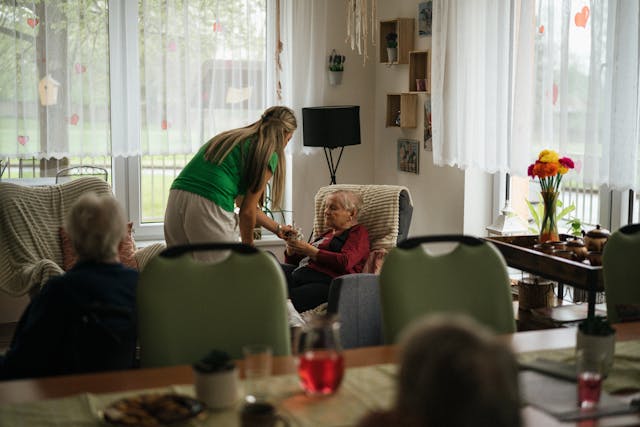
Caregiver Helping Elderly People in Nursing Home. Photo by Jsme MILA : https://www.pexels.com/photo/caregiver-helping-elderly-people-in-nursing-home-18459198/
SHARE

No individual connected with nursing homes – whether they are residents, their families, friends, staff, or administrators – can ignore the profound influence of the pandemic on these critical facilities that cater to an increasing number of older adults, many of whom suffer from cognitive impairments.

In the editorial titled “Learning from the experience of dementia care for nursing home residents during the pandemic,” published in the Journal of the American Geriatrics Society, Kathleen Unroe, M.D., MHA, M.S., a respected researcher-clinician from the Regenstrief Institute and Indiana University School of Medicine, along with Gail Towsley, PhD, NHA, a renowned expert from the University of Utah College of Nursing, address the ongoing necessity of incorporating high-quality, dementia-specific care into nursing homes.

The editorial delves into the complex decisions faced by nursing home leaders during the pandemic, who were tasked with managing competing needs. They had to balance the pressure to relieve hospitals by admitting new patients with the responsibility of ensuring the safety of staff and long-standing residents. This constant juggling of risk versus benefit often led to difficult compromises between safety measures and residents’ quality of life.

The piece brings attention to the varied uncertainties and stressors that long-term care providers and their charges face, focusing on challenges such as resident social isolation, staff recruitment, training, retention, and the problematic balance between optimal infection control and the best practices in dementia care.

“A majority of people who receive care in nursing homes have cognitive impairment,” Dr. Unroe emphasized. “High-quality care for these individuals, including those diagnosed with dementia, should be person-centered. This involves understanding a person’s care goals and treatment preferences, ensuring these are well-documented and then met, even for those who are no longer able to participate in these discussions.”

Dr Unroe also noted the inherent isolation of nursing home residents from their communities, former neighbourhoods, contacts, and families, emphasizing the need to maintain these vital connections actively. This includes facilitating easy participation of family and friends in the nursing home life and enabling residents to engage with their communities and families outside the facility.

Dr Unroe highlighted several vital lessons from the pandemic, including the necessity for specific dementia care staff training, the value of telehealth communications, and the importance of expanding families’ roles in nursing home care.

In 2022, the National Academies of Sciences, Engineering, and Medicine released “The National Imperative to Improve Nursing Home Quality.” This report acknowledged the catastrophic impact of the COVID-19 pandemic on nursing home residents and staff, drawing renewed attention to the chronic deficiencies that hinder the provision of high-quality care in these settings. It calls on the Centers for Medicare and Medicaid Services (CMS) and state governments to enhance oversight of nursing homes to prevent a recurrence of the failures experienced during the pandemic.

In conclusion, Drs. Unroe and Towsley emphasize the importance of seizing opportunities to unite around solutions to address persistent challenges in nursing home settings, noting, “While the pandemic included lessons we wish we did not have to learn, it offers us a chance to alter our practices and re-focus on high-quality dementia care.”

More information: Kathleen T. Unroe et al, Learning from the experience of dementia care for nursing home residents during the pandemic, Journal of the American Geriatrics Society. DOI: 10.1111/jgs.18771

Journal information: Journal of the American Geriatrics Society Provided by Regenstrief Institute


TAGGED:COVID-19dementiageriatricshealth and medicinenursing homesolder adults
Share This Article
Email Copy Link Print
Previous Article The potential exposure to PFAS from diets high in seafood might be underestimated
Next Article Understanding the Mechanisms of Ageing
Leave a Comment

Leave a Reply Cancel reply

Your email address will not be published. Required fields are marked *

Recent Posts

  • Experts fine-tune genetic maps to trace DNA influences on human traits and disease susceptibility
  • Fall Prevention Clinics: A Smart Investment in Older Adult Health
  • USC research shows early Alzheimer’s brain markers vary across diverse populations
  • Researchers find gut health supplement may help relieve arthritis pain
  • Outages Drive Rise in Emergency Hospital Visits Among Elderly Populations

Tags

adolescents adverse effects ageing populations aging populations air pollution alzheimer disease amyloids anxiety artificial intelligence atopic dermatitis behavioral psychology biomarkers blood pressure body mass index brain cancer cancer research cardiology cardiovascular disease cardiovascular disorders caregivers children climate change effects clinical research coffee cognition cognitive development cognitive disorders cognitive function cognitive neuroscience cohort studies COVID-19 dementia depression diabetes diets discovery research disease control disease intervention disease prevention diseases and disorders environmental health epidemiology foods food science gender studies geriatrics gerontology gut microbiota health and medicine health care health care costs health care delivery heart disease heart failure home care human brain human health hypertension inflammation insomnia life expectancy life sciences longitudinal studies memory disorders menopause mental health metabolic disorders metabolism mortality rates neurodegenerative diseases neurological disorders neurology neuroscience nursing homes nutrients nutrition obesity older adults parkinsons disease physical exercise population studies preventive medicine psychiatric disorders psychological science psychological stress public health research impact risk assessment risk factors risk reduction skin sleep sleep apnea sleep disorders social interaction social research socioeconomics type 2 diabetes weight loss
April 2026
S M T W T F S
 1234
567891011
12131415161718
19202122232425
2627282930  
« Mar    

This website is for information purpose only and is in no way intended to replace the advice, professional medical care, diagnosis or treatment of a doctor, therapist, dietician or nutritionist.

About | Contact | Cookie Policy | Digital Millennium Copyright Act Notice | Disclaimer | Privacy Policy | Terms of Service

You Might Also Like

Ageing Well

Groundbreaking research shows seniors can bounce back to wellness

By support
Wellness

Higher levels of thyroid hormone linked to increased risk of cognitive disorders in older adults

By support
Technology

Bluetooth Technology Offers New Pathways to Independent Living for Older Adults

By support
Science

Language Triggers Unseen Cognitive Mechanisms Influencing Feelings, Choices, and Actions

By support
Living Well Study
Categories
  • Ageing Well
  • Brain Health
  • Healthy Diets
  • Mental Wellness
  • Physical Wellness
  • Wellness
LivingWellStudy
  • About
  • Contact
  • Cookie Policy
  • Digital Millennium Copyright Act Notice
  • Disclaimer
  • Privacy Policy
  • Terms of Service
Welcome Back!

Sign in to your account

Username or Email Address
Password

Lost your password?