

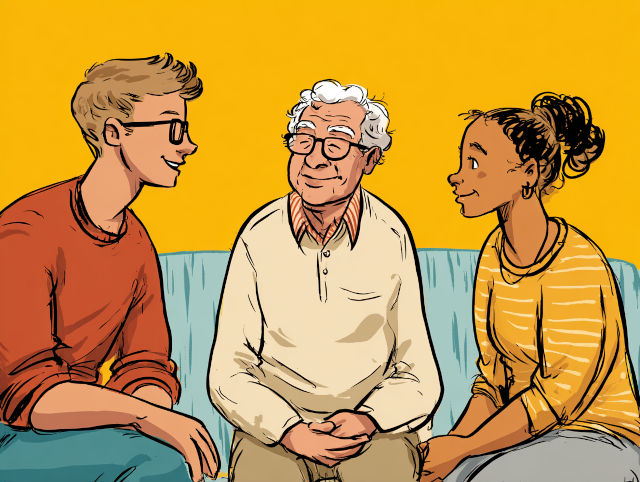
A new study shows that year-long home visits with older adults can play a significant role in shaping first-year medical students’ development, helping them strengthen communication skills, reconsider assumptions about ageing, and understand patient care beyond the boundaries of clinics and hospitals. Rather than focusing solely on technical knowledge, the research highlights how sustained personal contact allows students to encounter the human realities of ageing, vulnerability, and long-term health in ways that early medical training often overlooks.
For many medical students, the first years of education are dominated by lectures, textbooks, and examinations, with limited opportunities for meaningful interaction with patients. The study suggests that this imbalance can be addressed much earlier than is traditionally assumed. Instead of waiting for clinical rotations, students began learning through repeated visits to older adults in their own homes, where health is inseparable from daily routines, personal histories, and social circumstances. These encounters offered a form of learning rooted in lived experience rather than abstract cases.
Published in Medical Education Online, the study examines an eight-year Service-Learning initiative involving first-year medical students and older adults living in the community. Over the course of an academic year, students visited the same individuals regularly, allowing relationships to develop gradually. The programme was designed to expose students to ageing as an ongoing process rather than a medical problem to be solved, encouraging reflection on how health, independence, and dignity intersect over time.
Students typically visited in pairs, completing around ten visits during the year. Each session lasted between one hour and ninety minutes and centred on gentle, personalised physical activity combined with open conversation. Discussions ranged from everyday challenges and health concerns to broader reflections on ageing and identity. The programme was supported by an introductory workshop and continued mentoring from volunteer physicians and physiotherapists, ensuring that students were guided but not overly directed in their interactions.
Analysis of interviews, focus groups, and reflective writing revealed that students experienced profound changes in how they viewed patients and their future professional roles. They reported learning to build trust through attentive listening and consistent presence, to communicate with greater sensitivity around autonomy, and to tolerate uncertainty rather than rushing to provide solutions. Many gained a broader understanding of health that included loneliness, disability, and social support, while also confronting difficult subjects such as vulnerability, mortality, and end-of-life care.
The study followed three consecutive cohorts, involving 313 volunteers out of 555 pre-clinical students. Researchers conducted in-depth interviews and focus groups with 60 participants and analysed 128 reflective assignments using reflexive thematic analysis. The findings suggest that early, relationship-based service learning can foster empathy and reduce age-related stereotypes. As populations continue to age globally, the researchers argue that programmes grounded in sustained human connection may help future doctors develop a more patient-centred, compassionate approach to care from the very beginning of their training.
More information: Adi Finkelstein et al, Beyond the classroom: a qualitative study of voluntary home visits to older adults as a tool for empathy and professional growth in medical students, Medical Education Online. DOI: 10.1080/10872981.2025.2605378
Journal information: Medical Education Online Provided by The Hebrew University of Jerusalem