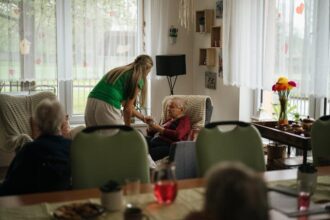


Clinical trials are essential for determining the safety and effectiveness of medical treatments and therapies, yet participant diversity is a significant gap. Notably, the 1.4 million individuals residing in the 15,600 nursing homes across the U.S. are often excluded from these studies despite the high prevalence of conditions like hypertension, depression, diabetes, and Alzheimer’s disease among them. This oversight is highlighted in a commentary by faculty from the Regenstrief Institute, Indiana University, UCLA, and the universities of North Carolina, Colorado, and Massachusetts, published in the Journal of the American Geriatrics Society (JAGS). The article emphasizes the necessity of including nursing home residents in clinical trials due to their medical complexity, offering significant challenges and unique insights into medical research.
The authors discuss the advantages of conducting research within nursing home settings and outline the essential components for successful clinical trials. They advocate for creating a dedicated nursing home clinical trials network and stress the importance of incorporating diversity, equity, and inclusion principles into trial designs. Corresponding author Kathleen Unroe, M.D., MHA, M.S., a researcher-clinician at the Regenstrief Institute and IU School of Medicine, poses critical questions about the appropriateness and implementation of therapies in nursing homes. She highlights the logistical challenges and the necessity for researchers to adapt their approaches to fit the realities of clinical care in these settings, which were not originally designed to facilitate research.
The commentary addresses several pressing concerns regarding clinical trials in nursing homes, emphasizing the urgent need for such studies. The authors propose a comprehensive framework for establishing a nursing home clinical trials network, which could significantly enhance the quality of medical care provided in these facilities.
Susan Hickman, PhD, another co-author and director of the Regenstrief Institute’s Center for Aging Research, notes nursing home care’s unique aspects, including testing, prevention, diagnosis, and treatment. She calls for a greater focus on this critical area within the healthcare continuum, given its essential role in caring for seriously ill adults. The commentary also touches on missed opportunities, such as excluding nursing home residents from COVID-19 therapeutic trials, which could have identified specific challenges related to dosing, administration, and monitoring.
The authors lament the missed opportunities in not including nursing home residents in past trials, such as those for COVID-19 therapeutics. This exclusion could have identified specific dosing, administration, and monitoring issues. Such findings could have spurred the creation of training materials specifically for nursing home staff and promoted the development of consistent policies to identify appropriate candidates and deliver treatments promptly, safely, and optimally.
Dr. Unroe concludes by emphasizing that nursing home residents should have access to evidence-based therapies. When the complexities of conducting trials in such settings are ignored, the result is often a more complex implementation phase. Trials conducted in nursing homes benefit the residents and generate knowledge relevant to the broader senior population, including those in assisted living facilities and those at home. This broad approach to clinical trials is pivotal for transforming care across the entire spectrum of senior healthcare.
More information: Kathleen T. Unroe et al, Evaluation of medical therapies in the nursing home population: Gaps, challenges, and next steps, Journal of the American Geriatrics Society. DOI: 10.1111/jgs.18829
Journal information: Journal of the American Geriatrics Society Provided by Regenstrief Institute