Thursday, 2 Apr 2026
  • My Feed
  • My Saves
  • History
  • Blog
Living Well Study
  • Blog
  • Ageing Well
  • Brain Health
  • Healthy Diets
  • Physical Wellness
  • Wellness
  • 🔥
  • Wellness
  • older adults
  • Living Well
  • Brain Health
  • public health
  • dementia
  • Ageing Well
  • physical exercise
  • alzheimer disease
  • mental health
Font ResizerAa
Living Well StudyLiving Well Study
  • My Saves
  • My Feed
  • History
Search
  • Pages
    • Home
    • Search Page
  • Personalized
    • Blog
    • My Feed
    • My Saves
    • History
  • Categories
    • Ageing Well
    • Brain Health
    • Healthy Diets
    • Mental Wellness
    • Physical Wellness
    • Wellness
Have an existing account? Sign In
Follow US
© 2022 Foxiz News Network. Ruby Design Company. All Rights Reserved.
Living Well Study > Blog > Living Well > Protective Turning Behaviours Used by Older Adults Concerned About Falling
Living Well

Protective Turning Behaviours Used by Older Adults Concerned About Falling

support
Share
older adult shopping
SHARE

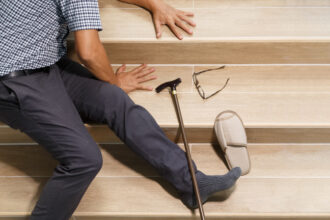
About one in three older adults experiences a fall each year, often resulting in serious injuries such as fractures that can sharply reduce quality of life and generate over $50 billion in annual medical costs. Hip fractures are particularly devastating, frequently leading to long-term loss of mobility, independence, and overall well-being. Notably, falls that occur while turning are nearly eight times more likely to cause a hip fracture than those that happen during straight walking.

Turning while walking is a routine but mechanically demanding movement. It requires balance, coordination, and rapid adjustments in body position, all of which may decline with age—unlike walking straight, turning shifts the body’s centre of gravity beyond its base of support, increasing instability and fall risk. These challenges can undermine confidence, leading to hesitation and greater danger during everyday activities such as shopping or moving around the home.

To better understand how older adults manage balance during turns, researchers conducted a study simulating a grocery store environment with a T-shaped walkway. Participants aged 65 and older completed three progressively challenging tasks: walking straight, making a planned turn, and making an unexpected turn. Full-body motion tracking was used to capture detailed balance and movement data.

At a group level, older adults turned in ways similar to younger adults. However, some individuals adopted protective strategies not seen in younger participants, such as reducing or slowing side-to-side body sway. Those who reported fear of falling or showed poorer balance in clinical tests were more likely to use these cautious strategies, which in practice helped them turn more safely.

These findings suggest that slower or more restrained movements during turning may reflect adaptive, protective behaviour rather than poor balance. Recognising person-specific strategies could improve how balance is assessed clinically, shifting attention beyond straight-line walking to include turning. This approach may support earlier, preventative interventions that better preserve mobility and independence in older adults.

More information: Zahava M. Hirsch et al, Older adult frontal plane balance during 90 degree turns while walking, Scientific Reports. DOI: 10.1038/s41598-025-22800-x

Journal information: Scientific Reports Provided by Stevens Institute of Technology

TAGGED:health care
Share This Article
Email Copy Link Print
Previous Article Study finds cutting alcohol consumption could save lives from cancer
Next Article A New Framework Viewing Centenarians as Models of Immune Adaptability in Multimorbidity
Leave a Comment

Leave a Reply Cancel reply

Your email address will not be published. Required fields are marked *

Recent Posts

  • Experts fine-tune genetic maps to trace DNA influences on human traits and disease susceptibility
  • Fall Prevention Clinics: A Smart Investment in Older Adult Health
  • USC research shows early Alzheimer’s brain markers vary across diverse populations
  • Researchers find gut health supplement may help relieve arthritis pain
  • Outages Drive Rise in Emergency Hospital Visits Among Elderly Populations

Tags

adolescents adverse effects ageing populations aging populations air pollution alzheimer disease amyloids anxiety artificial intelligence atopic dermatitis behavioral psychology biomarkers blood pressure body mass index brain cancer cancer research cardiology cardiovascular disease cardiovascular disorders caregivers children climate change effects clinical research coffee cognition cognitive development cognitive disorders cognitive function cognitive neuroscience cohort studies COVID-19 dementia depression diabetes diets discovery research disease control disease intervention disease prevention diseases and disorders environmental health epidemiology foods food science gender studies geriatrics gerontology gut microbiota health and medicine health care health care costs health care delivery heart disease heart failure home care human brain human health hypertension inflammation insomnia life expectancy life sciences longitudinal studies memory disorders menopause mental health metabolic disorders metabolism mortality rates neurodegenerative diseases neurological disorders neurology neuroscience nursing homes nutrients nutrition obesity older adults parkinsons disease physical exercise population studies preventive medicine psychiatric disorders psychological science psychological stress public health research impact risk assessment risk factors risk reduction skin sleep sleep apnea sleep disorders social interaction social research socioeconomics type 2 diabetes weight loss
April 2026
S M T W T F S
 1234
567891011
12131415161718
19202122232425
2627282930  
« Mar    

This website is for information purpose only and is in no way intended to replace the advice, professional medical care, diagnosis or treatment of a doctor, therapist, dietician or nutritionist.

About | Contact | Cookie Policy | Digital Millennium Copyright Act Notice | Disclaimer | Privacy Policy | Terms of Service

You Might Also Like

Wellness

Brown Adipose Tissue Enhances Athletic Performance and Supports Healthy Ageing

By support
Living Well

Alcohol Consumption in Elderly Doubles Risk of Brain Hemorrhage Due to Falls

By support
Living Well

Recommendation on interventions for preventing falls in older adults residing in the community

By support
Living Well

Work-Related Stress May Increase the Risk of Developing Irregular Heart Rhythms

By support
Living Well Study
Categories
  • Ageing Well
  • Brain Health
  • Healthy Diets
  • Mental Wellness
  • Physical Wellness
  • Wellness
LivingWellStudy
  • About
  • Contact
  • Cookie Policy
  • Digital Millennium Copyright Act Notice
  • Disclaimer
  • Privacy Policy
  • Terms of Service
Welcome Back!

Sign in to your account

Username or Email Address
Password

Lost your password?