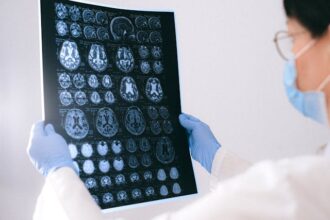


Researchers have discovered that alternative regions or networks within the brain can assume the responsibilities and functions of impaired areas to mitigate the effects of age-related cognitive decline. Recently published as a Reviewed Preprint in eLife, their findings have been hailed by the journal’s editors as a significant breakthrough in our comprehension of neural functional compensation, bolstered by persuasive evidence. This research provides methodologies for future investigations to measure compensation in studies focused on the neuroscience of healthy ageing.
The concept of functional compensation is well-established in neuroscience. The brains of older adults may engage in additional activity from an alternative brain region to offset diminished cognitive function. However, the actual impact of this compensation on cognitive performance enhancement remains a subject of debate.
Ethan Knights, a Research Associate at the Medical Research Council (MRC) Cognition and Brain Sciences Unit at the University of Cambridge, UK, emphasises the importance of understanding the neurophysiological alterations that sustain cognitive functionality in preventing cognitive decline in the elderly, a critical public health concern. “Fluid intelligence, which involves solving novel and abstract problems, significantly diminishes with age. It is known to activate a brain network called the multiple demand network (MDN), whose activation tends to wane as we age,” Knights explains.
In their exploration of functional compensation during tasks that require fluid intelligence, Knights and his team involved 223 adults aged between 19 and 87 years from the Cambridge Centre for Ageing and Neuroscience project’s Stage 3. They employed a modified version of the odd-one-out subtest from the standardised Cattell Culture Fair Intelligence Test. During the task, they monitored brain activity changes using functional magnetic resonance imaging (fMRI). Participants were challenged to identify the odd one from a row of display panels based on visual differences with varying difficulty levels.
The researchers observed, via fMRI scans, activation in brain regions typically associated with the MDN during these tasks. They sought regions showing positive effects of both age and performance, indicative of an age-related compensatory response, identifying two areas of interest: the cuneus, located at the rear of the brain and involved in processing visual information, and the bilateral frontal cortex, associated with decision-making, problem-solving, and social interactions.
The team confirmed these areas’ involvement in task-related functional compensation using multivariate Bayesian decoding. This neuroimaging analysis approach analyses activity patterns across several brain regions to infer data. Interestingly, while the informational content in the frontal cortex remained constant across ages, older adults showed increased information in the cuneus, suggesting its role in maintaining cognitive performance during fluid intelligence tasks, indicative of functional compensation.
eLife’s editorial team suggested that the study’s robustness could be enhanced by including more demographic details about the participants to ensure a sample truly representative of the general population.
In conclusion, senior author Kamen Tsvetanov, an Alzheimer’s Society Dementia Research Leader Fellow at the Department of Clinical Neurosciences, University of Cambridge, remarked, “Our findings provide the most convincing evidence to date of functional compensation in healthy aging. Given the cuneus’s established role in visual attention, its additional recruitment in older participants likely facilitated their ability to simultaneously process multiple visual panel features, accurately identifying the odd-one-out. Future research should aim to elucidate the specific role of the cuneus in such problem-solving tasks and how age, cuneus activation, and fluid intelligence interrelate, taking into account factors like education and lifestyle choices.”
More information: Ethan Knights et al, Neural Evidence of Functional Compensation for Fluid Intelligence in Healthy Ageing, eLife. DOI: 10.7554/eLife.93327.1
Journal information: eLife