Thursday, 2 Apr 2026
  • My Feed
  • My Saves
  • History
  • Blog
Living Well Study
  • Blog
  • Ageing Well
  • Brain Health
  • Healthy Diets
  • Physical Wellness
  • Wellness
  • 🔥
  • Wellness
  • older adults
  • Living Well
  • Brain Health
  • public health
  • dementia
  • Ageing Well
  • physical exercise
  • alzheimer disease
  • mental health
Font ResizerAa
Living Well StudyLiving Well Study
  • My Saves
  • My Feed
  • History
Search
  • Pages
    • Home
    • Search Page
  • Personalized
    • Blog
    • My Feed
    • My Saves
    • History
  • Categories
    • Ageing Well
    • Brain Health
    • Healthy Diets
    • Mental Wellness
    • Physical Wellness
    • Wellness
Have an existing account? Sign In
Follow US
© 2022 Foxiz News Network. Ruby Design Company. All Rights Reserved.
Living Well Study > Blog > Healthy Diets > Unlock the Secret to Better Kimchi with Ancient Techniques
Healthy Diets

Unlock the Secret to Better Kimchi with Ancient Techniques

support
Share
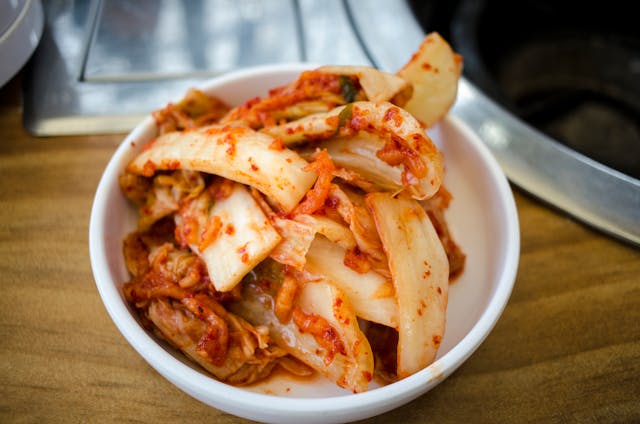
Delicious Kimchi in White Ceramic Bowl. Photo by makafood: https://www.pexels.com/photo/delicious-kimchi-in-white-ceramic-bowl-8838404/
SHARE

Fermented foods like kimchi have been integral to Korean cuisine for thousands of years. Since ancient times, Korean chefs have used onggi — traditional handmade clay jars — to ferment kimchi. Today, most kimchi is made through mass fermentation in glass, steel, or plastic containers, but it has long been claimed that the highest quality kimchi is fermented in onggi. Kimchi purists now have scientific validation, thanks to recent research from David Hu, professor in the George W. Woodruff School of Mechanical Engineering at Georgia Tech, and Soohwan Kim, a second-year PhD student in Hu’s lab.

In a combined experimental and theoretical study, Hu and Kim measured carbon dioxide levels in onggi during kimchi fermentation. They developed a mathematical model to show how the gas was generated and moved through the onggi’s porous walls. By bringing the study of fluid mechanics to bear on an ancient technology, their research highlights the work of artisans. It provides the missing link for how traditional earthenware allows for high-quality kimchi. Their study was published in the Journal of the Royal Society Interface. “We wanted to find the ‘secret sauce’ for how onggi makes kimchi taste so good,” Hu said. “So, we measured how the gases evolved while kimchi fermented inside the onggi — something no one had done before.”

The porous structure of these earthenware vessels mimics the loose soil where lactic acid bacteria — known for their healthy probiotic nature — are found. While previous studies have shown that kimchi fermented in onggi has more lactic acid bacteria, no one knows exactly how the phenomenon is connected to the unique material properties of the container. First, Kim obtained a traditional, handmade onggi jar from an artisan in his hometown of Jeju, South Korea, a region famous for onggi. Back at Georgia Tech, Hu and Kim first tested the permeability of the onggi by observing how water evaporated through the container over time.

Next, they installed carbon dioxide and pressure sensors into the onggi and a typical, hermetically sealed glass jar. They prepared their own salted cabbage and placed it in both containers. They then used the sensors to measure and compare the change in carbon dioxide — a signature of fermentation. Hu and Kim also developed a mathematical model based on the porosity of the onggi. The model allowed them to infer the generation rate of carbon dioxide since the onggi lets carbon dioxide out gradually. They concluded that the onggi’s porous walls permitted the carbon dioxide to escape the container, accelerating the fermentation speed.

The onggi’s porosity also functioned as a “safety valve,” resulting in a slower increase in carbon dioxide levels than the glass jar while blocking the entry of external particles. Their data revealed that the carbon dioxide level in onggi was less than half of that in glass containers. They also found that the beneficial bacteria in the onggi-made kimchi increased 26% more than in the glass counterpart. In the glass jar, the lactic acid bacteria became suffocated by their carbon dioxide in the closed glass container. It turns out that because the onggi releases carbon dioxide at a small rate, the lactic acid bacteria are happier and reproduce more.

“Onggi were designed without modern knowledge of chemistry, microbiology, or fluid mechanics, but they work remarkably well,” Kim said. “It’s very interesting to get these new insights into ancient technology through the lens of fluid dynamics.” Onggi’s semi-porous nature is unique compared to other forms of earthenware. A clay container that leaks, but only slightly, is not easy to make. Terra cotta containers, for example, quickly leak water. “It’s amazing that, for thousands of years, people have been building these special containers out of dirt, but in many ways, they are very high-tech,” Hu said. “We discovered that the right amount of porosity enables kimchi to ferment faster, and these onggi provide that.”

While the use of onggi by artisans is dwindling, the research by Hu and Kim serves as a reminder of the value of these traditional methods. The study’s findings not only validate the artisan work but also inspire the development of energy-efficient methods for fermenting and storing foods. Moreover, the aesthetic appeal of onggi adds to their allure, making them a unique and beautiful addition to any kitchen.

More information: Soohwan Kim et al, Onggi’s permeability to carbon dioxide accelerates kimchi fermentation, Journal of The Royal Society Interface. DOI: 10.1098/rsif.2023.0034

Journal information: Journal of The Royal Society Interface Provided by Georgia Institute of Technology


TAGGED:ancient sciencecarbon dioxidefermentationfluid mechanicsfood sciencepottery
Share This Article
Email Copy Link Print
Previous Article Impact of Extreme Temperatures on Stroke Mortality in Low-Income Countries
Next Article UC Irvine Study Reveals Heat Waves’ Harmful Effects on Vital Organs
Leave a Comment

Leave a Reply Cancel reply

Your email address will not be published. Required fields are marked *

Recent Posts

  • Experts fine-tune genetic maps to trace DNA influences on human traits and disease susceptibility
  • Fall Prevention Clinics: A Smart Investment in Older Adult Health
  • USC research shows early Alzheimer’s brain markers vary across diverse populations
  • Researchers find gut health supplement may help relieve arthritis pain
  • Outages Drive Rise in Emergency Hospital Visits Among Elderly Populations

Tags

adolescents adverse effects ageing populations aging populations air pollution alzheimer disease amyloids anxiety artificial intelligence atopic dermatitis behavioral psychology biomarkers blood pressure body mass index brain cancer cancer research cardiology cardiovascular disease cardiovascular disorders caregivers children climate change effects clinical research coffee cognition cognitive development cognitive disorders cognitive function cognitive neuroscience cohort studies COVID-19 dementia depression diabetes diets discovery research disease control disease intervention disease prevention diseases and disorders environmental health epidemiology foods food science gender studies geriatrics gerontology gut microbiota health and medicine health care health care costs health care delivery heart disease heart failure home care human brain human health hypertension inflammation insomnia life expectancy life sciences longitudinal studies memory disorders menopause mental health metabolic disorders metabolism mortality rates neurodegenerative diseases neurological disorders neurology neuroscience nursing homes nutrients nutrition obesity older adults parkinsons disease physical exercise population studies preventive medicine psychiatric disorders psychological science psychological stress public health research impact risk assessment risk factors risk reduction skin sleep sleep apnea sleep disorders social interaction social research socioeconomics type 2 diabetes weight loss
April 2026
S M T W T F S
 1234
567891011
12131415161718
19202122232425
2627282930  
« Mar    

This website is for information purpose only and is in no way intended to replace the advice, professional medical care, diagnosis or treatment of a doctor, therapist, dietician or nutritionist.

About | Contact | Cookie Policy | Digital Millennium Copyright Act Notice | Disclaimer | Privacy Policy | Terms of Service

You Might Also Like

Healthy Diets

A diet primarily composed of vegetables or vegetarian choices is associated with a 39% decreased chance of contracting COVID-19

By support
Healthy Diets

Research Identifies New Connection between Dietary Habits, Depression, and Alzheimer’s Disease

By support
Healthy Diets

Initial Research Indicates Ketogenic Diet Enhances Treatment of Severe Mental Disorders

By support
Healthy Diets

Fibre-Rich Diet Tied to Better Heart Health for People Working Night Shifts

By support
Living Well Study
Categories
  • Ageing Well
  • Brain Health
  • Healthy Diets
  • Mental Wellness
  • Physical Wellness
  • Wellness
LivingWellStudy
  • About
  • Contact
  • Cookie Policy
  • Digital Millennium Copyright Act Notice
  • Disclaimer
  • Privacy Policy
  • Terms of Service
Welcome Back!

Sign in to your account

Username or Email Address
Password

Lost your password?